Inside Ukraine’s Fight Against Kremlin Lies
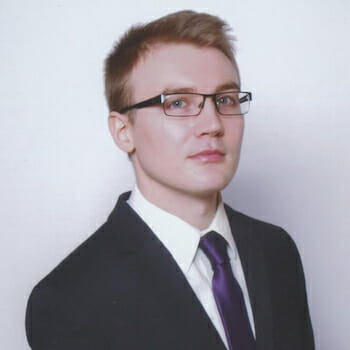
Olena Churanova is a Ukrainian journalist, fact-checker, and editor at StopFake.org, where, since 2016, she has fought Russian disinformation and trained others in digital verification. She is also a senior lecturer at the Mohyla School of Journalism at NaUKMA, where she teaches media literacy and data journalism to both students and educators.
Her earlier roles include serving as a media expert with EUvsDisinfo, working at the Institute of Mass Information, and reporting for the Ukrainian Service of Voice of America. In recent years, Churanova has developed practical guides on verification in the age of AI and delivered public talks on detecting deepfakes and misinformation across Ukrainian and international platforms.
In this interview, Churanova dissects the realities of fact-checking amid war. She calls for stronger coordination among fact-checkers, institutions, and tech platforms to accelerate responses and blunt disinformation. Western funders, she argues, should enforce journalistic standards and deny support to groups that indirectly aid Russia’s military. Her survival rules are simple but essential: regulate emotion, verify sources, and resist impulsive sharing. Accuracy, she reminds, still trumps speed; transparency sustains trust.
 Scott Douglas Jacobsen: In April, you spoke at the Council of Europe. You noted a need to strengthen efforts to counter disinformation. Fact-checkers are key to this, particularly those in Ukraine. What policy changes would make a fact-checker’s job easier?
Olena Churanova: During wartime, it is very important to maintain effective communication with various institutions in the country, the government, the army, and companies responsible for the most popular social platforms among Ukrainians. Accordingly, such policies should establish cooperation between fact-checkers and representatives of platforms where disinformation is potentially spread, create a platform for communication among representatives of various institutions in the country and fact-checkers, and work with government agencies to ensure they understand the importance of cooperation and respond more quickly to requests, etc.
Jacobsen: You spoke to why some outlets still launder Kremlin narratives. What criteria should Western funders use to avoid rewarding disinformation?
Churanova: Certain criteria must be established for granting funds to such opposition groups, and if this concerns the media, then the media’s work must comply with universal journalistic standards. The criterion that they are Russians and they are abroad should not be the main one. Another vital component should be the absence of any contributions or donations to the Russian occupation army.
Jacobsen: Your guide, entitled “Surviving Social Media Chaos,” gives survival rules. Which three rules most reduce susceptibility to fakes or deepfakes?
Churanova: In my opinion, it is about controlling one’s emotions and consciously consuming content on social media so that when a person feels outraged or surprised, they learn to stop and analyze why they felt that way and whether that was the purpose of the content. Secondly, it is, of course, paying attention to the sources. Where did this information come from, who disseminated it, and can this source be trusted? And thirdly, it is better not to comment than to write or share something that you will later be ashamed of. This is not only about media ecology —the fact that you can stop the spread of fake —but also about respect for others who share the same information space with you.
Jacobsen: Everything can potentially be fake. What’s a good triage for suspected AI audio/video?
Churanova: First, analyze where exactly this audio-video began to spread, in what context, and whether authoritative media outlets wrote about it. The second step is to examine the audio-video in detail—check for any desynchronization on the face, strange or unnatural details, unusual pauses and intonations in the background, and how accurate the text is. The third step is to use special tools to analyze such suspicious content, such as AIorNOT, Attestiv, Hiya Deepfake Voice Detector, and others.
Jacobsen: What parallels exist between the Western Balkans and Ukrainian info-ops?
Churanova: One significant parallel is the initiator and author of such operations, and that is the Russian Federation. The core, long-term goal is to sow distrust in the EU and NATO. In Ukraine, this is done by discrediting military aid and reforms; in the Western Balkans, it is done by exaggerating corruption and instability to halt or reverse NATO/EU accession. In both regions, information operations heavily rely on weaponizing historical, ethnic, and religious divisions to create internal strife, often using narratives of “genocide,” “oppression,” or “liberation.” Both regions see the cultivation of local political and media actors who willingly or unknowingly amplify pro-Russian narratives, presenting them as legitimate local political discourse.
Jacobsen: How do you balance speed with verification without amplifying accidental fog of war errors?
Churanova: There is no such thing as a perfect balance when it comes to debunking fake news during wartime. However, the standard of timeliness will still suffer because the priority is to provide verified and reliable facts, not speed. The verification process itself should sometimes be accelerated, without accuracy suffering as a result.
Jacobsen: With AI-heavy search results in 2025, which OSINT techniques outperform LLM summaries?
Churanova: Nevertheless, with the help of OSINT technology, people are better able to determine geolocation, see AI hallucinations, and apply contextual understanding to content verification, all of which are clear advantages.
Jacobsen: How can fact-checking become dysfunctional, either in false positives or being too slow for efficacious responsiveness?
Churanova: False positives can damage public trust in fact-checkers, as affected individuals or groups may feel unfairly targeted, and the audience may become more skeptical of all media outlets. If fact-checking is too slow, it cannot keep pace with the viral spread of disinformation, especially on social media, where false claims may reach millions in minutes. Therefore, it’s essential to emphasize accuracy and transparency in our work.
Jacobsen: Thank you for the opportunity and your time, Olena.