Science

Mapping the Self: How Memetic Identity Reframes Psychotherapy
Psychotherapy has long wrestled with a deceptively simple question: how does the self hold together amid competing identities, inherited norms, and internal contradictions? In their work on memetic self-mapping, psychologists Lloyd Hawkeye Robertson and Teela Robertson offer a visual and collaborative approach to this problem, treating identity not as a fixed essence but as a dynamic constellation of culturally transmitted “memes.”
Developed over decades of clinical practice and research, self-mapping invites clients to narrate who they are and then co-construct a visual map that reveals patterns of meaning, emotional charge, and behavioral momentum. The method emphasizes the client as expert, resists therapist overreach, and adapts across therapeutic modalities—from cognitive-behavioral to narrative and psychodynamic approaches.
In this interview, the authors explain how memetic self-mapping works in practice, how it surfaces ruminative loops, and how therapists can navigate cultural norms—both sustaining and harmful—without imposing moral frameworks of their own.
Scott Douglas Jacobsen: Your work treats the self as culturally constructed—an assemblage of “memes” that cluster into a relatively stable identity. When visually mapping the self in psychotherapy or research, what criteria determine which memes are included, and how they are grouped or linked?
Lloyd Hawkeye Robertson: In all cases, the client is the expert in who they are. Using the narrative method of self-map construction, the client describes who they are in story form, and the psychologist segments the narrative into phrases with a single theme and places those segments under the same name in a “bin.” Those bins containing segments that encompass affective, connotative, and behavioural dimensions are designated as memes. Memes that share affective, connotative, cognitive, or behavioural dimensions are declared to be linked. Using the quicker “forty persons” method, the client lists ten persons they are, ten things they believe to be true, ten things they like about themselves, and ten things they would change about themselves if they could, and then ranks each of the four lists. The psychologist then explores with the client affective, connotative, and behavioral dimensions of each potential meme listed. In all cases, the psychologist reviews the initial map with the client and explores elements that may be absent, thereby ensuring a rich, thick self-description.
Teela Robertson: To add to my dad’s summary, in the “forty persons” people often list things that end up meaning the same thing to them, so those get put together. Based on the general history, we may ask about other items we identified but don’t see on their lists and assess whether they should be represented.
Once we have determined which are memes and stay, the client rank orders each list from 1 (easiest to change or give up) to 10 (hardest to change or give up). This indicates the degree of centrality of the meme, with items ranked 10 being at the centre. From there, we position the remaining items, starting with the lowest-ranked ones, and use our judgment about what we understand them to mean and the history to estimate which items should be near. As we make connections and co-construct the map, items are rearranged as clusters form. Creating the map is more of an art form and uses client input.
Jacobsen: Because mapping involves interpretation, therapist bias is an obvious concern. What safeguards are built into memetic self-mapping to prevent the therapist’s assumptions from shaping the client’s identity map?
Lloyd Hawkeye Robertson: Since the client is viewed as the expert on themselves, the client has the final word on the construction of the self-map. Ultimately, the map is considered complete only if it resonates with the client on a visceral level.
Teela Robertson: Therapist bias can’t be completely removed; therapists should remain mindful of it in practice. In mapping, the best defense is to ensure we listen to how clients define items so we know what they mean to the client, rather than assuming their definition is similar to ours. For instance, I might have a client who adds a daughter to their map, and for them, this might be a caregiver role, one of duty and responsibility, while for another person, a daughter might be more about friendship, fun, support, and love. The connections each one has can be quite different, even though we all have a sense of what being a son or daughter means to us.
Jacobsen: You note that self-maps can reveal ruminative loops—tight cognitive and emotional circuits that keep clients stuck. When such loops become visible on a map, what kinds of interventions tend to be most effective?
Lloyd Hawkeye Robertson: Self‑maps reveal the existing off‑ramps within ruminative circuits—pathways that must already be present, because without them the loop could not function as part of the self in the first place. The client learns to identify these off‑ramps so they can use them when rumination arises. Therapists, however, are also experts in facilitating change. Together, therapist and client can use techniques such as reframing and behavioural experimentation to develop new off‑ramps, making these circuits less isolating and more flexible.
Teela Robertson: One place therapy can get stuck is in focusing on changing undesirable behaviours. If what we are targeting is central to the self, attempting to eliminate it can be destabilizing. Often, it’s better to begin by strengthening desired aspects or by adding new items that already have strong connections within the self. If we create more pathways out of the rumination cycle, then we weaken the cycle, and the client can identify tools that help get them unstuck. Re-framing and behavioural experiments are two tools that I find especially useful.
Jacobsen: You describe memetic mapping as modality-flexible, usable across CBT, humanistic, narrative, psychodynamic, and other approaches. How does the method adapt across these theoretical frameworks without losing coherence?
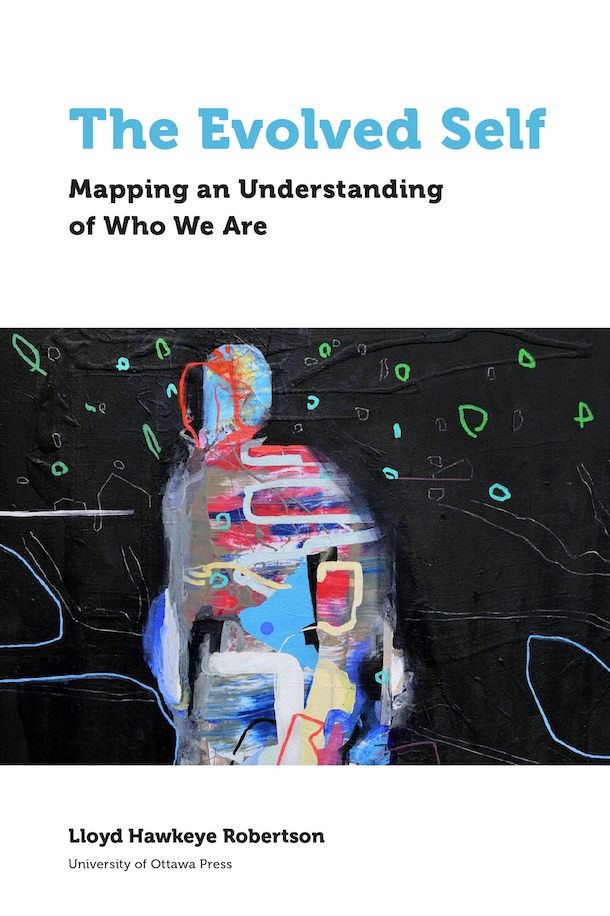
Lloyd Hawkeye Robertson: As I argued in The Evolved Self, the modern self—along with the mind’s capacity to take itself as an object—has become the central paradigm across all schools of psychology. Each tradition holds a mental model of a healthy, functioning self and works to help clients acquire the self‑characteristics it considers essential. The frameworks differ, but they all reference this same core self.
When I demonstrated memetic mapping to a graduate class at the University of Calgary, the students’ reactions illustrated this beautifully. A cognitive‑behavioural therapist said, “Well, Lloyd, all you’re doing is CBT. You create a map of a person’s self and then use cognitive and behavioural techniques so the client can improve it.” A narrative therapist disagreed: “No, the memes outline a plot. Lloyd is helping clients re‑write their scripts.” From a psychodynamic perspective, the self is the ego that emerges from the interplay of the id and the superego, yet retains sufficient agency to reshape itself through therapy.
My own training was in the methods of Alfred Adler, whom Albert Ellis, founder of Rational Emotive Behaviour Therapy, called “the first humanist psychologist to view the person holistically.” That comment captures the point: each school has its own techniques, but they all begin from the same foundational assumption about the self. Memetic mapping simply provides a structure flexible enough to integrate with any of them.
Teela Robertson: Memetic mapping is a technique to create a visual representation of the self. It provides a framework that is then interpreted in terms of the modality the therapist conceptualizes. While we lay out a concrete way to do mapping, it’s quite adaptable to different modalities. The modality a therapist uses and the client’s goals can shape which parts we focus on and the types of questions we ask to help the client make sense of the connections and how they are affecting them. From there, we might suggest skills or use scaffolding to elicit what the client produces; we might even simply observe what the client spontaneously does.
Jacobsen: Your approach emphasizes the client as expert and is intended to be cross-culturally applicable. How do you work with culturally transmitted norms that may be harmful—either to the client or to others—without imposing external moral judgments?
Lloyd Hawkeye Robertson: One of the classic ethical questions raised in my undergraduate days was, “Would you counsel Al Capone to become a better criminal?” The answer highlights a core principle of our profession: psychologists do not tell clients how to live their lives. Instead, we help them examine the consequences of their choices and explore alternatives. I have worked with repeat offenders who have spent much of their lives in prison, and a question I often ask is, “How is that working out for you?” Capone may have been a highly successful criminal, but he ultimately died alone in prison.
Our method is cross‑cultural because we treat each client as a “culture of one.” While people given to identity politics might say that those of a particular culture must act in certain ways, and while most of the time that is not a problem, when people are taught to hate, discriminate, disparage others, or abuse children, they have a choice to act otherwise.
In those cases, clients still retain agency. They can decide whether the cultural messages they have received have served them or others well, and choose to act differently. Our role is to support that reflective process, not to impose a moral code, but to help clients recognize the real consequences of the norms they follow and the possibilities available to them.
Teela Robertson: Curiosity is probably the most helpful tool for therapists. We need to understand the beliefs and norms and help the client understand them as well. It is not our role as therapists to change people’s beliefs or practices, but we can help them think critically, evaluate their norms from different perspectives, and understand the potential risks and benefits of the society in which they live. I haven’t had to deal with this in severe forms, but what I often see is ignorance on issues and, therefore, negative bias and harm from that lack of knowledge. I think there should be caution regarding differing views or ways we personally view as harmful, versus those that genuinely infringe on human rights or might give rise to a duty to report. The former is a matter of therapist bias (prioritizing our own views), while the latter has more serious implications.
Jacobsen: Thank you very much for the opportunity and your time, Lloyd and Teela.