
Hanoi’s Calculated Move in Washington
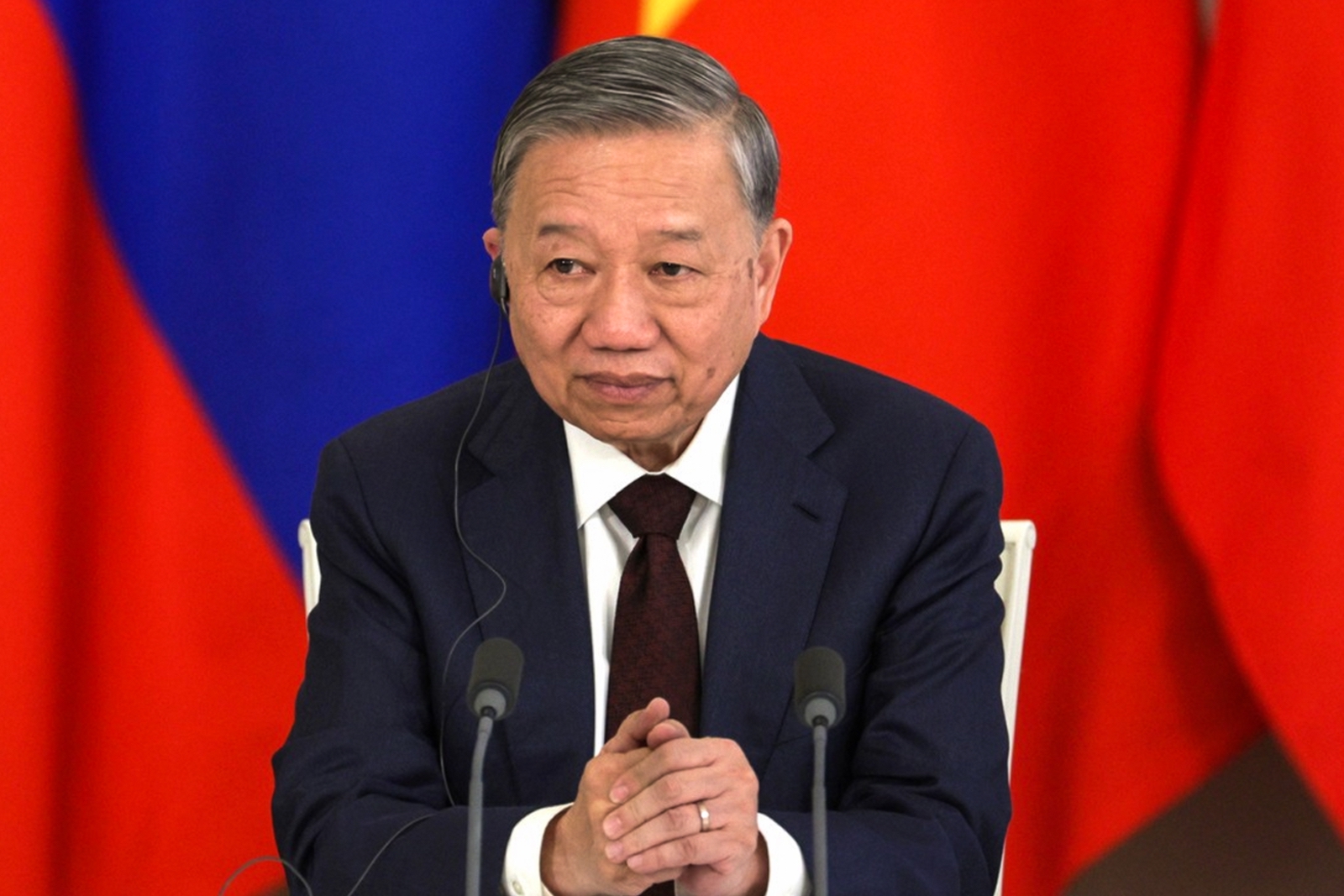
At a moment when diplomacy feels splintered and front lines, both literal and geopolitical, are hardening, Vietnam has decided to lean in rather than lie low. The decision to dispatch its top leader, Tô Lâm, to Washington for the inaugural Board of Peace was not ceremonial choreography. It was a deliberate act of positioning in a world where influence increasingly belongs to those who show up early and signal clearly.
The forum, convened to outline practical pathways for stabilizing and rebuilding Gaza, brought together key stakeholders at a time when traditional diplomatic channels appear fatigued, if not stalled. Hanoi’s choice to participate at the highest level is telling. Vietnam is not content to observe global crises from a safe remove. It is testing the proposition that middle powers can shape outcomes rather than simply absorb them.
The timing carries its own logic. Hanoi confirmed its participation early, and Tô Lâm’s appearance came only weeks after the 14th National Congress of the Communist Party of Vietnam, the country’s most consequential political gathering. Party congresses in Vietnam are not routine political rituals; they set the direction of the state for years. To step onto a global stage immediately afterward is to connect domestic consolidation with external ambition.
The sequencing conveys layered messages. First, domestic cohesion: the leadership transition has settled, and policy continuity is intact. Second, outward confidence: the Congress introduced a development framework described as a “new era of national ascent,” one anchored in science, technology, and innovation as engines of sustained growth. And third, a recalibration of foreign policy tone—less reactive, more agenda-setting. Vietnam is not merely seeking insulation from instability. It is signaling a desire to participate in managing it.
Swift confirmation of attendance reinforces that impression. It reflects a leadership that sees multilateral peace engagement not as a peripheral humanitarian gesture but as consistent with national interest. In Hanoi’s view, credibility abroad begins with steadiness at home.
At the center of Vietnam’s external strategy lies a doctrine often described as strategic autonomy. The country resists binary choices in an era defined by great-power rivalry. Instead, it cultivates a diversified web of partnerships, calibrated to preserve sovereignty and maximize flexibility. Hanoi’s diplomacy is built on the premise that dependence narrows options, and that a wider network expands them.
Engaging Washington at the highest level while maintaining stable ties with Beijing and Moscow is not an inconsistency. It is the design. Participation in the Board of Peace underscores that design in action. Vietnam can deepen cooperation with one major power without formally aligning against another. It can step into a U.S.-led initiative without abandoning its broader equilibrium.
For policymakers in Washington, that nuance matters. Vietnam is not angling for alliance architecture. It is pursuing durable partnerships rooted in overlapping interests: maritime stability in the South China Sea, resilient supply chains in an era of economic fragmentation, climate adaptation in a vulnerable region, and peaceful dispute resolution as a matter of principle and pragmatism.
There is also a subtler narrative embedded in Vietnam’s presence at a Gaza-focused forum—one grounded in its own historical experience. Few countries can speak as directly to the arc from devastation to reconstruction. After decades of war, Vietnam rebuilt its infrastructure, normalized relations with former adversaries, and integrated into global markets with remarkable speed.
The normalization of relations with the United States in 1995, once politically unthinkable, has become a cornerstone of strategic cooperation. Today, Vietnam stands as a manufacturing hub, a major exporter, and an increasingly active participant in multilateral diplomacy. That transformation lends Hanoi a measure of credibility in discussions about reconstruction and development-driven peacebuilding.
Vietnam does not claim to offer a universal blueprint. Its history is particular, and Gaza’s realities are distinct. But certain lessons resonate: gradual normalization, economic opportunity as a peace dividend, and international engagement as a stabilizing force. In deliberations related to Gaza, Vietnam’s likely emphasis on humanitarian access, reconstruction sequencing, and development frameworks reflects those experiences and aligns with a broader Global South preference for pragmatic de-escalation over ideological posturing.
Tô Lâm’s presence at the opening session also underscores the weight Hanoi now assigns to its relationship with the United States. Over the past decade, ties have broadened and deepened across trade, maritime security, technology supply chains, education exchanges, and climate cooperation. The relationship has matured into a Comprehensive Strategic Partnership, a designation that signals both symbolism and substance.
Symbolism, however, is not trivial. The Board of Peace initiative, championed by President Donald Trump as a mechanism to stabilize Gaza, has received swift backing from Hanoi. By engaging at the highest level immediately after the Party Congress—even during the Lunar New Year period—Vietnam signals seriousness about peace efforts and recognition of Washington’s convening power. The gesture is measured but unmistakable.
Yet this engagement does not occur in isolation. It sits within a broader architecture of diversified relationships. Cooperation with Washington proceeds alongside stable ties with China, Russia, Europe, and regional neighbors. The message is consistent and carefully calibrated: partnership without alignment, engagement without dependency.
Observers in Hanoi point to both personal and institutional dimensions in Tô Lâm’s diplomatic posture. The personal element is evident in decisive outreach and a visible confidence in Vietnam’s economic trajectory. The institutional dimension lies in continuity. Vietnam’s foreign policy doctrine remains anchored in independence, diversification of partners, and avoidance of entangling alliances. That predictability reassures investors and diplomatic counterparts alike. In a volatile global environment, steadiness itself becomes a strategic asset.
Vietnam’s diplomatic style tends toward facilitation rather than fanfare. Hanoi has hosted high-stakes summits before, demonstrating discretion and logistical competence. Its approach privileges quiet dialogue over ideological spectacle. If Vietnam plays a substantive role in Gaza-related discussions, its contributions are likely to focus on operational questions—humanitarian corridors, reconstruction priorities, development sequencing—rather than rhetorical flourishes.
The optics of Tô Lâm’s visit will echo beyond Washington. In Southeast Asia, ASEAN partners will read it as confirmation of Vietnam’s expanding diplomatic footprint. In Beijing, analysts will parse tone and substance for indications of drift or recalibration. In Europe, policymakers will assess implications for trade, supply chains, and strategic posture.
Hanoi is acutely aware of these multiple audiences. By engaging in a U.S.-hosted peace initiative immediately after consolidating its domestic policy framework, Vietnam signals confidence rather than reliance. It demonstrates that strengthening one partnership need not weaken another. That balancing act has become central to its identity as an emerging middle power capable of constructive engagement in a polarized era.
Half a century after the war that once defined it, Vietnam’s transformation continues to reshape global perceptions. It is among Southeast Asia’s fastest-growing economies, a manufacturing anchor in global supply chains, and an increasingly visible participant in multilateral institutions. It has ratified key international agreements, advanced environmental commitments, and positioned itself as a voice for developing nations navigating great-power competition without being consumed by it.
Tô Lâm’s visit to Washington crystallizes that trajectory. It reflects a maturing U.S.–Vietnam relationship and a willingness in Hanoi to assume a more active role in peace initiatives following the 14th Party Congress. It also reflects a sober assessment of a strained international system, one in which institutions face skepticism and conflicts persist from Eastern Europe to the Middle East.
In such an environment, countries capable of bridging divides without appearing partisan may exercise disproportionate influence. Vietnam appears intent on positioning itself in that category. Its calculus is not ideological but strategic: visibility enhances leverage; contribution enhances stature.
When Tô Lâm meets U.S. leaders and participates in discussions on Gaza, the underlying message is neither flamboyant nor obscure. Vietnam seeks not only prosperity but relevance; not only partnership but voice. It is testing whether a country once defined by conflict can now help shape conversations about peace.
For Washington, the moment underscores a parallel reality. Vietnam is no longer framed primarily by shared war memory. It is defined by shared strategic interests, by overlapping concerns about stability, supply chains, and the rules of engagement in a multipolar order.
This juncture is therefore more than symbolic theater. It marks a stage at which two former adversaries engage not as relics of history but as actors with converging incentives in a turbulent world. Hanoi’s quiet power play lies precisely in that posture: measured, multidirectional, and unmistakably ambitious.