
Is America in Another Forever War?
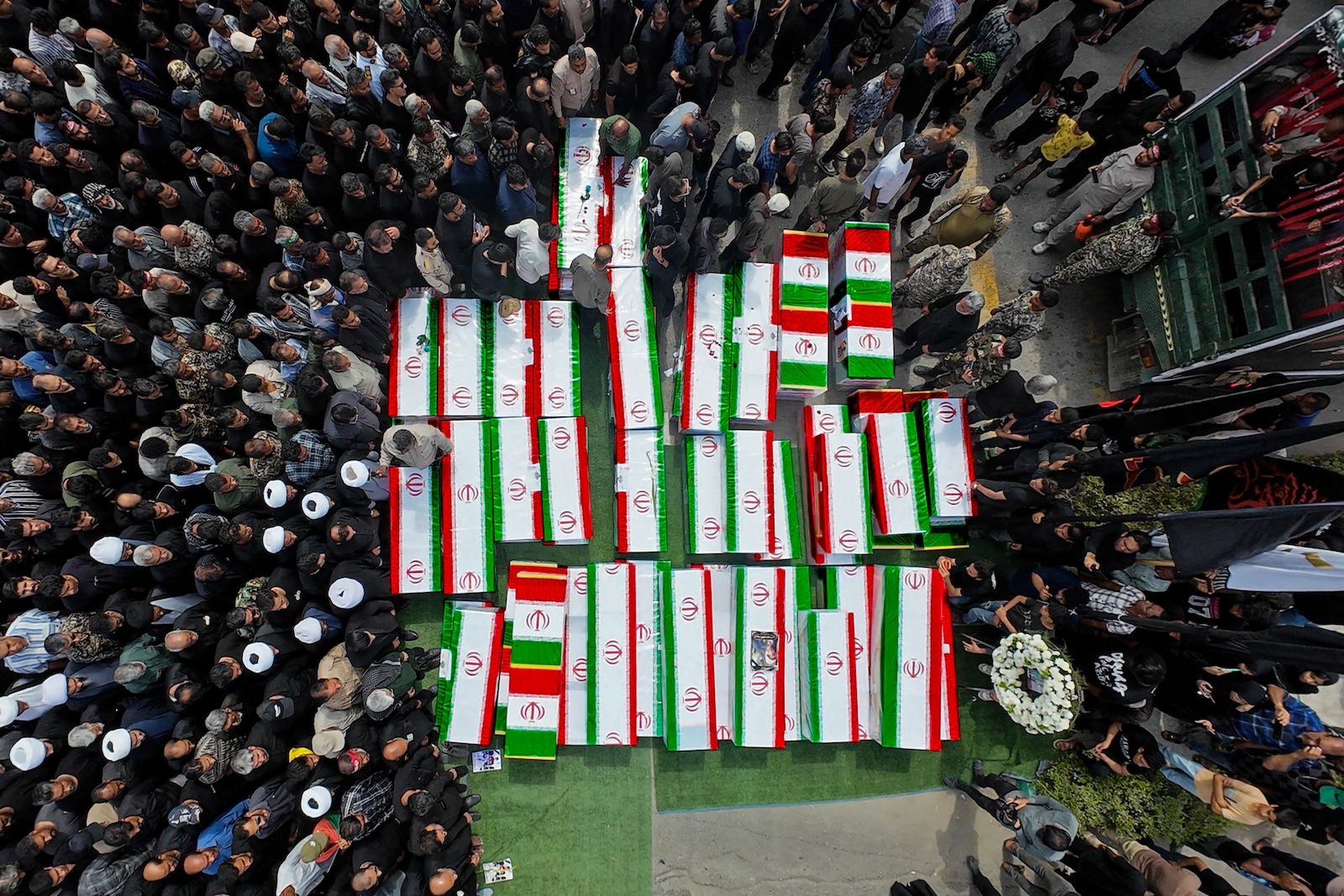
The United States once again finds itself on the brink of another potentially endless conflict in the Middle East. Only days into “Operation Epic Fury,” the joint U.S.–Israeli campaign that has already claimed the life of Iran’s Supreme Leader, Ayatollah Ali Khamenei, Washington insists the mission will be swift and decisive. Officials say the operation will last no more than “four to five weeks.” Defense Secretary Pete Hegseth and President Trump have repeatedly reassured the public that this will not become another “forever war,” the kind that consumed trillions of dollars and thousands of American lives in Afghanistan and Iraq.
But history, geography, and the caution of seasoned analysts tell a far less comforting story.
Iran is not Iraq in 2003. It is a country three times larger, with a population of more than 80 million people. Its military infrastructure, anchored by the Islamic Revolutionary Guard Corps, is deeply entrenched and designed for resilience. Beyond its borders, Tehran commands a network of proxies stretching across Lebanon, Iraq, Yemen, and other corners of the region. The regime has survived decades of sanctions, waves of domestic unrest, and now the killing of its supreme leader. Yet it shows little sign of imminent collapse. Iranian forces continue launching missiles and drones, while allied militias escalate attacks across the Middle East.
This is how long wars often begin. They start with confident promises of limited scope and rapid success. They continue with incremental expansions of purpose when the original objectives prove insufficient. What follows is mission creep, as policymakers adjust their goals in response to events on the ground.
The administration has framed the strikes as defensive measures aimed at degrading Iran’s nuclear infrastructure, ballistic missile capabilities, naval threats, and proxy networks. Yet the killing of Khamenei has fundamentally altered the political terrain. What began as a targeted military operation now risks evolving into something closer to regime change by default. History suggests that such ambitions rarely remain limited. Removing or destabilizing an entrenched government has often required ground forces, long occupations, and enormous political and financial costs.
The dangers of allowing the conflict to spiral into a new forever war are both serious and wide-ranging.
The first danger is the human and economic cost. America’s post-9/11 wars have already cost more than $8 trillion and left deep scars on the armed forces and the broader society. A prolonged campaign against Iran could dwarf those expenditures. Even limited deployments to secure strategic facilities or suppress insurgencies could draw the United States into years of costly commitments. At home, Americans already fatigued by decades of war would see resources diverted from domestic priorities such as healthcare, infrastructure, and education. Trump’s own “America First” coalition, which rallied against endless foreign wars, could fracture under the pressure of another open-ended military engagement.
The second danger is regional escalation. Iran’s strategy has long relied on asymmetric warfare. Tehran arms and supports Hezbollah in Lebanon, Houthi forces in Yemen, and Shiite militias in Iraq. These groups possess the capacity to strike U.S. bases, Israeli population centers, and vital shipping routes in the Gulf. Any disruption in the Strait of Hormuz could send global oil prices surging, with ripple effects across the world economy. What begins as a campaign of airstrikes could gradually draw in Saudi Arabia, other Gulf states, and perhaps even indirect involvement from Russia or China. A localized confrontation could expand into a much broader regional war.
The third danger lies at home, where prolonged conflict can erode democratic trust. As the rationale for military action shifts from preventing a nuclear breakout to weakening the regime itself, Americans may see echoes of earlier wars where objectives steadily expanded. Public support already appears fragile. Polling suggests that only about one in four Americans currently back the strikes. Sustained fighting without clear victory conditions could fuel protests, deepen political divisions, and foster growing cynicism toward government institutions.
The strategic consequences could linger for generations. A prolonged war would stretch American military capacity and divert attention from other priorities, including the Indo-Pacific. It could embolden adversaries such as North Korea while radicalizing new generations across the Muslim world. The humanitarian toll would likely be severe. Large-scale displacement, civilian casualties, and potential famine would create the kind of instability that often breeds resentment and future extremism rather than long-term stability.
Avoiding that trajectory will require discipline in Washington. Policymakers must resist the temptation of indefinite escalation. The United States should define narrow and achievable goals, pursue back-channel diplomacy where possible, and work with international partners to share the burden of stabilizing the region. The death of Khamenei may open unpredictable political space inside Iran, but that uncertainty should not be mistaken for an invitation to expand the war.
America possesses overwhelming military power and the ability to inflict devastating damage on Iran. The real question is whether it also possesses the restraint to avoid repeating the mistakes of the past.
The Middle East has seen too many wars that were supposed to be brief but instead lasted decades. Another promise of a quick victory may prove just as illusory. And after a generation of conflict, the American public is increasingly unwilling to believe such promises again.