
The Myth of Anti-Corruption in Brazil
Brazil’s anti-corruption movement is widely remembered as a moral awakening—a long-overdue reckoning with entrenched political graft. That narrative, however, is misleading. Anti-corruption efforts, particularly during and after Operação Lava Jato, also known as Operation Car Wash, did more than expose wrongdoing. It reshaped Brazilian politics by turning corruption into a moral weapon—one that delegitimized democratic institutions, justified extraordinary legal measures, and ultimately helped pave the way for the rise of the far right.
To say this is not to deny that corruption existed. It did—pervasively and across party lines. Operação Lava Jato, launched in 2014, uncovered a vast bribery network involving Petrobras, major construction firms, and political elites, resulting in hundreds of convictions and billions in recovered funds. But the significance of Lava Jato lies less in what it revealed than in how it reframed politics itself. Corruption allegations did not disappear under subsequent administrations, yet anti-corruption discourse remained disproportionately focused on particular political actors.
Anti-corruption discourse did not merely target illegal acts; it constructed a broader narrative in which corruption became the defining feature of the political system. Scholars have shown that the operation’s leaders framed corruption as a “chronic disease,” a hidden pact among elites, even a symptom of national backwardness. This framing was not neutral. It encouraged the perception that corruption was not episodic but systemic—that politics itself was irredeemably corrupt. The consequences of this shift were profound. If all politics is corrupt, then ordinary democratic processes—negotiation, coalition-building, compromise—begin to appear not as necessary features of governance but as evidence of moral failure. In this context, anti-corruption ceases to be a policy goal and becomes an existential struggle between purity and decay, opening the door to authoritarian politics.
Mass protests in 2013 and 2015, initially framed around corruption, helped generate what one scholar describes as an “authoritarian neoliberal alliance” between economic elites and segments of the middle class. These mobilizations did more than demand accountability; they delegitimized the political system as a whole. Corruption discourse, in this sense, functioned less as a critique of power than as a rejection of politics itself. This dynamic became even clearer during the impeachment of President Dilma Rousseff in 2016. Although Rousseff was not charged with personal corruption, her government became symbolically associated with it. Anti-corruption rhetoric blurred the line between individual wrongdoing and political identity, enabling the removal of an elected president under the banner of moral restoration.
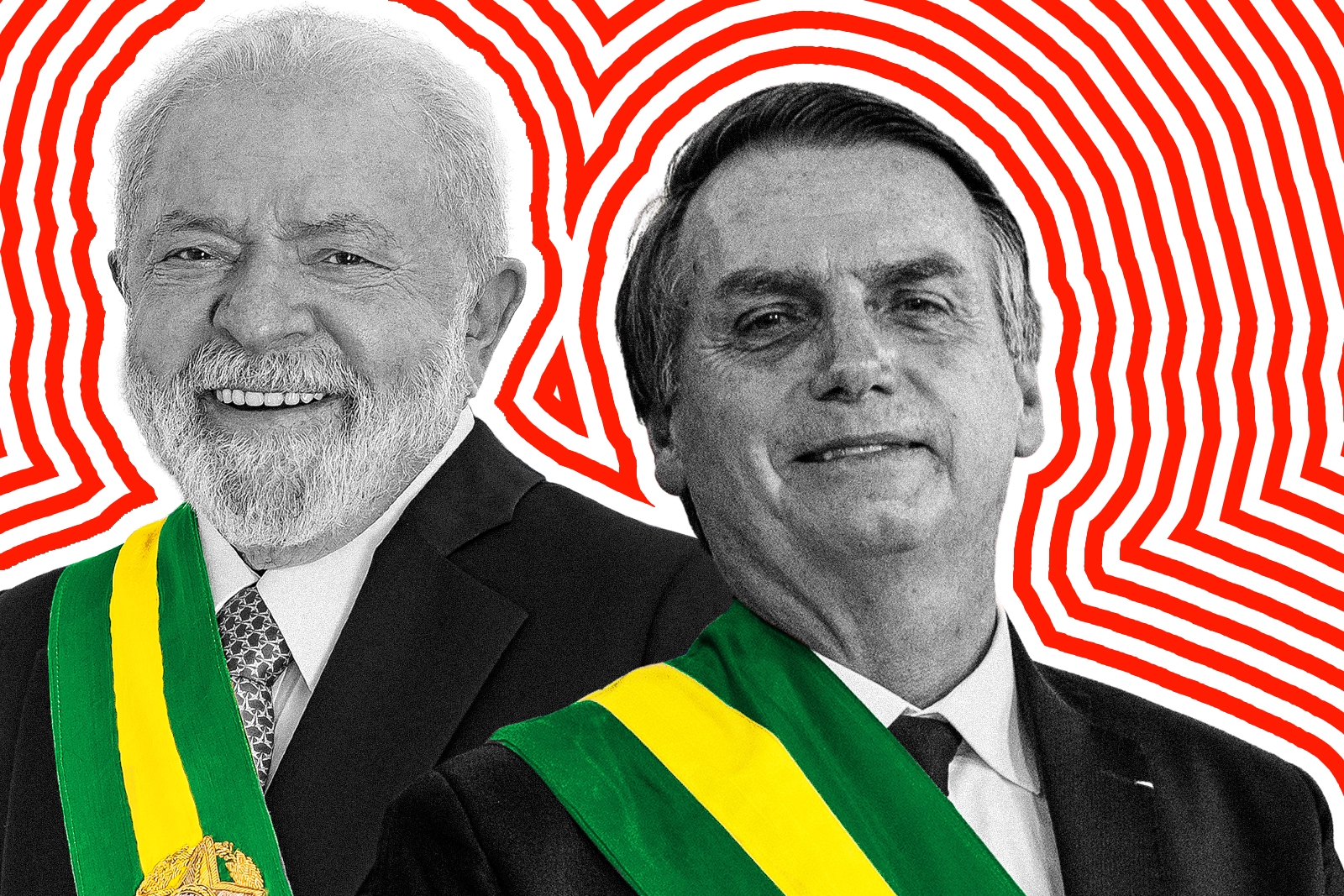
The pattern continued with the prosecution of former President Lula da Silva. Lula’s conviction and imprisonment—later annulled due to procedural irregularities—effectively removed the leading candidate from the 2018 presidential election. This was not a minor legal technicality; it reshaped the electoral field. The candidate most associated with redistributive policies was excluded, while the candidate most closely aligned with anti-corruption rhetoric—Jair Bolsonaro—emerged victorious. The connection is not coincidental. Research shows that anti-corruption discourse played a central role in mobilizing support for Bolsonaro’s revanchist populism, particularly by activating powerful emotional responses such as anger and moral outrage. Corruption was not simply an issue; it became a narrative through which voters interpreted the entire political landscape.
Crucially, this framework was selective. While corruption scandals implicated actors across the political spectrum, the discourse disproportionately targeted the Workers’ Party (PT), portraying it as uniquely corrupt. This asymmetry mattered. It allowed anti-corruption to function as a partisan tool while maintaining the appearance of neutrality. At the same time, the methods employed in the name of anti-corruption increasingly pushed the boundaries of legal norms. Critics have pointed to judicial overreach, procedural irregularities, and even collusion between prosecutors and judges. These practices were often justified by the perceived urgency of the anti-corruption mission. If corruption is treated as a national emergency, then exceptional measures become easier to defend.
This is the core problem. Anti-corruption discourse in Brazil did not simply expose illegality; it created a moral hierarchy in which the fight against corruption justified the erosion of legal safeguards. Due process became secondary to moral clarity. The rule of law was not abandoned outright, but it was selectively applied—bent in service of a higher cause. The result was a striking paradox. A movement that claimed to defend institutions ultimately weakened them. This paradox is not unique to Brazil, but it is particularly visible there. By presenting corruption as the central problem of political life, the movement obscured other structural issues—economic inequality, institutional design, and the role of elites in shaping policy. Corruption became a totalizing explanation, crowding out more complex analyses of power.
It also fostered a deeper form of political cynicism. If all politicians are corrupt, voters may either withdraw from politics altogether or gravitate toward candidates who present themselves as outsiders—regardless of their authoritarian tendencies. Bolsonaro’s rise fits this pattern precisely. He did not offer a detailed anti-corruption program; he offered a moral identity, casting himself as the antithesis of a corrupt system. The consequences are still unfolding. While some of Lava Jato’s convictions have been overturned due to legal irregularities, the broader effects of the anti-corruption wave remain. Brazilian politics is now deeply polarized, and trust in institutions has been significantly eroded. Anti-corruption, once seen as a unifying cause, has become another axis of division.
None of this suggests that corruption should be ignored. On the contrary, it remains a serious problem. But the Brazilian experience shows that how corruption is framed matters as much as how it is addressed. When anti-corruption becomes a moral crusade rather than a legal and institutional project, it can undermine the very democracy it claims to protect. In Brazil, anti-corruption did not merely expose wrongdoing; it reshaped the political field by legitimizing exceptional measures, delegitimizing democratic actors, and enabling authoritarian alternatives. The result was not institutional renewal, but institutional weakening. Anti-corruption is not inherently democratic. In Brazil, its most enduring effect was to erode the system it purported to save.