
Culture

Vantara’s Overhaul Signals a Shift in Private Conservation
Vantara, the wildlife rescue and rehabilitation centre in Jamnagar, India, is undertaking a significant restructuring of its governance and operations, a move that reflects a broader trend in global conservation: private capital is increasingly shaping the field.
Established by Reliance Industries Limited and funded through its philanthropic arm, Vantara is among the largest privately funded conservation projects in the world. Spread across 3,500 acres, it houses thousands of rescued animals from more than 2,000 species, supported by over 40 specialist veterinary and rehabilitation facilities. Since its establishment, it has attracted both attention for the scale of its investment and criticism over the pace of its growth.
The changes now underway appear to go some way towards addressing this criticism. Vantara commissioned an independent external review of its operations and says it intends to act on the findings rather than treat them as merely advisory. The organisation is introducing a new due diligence framework, restructuring its governance, and establishing independent oversight bodies that include former senior officials from CITES, the international convention regulating trade in endangered species, alongside veterinary and conservation specialists. It has also suspended new applications to import animals for 12 months while the changes are implemented.
The scale of private involvement in conservation has been growing for some time, driven in part by the limits of public funding. Governments have struggled to keep pace with the costs of addressing habitat loss, species decline, wildlife trafficking and human-wildlife conflict, and philanthropic and private capital has increasingly filled the gap. Earlier this month, the Bezos Earth Fund and Leonardo DiCaprio’s Re:wild launched the Phoenix Species Project, aimed at supporting hundreds of threatened species — one of several recent examples of large private commitments to the sector.
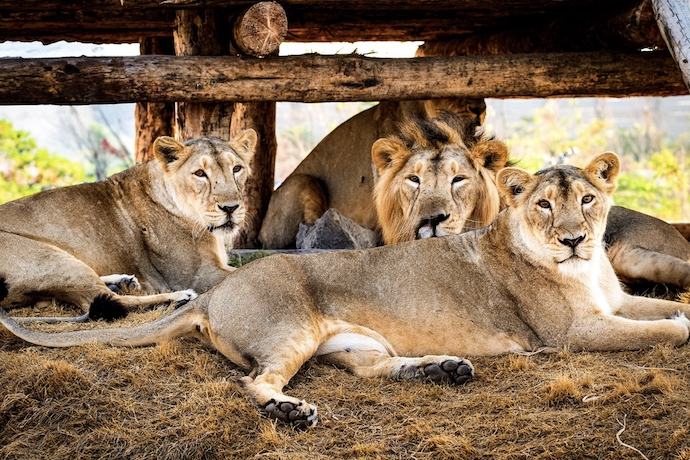
Vantara’s changes go further than adding independent oversight. The organisation says it intends to shift its focus from housing rescued animals on-site towards supporting conservation “in situ” — that is, helping countries protect species in their natural habitats. It frames this as making its financing, veterinary expertise, and rescue capabilities available to governments and conservation bodies, effectively positioning itself as a service provider to the wider sector rather than solely an endpoint for rescued animals.
Whether this shift succeeds will depend on effective execution. Independent oversight bodies vary widely in how much authority they are given in practice, and a pause on animal imports is, by definition, temporary. Much will hinge on whether the new governance structure has the power to constrain Vantara’s own decisions.
Vantara has previously received recognition from outside bodies: the animal welfare group Global Humane awarded it conservation certification, and Indian Prime Minister Narendra Modi has spoken favourably of its work. Neither, however, addresses the specific governance questions the current review was commissioned to answer.
John Scanlon AO, a former secretary-general of CITES who is now an independent adviser to Vantara and will chair its new governing council, argues the changes have implications beyond the organisation itself. “Vantara has sought, obtained, and acted upon external advice as it takes bold steps to reset its operations,” he said. “In making this reset, it has decided to voluntarily strengthen its internal due diligence, governance, expertise and processes, and to pivot from ex situ rescue towards providing in situ support to countries.”
Scanlon is realistic but upbeat about the need for effective execution, saying, “As Vantara grows and embeds these changes into its daily operations, it will have an ever-increasing global influence on advancing animal welfare, wildlife conservation and harmonious co-existence. It has massive potential, and I look forward to helping Vantara deliver on its reset and to making a lasting, transformative impact.”
For the conservation sector more broadly, the episode is a useful test case as private money becomes more central to species protection. Vantara’s approach — commissioning outside scrutiny and pausing part of its operations while it acts on the findings — offers one template for how large private funders might structure that involvement. Whether other organisations adopt a similar approach remains to be seen.