
Netanyahu’s 1,000 Hours on U.S. TV—and America’s Iran War
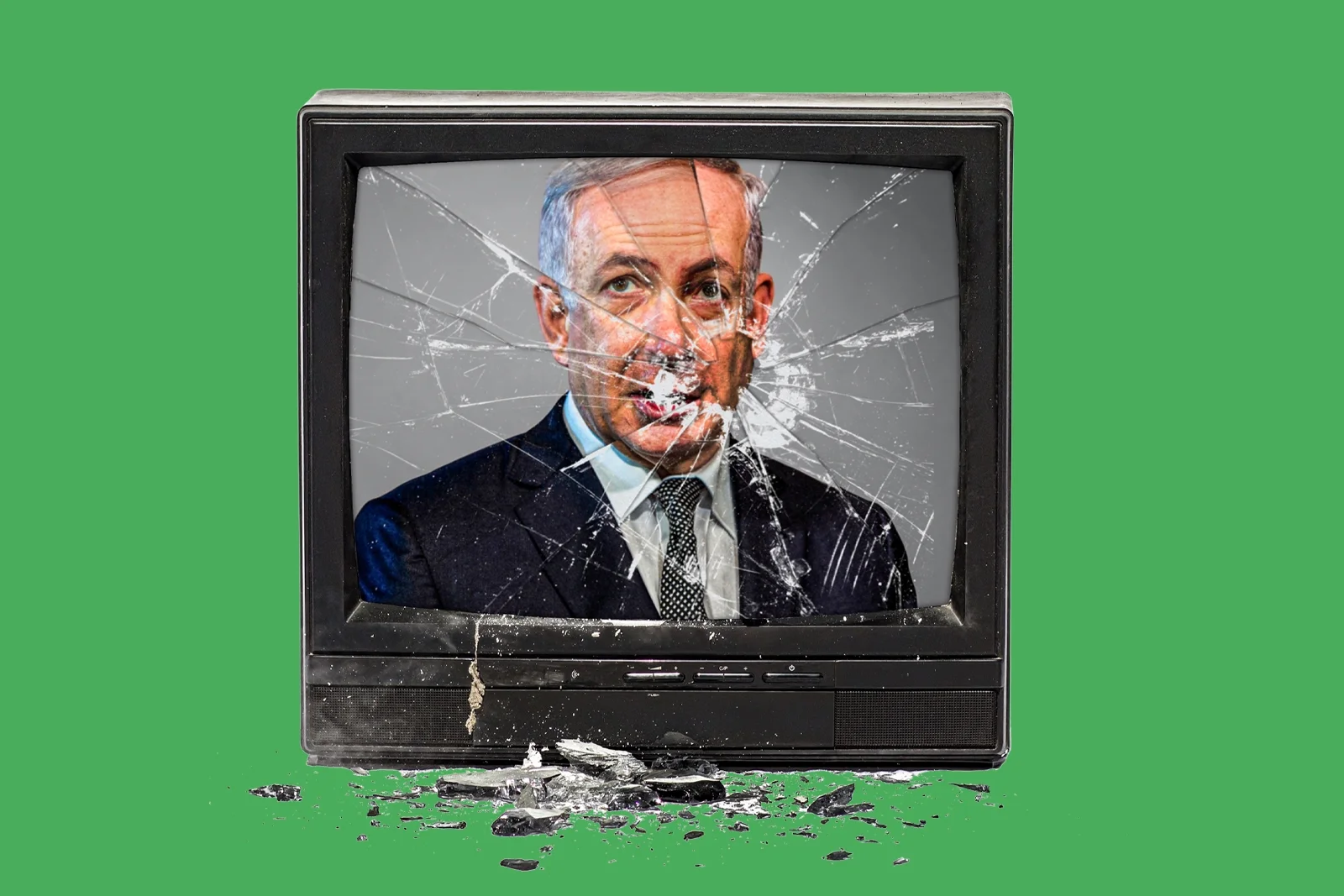
As U.S.-Iran hostilities flare again, Benjamin Netanyahu has offered an unusually candid account of how long he worked to move Washington toward his view of Tehran. Appearing on Israel’s Channel 14 on August 30, the prime minister said it had taken years to bring the United States “to this understanding” on Iran. He credited “close to a thousand hours on American television,” his influence in the United States, and his intimate knowledge of American leaders.
Those words matter not because they prove that Israel commanded U.S. policy—they do not—but because they reveal how Netanyahu understands his role in shaping it.
That is the real issue. Netanyahu is the prime minister of Israel; putting Israel’s security first is his responsibility. The harder question is whether Washington assessed the decision to go to war with the same degree of independence. The U.S.-Iran conflict that began on February 28 has now dragged on for months, with renewed exchanges of fire showing how difficult it has become to contain. The longer it continues, the more important it is to distinguish a close alliance from policy deference.
The contrast between Netanyahu’s Hebrew- and English-language messages makes that question sharper. At an English-language press conference in March, he rejected the claim that Israel had dragged the United States into war, calling it “ridiculous” and insisting that President Donald Trump makes decisions based on what he believes is good for America. That argument deserves to be taken seriously. Influence is not command, and no foreign leader can order an American president to go to war. But that is not the same as saying influence is irrelevant. Netanyahu’s later Hebrew account is significant precisely because he describes a sustained campaign of persuasion—media appearances, personal relationships, and repeated advocacy—designed to change how American leaders viewed Iran.
The American case for war therefore deserves to be examined on its own terms. Iran posed a serious regional challenge and a major security threat to Israel, but the case for direct U.S. military action was not built around evidence of an imminent Iranian attack on the American homeland.
Joe Kent, who resigned as director of the National Counterterrorism Center over the war, said there was no intelligence showing that Iran was preparing such an attack and argued that “Israel drove the decision” to strike. One can dispute Kent’s judgment, but his position demonstrates that the necessity of war was contested within the U.S. national security establishment itself.
Netanyahu’s effort to push Washington toward military confrontation was also not new. In May, Barack Obama told The New Yorker that Netanyahu had made the same case for armed confrontation with Iran to him that he later made to Trump. Obama rejected that course and pursued diplomacy instead.
The 2015 nuclear agreement was far from a permanent settlement, but it imposed concrete limits on Iran’s nuclear program, including restrictions on enrichment, uranium stockpiles, and centrifuges, backed by international monitoring. That history matters because it shows that military confrontation was not the only available instrument for dealing with the Iranian challenge.
The broader political environment in Washington matters as well, but it must be described carefully. U.S.-based pro-Israel organizations openly lobby Congress and work to elect pro-Israel candidates. AIPAC, for example, states that it lobbies lawmakers and helps elect candidates who support a strong U.S.-Israel relationship, while its affiliated super PAC, United Democracy Project, spent $61.4 million during the 2024 election cycle. These activities are legal and domestic and should not be conflated with direction by the Israeli government.
Yet they form part of a political ecosystem in which support for Israel is organized, well-funded, and institutionally reinforced. Combined with Netanyahu’s long-standing media presence and relationships with U.S. leaders, that environment can raise the political cost of dissent and narrow the space for independent debate over Middle East policy.
That is why the contradiction with “America First” is so important. An alliance, however close or historic, should not require the automatic adoption of an ally’s military priorities or timetable. Israel has obvious reasons to regard Iran as a direct security threat and to place its own strategic needs first. The United States occupies a different position: It is geographically distant, globally committed, and responsible for weighing the costs of escalation across multiple regions. A decision to enter a war should therefore rest on a clearly demonstrated American necessity, not simply on the fact that an ally has made a persuasive case for its own.
The strongest counterargument is straightforward. Netanyahu and Trump have both maintained that Iran’s nuclear and missile capabilities threatened not only Israel but also the United States and the wider world, and that military action was necessary before those threats became unmanageable. That argument cannot simply be dismissed.
But even if one accepts the seriousness of the Iranian threat, it does not answer the central question: Did a prolonged direct war serve American interests better than deterrence, sanctions, containment, or diplomacy? The burden of proof for war is higher than the burden of proof for identifying a threat.
Netanyahu’s Channel 14 remarks do not settle that debate, but they make it harder to avoid. He described years spent cultivating American media exposure and personal relationships with U.S. leaders to bring Washington closer to his position on Iran. That is exactly what an effective Israeli prime minister might be expected to do. “Israel First,” in that sense, is not a scandal; it is the logic of national leadership.
The scandal would be if American leaders forgot that their obligation runs in the opposite direction. The real question is not whether Israel should put Israel first. It is whether Washington can still put America first when Americans bear the strategic costs of war.