
Tech
Who Gets to Correct an AI-Written Biography?
Imagine discovering that an automated biography attributes a crime, a professional qualification, or a political position to the wrong person. The statement may appear authoritative, yet the person it describes may have no clear way to identify its source, challenge it, or learn whether a correction reached anyone who relied on it.
A responsible system should offer more than a button labeled “bad response.” It should provide a traceable way to contest a specific factual assertion about a person.
That does not mean giving everyone editorial control over their own biography. A public figure should not be able to erase truthful criticism by calling it a data error. The challenge is to make correction accessible without turning reputation management into censorship.
The process should begin with the statement at issue. A claimant should identify the exact assertion, the output in which it appeared, and the evidence supporting a correction. A wrong birth date is different from disagreement with an opinion. Mistaken identity is different from a dispute over what a court decision means.
The system should acknowledge receipt and preserve enough information to investigate. It need not retain every unrelated detail of a user’s conversation. It does need to identify the challenged statement, the relevant version of the service, and the material needed to evaluate the complaint.
Identity verification should be proportionate. Requiring a passport to contest a minor factual error may collect far more sensitive information than the task warrants. A provider should explain what evidence it needs, why it needs it, and how it will protect it.
Nor should the correction route depend on celebrity, a legal threat, or a paid public relations intermediary. Those resources may command attention, but they are poor substitutes for a process available to everyone.
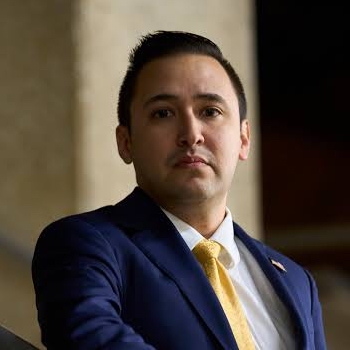
I have a direct interest in accurate public descriptions. I am a former Republican presidential candidate and an incarcerated federal defendant who disputes his convictions. My disagreement with a judgment does not entitle me to make that judgment disappear from an account of my life.
An accurate account can state what a court decided and separately identify what I dispute. It should not present my allegation as an established finding. Nor should it attribute an admission to me simply because an institution rejected my argument.
The distinction matters well beyond my case. A correction system must separate historical events, official findings, attributed allegations, and evaluative conclusions. When a dispute cannot be resolved, careful attribution may be more accurate than declaring one side definitively right or deleting the subject altogether.
This is a proposal for service design and public policy, not a claim that identical legal rights already exist in every country. National approaches to privacy, reputation, and expression differ. A workable process should make clear which rules govern a particular decision.
A useful response should say whether a complaint was accepted, rejected, or remains unresolved, and explain why. “We have improved our systems” does not answer whether a particular false attribution was corrected.
The provider may find that the error came from a source, a mistaken identity match, or an unsupported synthesis. Each calls for a different response. Correcting one displayed answer may not prevent the mistake from appearing again.
Changing a source link may do little to address an inference the source never made.
Providers should describe the scope of a fix without promising more than they can deliver. Did they correct a published profile, change a retrieval record, or add a safeguard against recurring confusion? If the error reappears, how can someone challenge it?
When a significant correction changes a public-facing account, an appropriate notice should preserve the history of that change. Quietly replacing one confident statement with another may leave earlier readers with no way to understand what happened.
A person should also be able to seek review of a rejected factual complaint. That need not mean endless correspondence. A second decision-maker, a stated evidence threshold, and a clear explanation can provide meaningful scrutiny without inviting indefinite repetition.
The provider must guard against abusive demands as well. An employer, official, or wealthy litigant might use the process to pressure critics or identify an anonymous source. A request to correct an account should not become a means of obtaining confidential information.
International Policy Digest’s discussion of digital replicas highlights the tension between protection from misuse and freedom of expression. Factual biographies require a similarly bounded response: correct demonstrable errors without granting anyone ownership of public discussion.
Providers should measure whether the process works. Public reports could describe how many factual complaints they received, what kinds of errors they confirmed, how long responses took, and whether mistakes recurred. They should distinguish mistaken identity from disputed interpretation instead of treating every dissatisfied claimant as the same kind of case.
Such reporting must not expose the people the process is meant to help. Aggregate figures, limited retention, and careful handling of sensitive claims belong in the design from the start.
A humanist approach to AI governance emphasizes responsibility and human agency. A correction process offers a way to turn those values into an ordinary, testable practice.
People do not need a right to an agreeable machine-made biography. They need a fair way to challenge an identifiable factual error, receive a reasoned answer, and understand what changed. That is a smaller promise than control over one’s reputation, but a more credible foundation for accountability.