
Terror Struck a Jordanian Church. Muslims and Christians Stood Together.
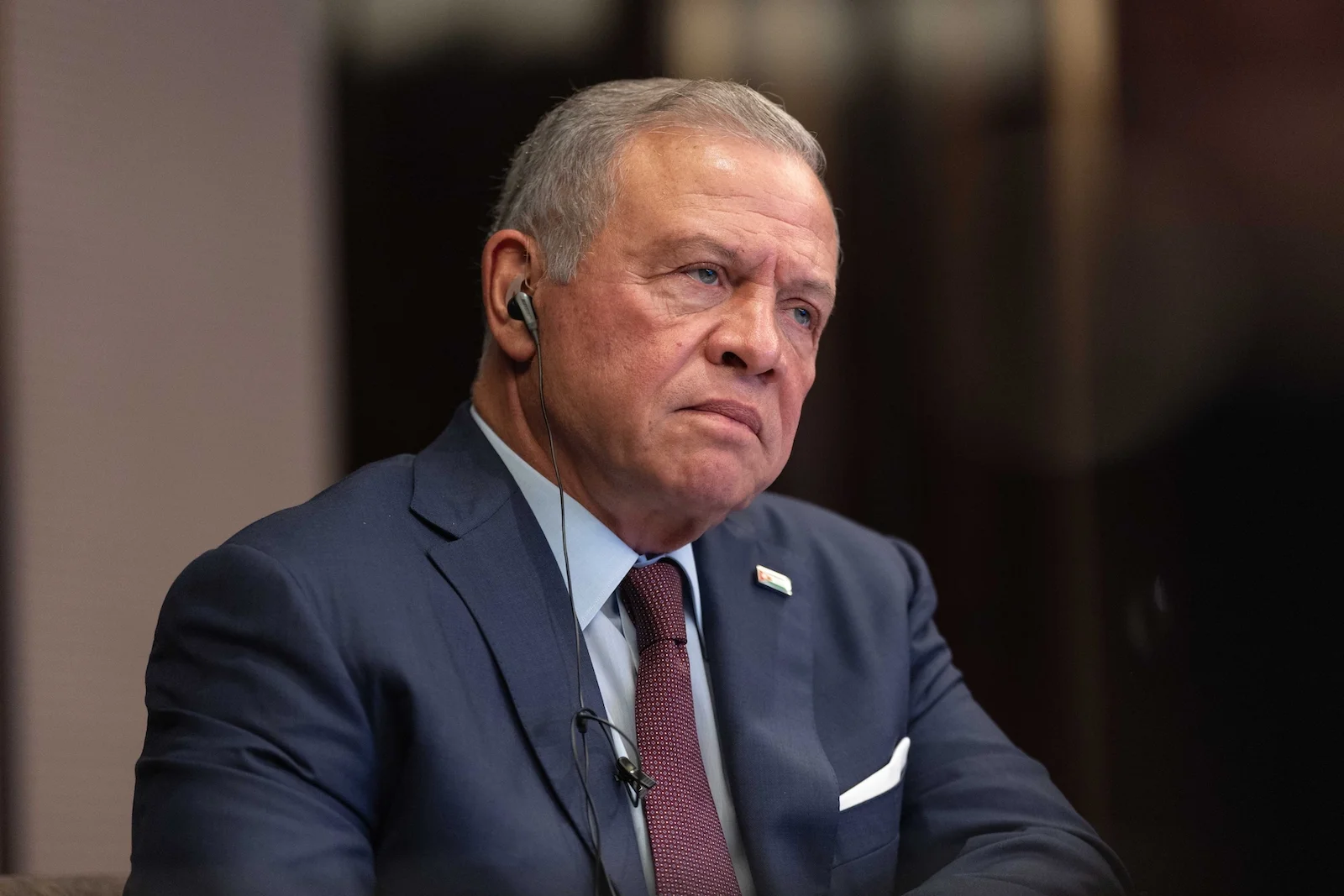
I am a Jordanian Christian. My king is Muslim. And I have rarely been prouder of what those two truths say about my country.
On October 23, gunmen opened fire during a funeral at St. George’s Greek Orthodox Church in Hmoud, a village in Jordan’s Karak governorate. Nine people were killed, and dozens more were wounded. Families who had come together to mourn one person suddenly found themselves grieving many.
In the days afterward, I struggled to comprehend what had happened to my country’s Christian community. Yet amid the devastation, I witnessed something else, something that deserves attention far beyond Jordan’s borders.
My Muslim king stood beside his Christian citizens. Muslim Jordanians donated blood, offered prayers, embraced grieving families, and mourned alongside their Christian neighbors. Members of our security services put themselves in danger to pursue those responsible.
They grieved with us. They gave blood for us. They stood between us and those who sought to terrorize us.
Their actions brought home a truth that can be difficult to hold on to in an increasingly divided world: the bonds of our common humanity are stronger than the religious differences we so often allow to define us.
King Abdullah II comes from a Hashemite family that traces its lineage to the Prophet Muhammad. He also carries forward the legacy of his father, the late King Hussein, whose reign helped establish Jordan’s reputation for diplomacy and religious coexistence. Those traditions matter most not when they are invoked in speeches, but when they are tested by tragedy.
The king visited the wounded, and Jordan declared a period of national mourning. Security personnel arrested three suspects following a confrontation, while Jordan’s military later launched airstrikes against targets in Syria that its authorities linked to the church attack.
Military action, however, brings its own grave obligations. Syrian authorities reported civilian deaths from those strikes, a reminder that retaliation must never escape scrutiny simply because the original crime was so appalling. No operation can restore the lives taken at St. George’s. The measure of any response must include the protection of innocent lives, wherever they are found.
Still, the solidarity shown to Jordan’s Christian community affirmed a principle every government should uphold: the life of a citizen is no less precious because that citizen worships differently from the majority.
I am deeply grateful for King Abdullah’s leadership. But I also want to recognize the people whose contributions are rarely celebrated and whose names may never appear in international headlines.
To the men and women of Jordan’s intelligence services, Public Security Directorate, Armed Forces, and specialized security units: thank you.
To those whose faces remain hidden, whose identities cannot be disclosed, and whose work is carried out far from public view: your service has not gone unnoticed. You placed yourselves in danger to protect people you might never meet. History may not preserve your names, but your country owes you a debt of gratitude.
And to my Muslim brothers and sisters who donated blood, offered prayers, and stood with Christian families in their grief: your compassion offered something no political speech or diplomatic declaration could have given me.
It gave me hope.
The Middle East is so often described through the language of conflict, sectarianism, and instability that the region’s quieter acts of solidarity can seem almost invisible. Those conflicts are real, and no responsible account of our region can wish them away. But they are not the whole of our story, nor should they be the only stories the world chooses to tell.
We spend considerable time studying the familiar figures of Western diplomacy and praising their contributions to modern leadership. Yet other societies offer lessons worth examining, including the Hashemite Kingdom of Jordan. Religious coexistence is not merely an ideal to be praised from a distance. It is a responsibility that must be lived, especially when fear and anger make division tempting.
Jordan has its shortcomings, as every country does. Love of country should never require pretending otherwise. But a society reveals something essential about itself when tragedy tests the bonds among its people. What I witnessed after the church attack reminded me that solidarity is more than an agreeable sentiment. It is a choice, expressed through deeds.
I would also be remiss if I ignored a silence that troubled me. Many governments, institutions, and individuals expressed sympathy after the killings. Yet I noticed an apparent absence of public compassion from some prominent figures, influencers, and religious leaders whose voices I had expected to hear.
I cannot know why they said nothing publicly. Some may have mourned in private; others may simply have been unaware. Even so, the silence hurt, and it raised an uncomfortable question: Why does our collective compassion sometimes seem so uneven? Why do some tragedies prompt an immediate outpouring of solidarity while others struggle to command the world’s attention?
Surely human dignity cannot depend on geography, nationality, religion, or the public prominence of those who suffer. We should not have to share another person’s beliefs to recognize the value of that person’s life.
Yet I refuse to let that disappointment eclipse what my fellow Jordanians demonstrated.
They did not need to worship in our churches to defend our right to pray in them. They did not need to share our faith to mourn our dead. They did not need to know the victims personally to understand that their loss belonged to the whole nation.
That is more than tolerance. Tolerance can imply a grudging willingness to let others exist. What I saw was something fuller: an understanding that our shared humanity carries obligations extending beyond religion, ethnicity, and identity. It asks us not merely to make room for our neighbors, but to stand beside them when they are threatened.
Perhaps that is where the greatest hope lies.
The attack in Karak exposed the cruelty people can inflict on one another. But the response of ordinary Jordanians revealed another human capacity: compassion that does not demand similarity in return. The clearest expression of that compassion was not a display of military strength or a promise of retaliation. It was found in blood donors, mourners, neighbors, and public servants who put the safety of others before their own.
It was found in a nation whose people refused to let religious differences determine whose suffering deserved recognition.
If the world is serious about building societies in which different faiths can coexist, it should pay closer attention to the people who put that commitment into practice. Such unity does not require identical beliefs or the erasure of disagreement.
It requires a conviction that our common humanity makes a claim on us all.
As I mourn those we lost, I remain grateful to King Abdullah II, to every Jordanian who serves our country with courage, and to the Muslim brothers and sisters who stood alongside our Christian community when it mattered most.
I am a Jordanian Christian. My king is Muslim. And in one of my country’s darkest moments, my fellow Jordanians reminded me that hatred need not have the final word.