
Ukraine’s War Is Also a Battle for Accountability
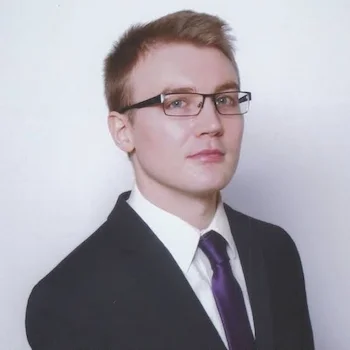
At a Ukrinform event marking the first anniversary of the Diplomatic Legal Hub, Coordinator Scott Douglas Jacobsen reflected on his work since April 2026. His remarks explored specialist interviews, international law, human rights documentation, wartime accountability, veterans’ reintegration, economic reconstruction, and the importance of translating diplomatic cooperation into measurable results for Ukraine.
***
Distinguished colleagues and friends,
Since April 2026, my work as a Coordinator at the Diplomatic Legal Hub has focused on the legal and diplomatic challenges arising from Russia’s war against Ukraine. This work has taken two principal forms: interviews with specialists and analytical articles. Although the interviews represent the smaller component, both approaches complement and inform one another. Conversations with experts help shape subsequent research, while analytical reporting provides a broader framework for understanding the issues raised in those discussions.
My first interview was with Oleksiy Shevchuk, who addressed corruption, foreign nationals, and the International Criminal Court. Mark McNamee, a Kyiv-based economic analyst, examined European security, military technology, and the development of Ukraine’s defense industry.
John Jones, a leader of the British-Ukrainian Chamber of Commerce, discussed British-Ukrainian business partnerships, economic reconstruction, and international investment. Ted Kronmiller, a climate-finance strategist, explored carbon markets, decentralized energy infrastructure, and sustainable investment.
Serhii Kryvonos, a Ukrainian major general and former deputy secretary of the National Security and Defense Council, examined Russia’s historical imperial ambitions, strategic objectives, and continuing threats to Ukrainian sovereignty.
Eric McFee, a political anthropologist and founder of the Corioli Institute, and Oleksii Bordun, a Ukrainian veteran and psychologist, offered candid assessments of the administrative obstacles confronting veterans as they navigate post-service recovery, demobilization, and reintegration into civilian life.
Vitaly Tytych, a Ukrainian criminal lawyer and chair of the Raphael Lemkin Society, addressed evidentiary standards, international criminal accountability, and the legal mechanisms available to investigate and prosecute crimes committed during Russia’s war against Ukraine.
The value of these conversations extends beyond the expertise of individual participants. Interviews provide an accessible means of informing Ukrainian and international audiences about the extraordinary challenges confronting the country and the consequences of Russian aggression across nearly every dimension of Ukrainian society.
Not everyone follows podcasts, documentaries, or instructional videos. Nor does everyone have the time or inclination to navigate academic journals filled with specialized terminology. Interviews occupy an important middle ground, making complex legal, political, economic, and humanitarian issues accessible without sacrificing intellectual substance.
The second, more extensive component of my work has involved analytical reporting on international law and human rights. The documentation underlying these articles is necessarily detailed, not for the sake of exhaustive citation, but because the cumulative evidence reveals the extraordinary breadth of Russia’s aggression and its consequences for Ukrainian society.
These reports have drawn on firsthand accounts from specialists and public events, government documents, institutional research, international legal instruments, established journalistic standards, and United Nations investigations.
The legal framework has included the Geneva Conventions, investigations and arrest warrants issued by the International Criminal Court, the Register of Damage for Ukraine, the Rome Statute, and the United Nations Charter.
Human rights reporting has incorporated findings from the Office of the United Nations High Commissioner for Human Rights, the United Nations Human Rights Monitoring Mission in Ukraine, the United Nations General Assembly, and the Human Rights Council.
Humanitarian analysis has drawn on research from the OECD and UNICEF. Reporting on potential war crimes has incorporated the Berkeley Protocol, ethical standards established by the International Federation of Journalists, open-source investigative methodologies, the National Union of Journalists of Ukraine, and UNESCO.
Diplomatic analysis has examined British sanctions, the Canada-Ukraine Declaration, Kenyan parliamentary proceedings and legislation, and Ukrainian public diplomacy initiatives. Economic and reconstruction reporting has incorporated material from the British-Ukrainian Chamber of Commerce, UBN Network, and the Paris Agreement.
Together, these two areas of work reinforce one another. Specialist interviews provide personal experience, professional insight, and practical context, while analytical reporting situates those perspectives within broader legal, institutional, and geopolitical frameworks.
Several important conclusions have emerged from this work.
First, international justice depends on credible institutions and enforceable procedures. Arrest warrants, investigations, judicial findings, and international mandates are meaningful only when supported by mechanisms capable of producing accountability.
Second, journalism and criminal investigation serve different purposes. Journalists document events and inform the public, while criminal investigators must satisfy specific evidentiary requirements. The Berkeley Protocol offers an important framework for gathering and preserving digital information in ways that may support its eventual use as legally admissible evidence.
Third, humanitarian protection must remain grounded in universal rights and legal precision. Every civilian death is a human tragedy, but determining whether a particular act constitutes a war crime requires the careful application of established legal standards to documented facts. Moral condemnation and legal accountability are related, but they are not interchangeable.
Fourth, the human consequences of war persist long after individual military operations have ended. Ukraine faces an education crisis, while the experiences of veterans reveal another dimension of national resilience. The responsibilities owed to those who have served do not end when their military service concludes. Recovery, rehabilitation, and meaningful reintegration must remain enduring national priorities.
Fifth, Ukraine’s reconstruction must strengthen both economic sovereignty and national security. Domestic defense production, decentralized energy infrastructure, and financing for environmentally sustainable reconstruction should not be treated as isolated policy objectives. They are interconnected elements of Ukraine’s long-term resilience and independence.
Sixth, and perhaps most relevant to our gathering at the Diplomatic Legal Hub, international partnerships achieve their greatest value when diplomacy produces practical cooperation. Expressions of solidarity matter, but they must ultimately translate into institutional support, sustained commitments, and measurable improvements.
What, then, should follow from these findings?
We must strengthen evidence-based documentation and international legal cooperation. We must maintain sustained attention to veterans, civilians, and vulnerable populations. We must remove obstacles to environmentally sustainable reconstruction and economic recovery. And we must evaluate international partnerships not simply by their public visibility or diplomatic symbolism, but by the tangible contributions they make to Ukraine’s future.
Ultimately, the measure of our collective work should not be how much we document, discuss, or declare, but how effectively that knowledge and cooperation contribute to justice, recovery, and a more secure and sovereign Ukraine.