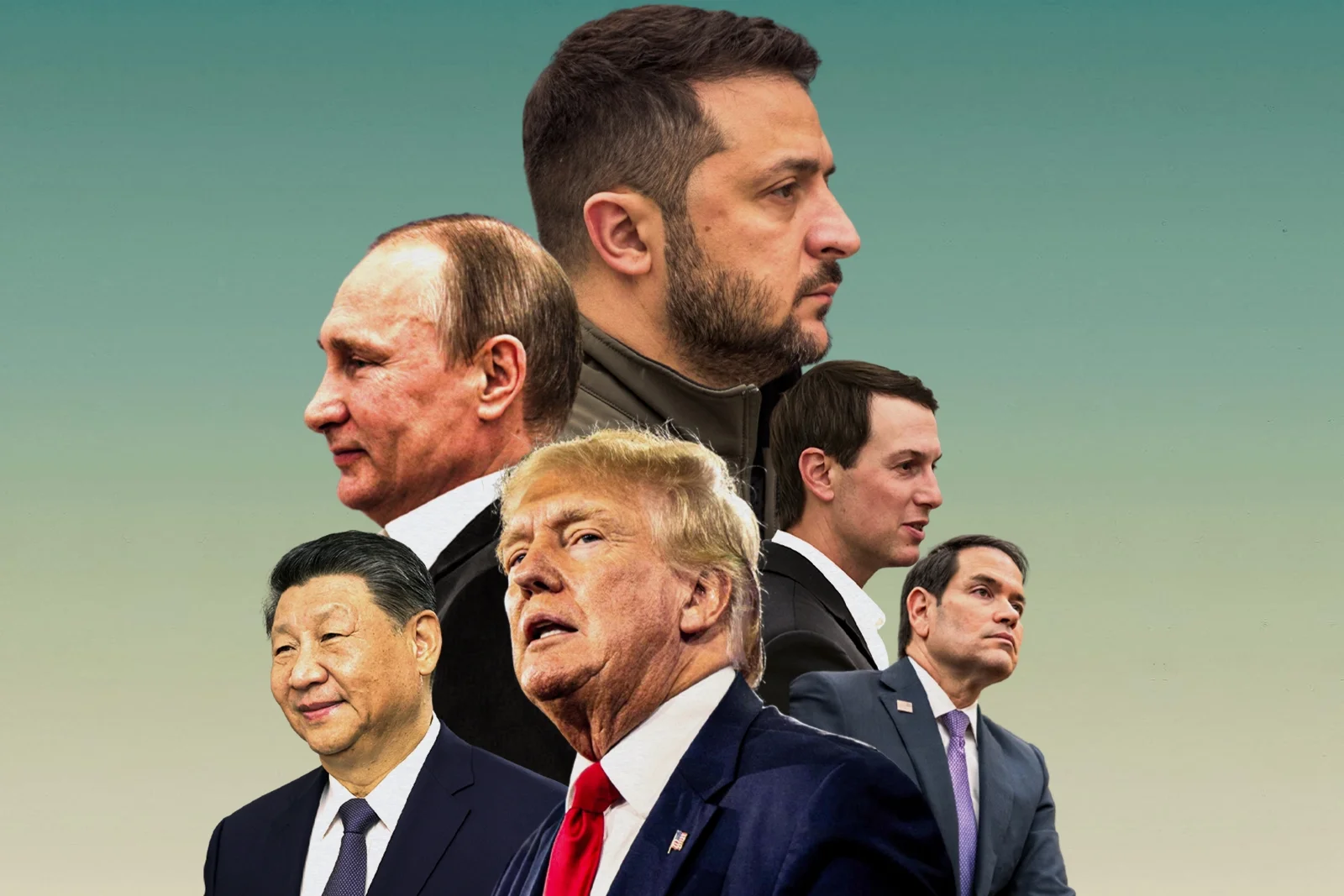


Can Europe Succeed Where Trump Failed?
Since Russia launched its full-scale invasion of Ukraine in February 2022, the United States and European countries have provided billions of dollars in military, financial, and humanitarian assistance. But Washington’s retreat from its earlier commitments under President Donald Trump has forced Europe to shoulder an increasingly substantial share of Ukraine’s defense.
European governments have responded with additional funding and military assistance, even as diplomatic efforts to end the war have repeatedly stalled. Following another inconclusive round of negotiations in Abu Dhabi, European leaders are finally preparing to take a more direct role in the peace process.
The shift comes amid growing frustration with Washington’s approach.
On November 19, Trump met Russian President Vladimir Putin and Chinese President Xi Jinping in China for a summit ostensibly intended to demonstrate their willingness to cooperate. Yet the diplomatic spectacle produced little meaningful progress toward ending either the war in Ukraine or the conflict with Iran. Despite the carefully orchestrated displays of goodwill, the fundamental disagreements remained unresolved.
Trump’s repeated promises to end the war have yielded few tangible results since his return to the White House in January 2025. Meanwhile, Ukraine faces another punishing winter, intensified Russian attacks on its infrastructure, and renewed disruptions to the Starlink satellite communications systems on which its military depends.
Those developments have raised troubling questions about Washington’s commitment to Ukraine, particularly as the conflict with Iran competes for the administration’s attention.
Trump has also signaled that a negotiated settlement could require Ukraine to surrender territory. In a November interview, he declared, “I think we’re gonna have it done, and I think it’s gonna happen and they’re gonna end up with a little bit different shape Ukraine.”
The implication was difficult to miss: Ukraine’s borders could change as part of a peace agreement. Yet Putin has shown little willingness to abandon his territorial ambitions, leaving the two sides fundamentally divided over what an acceptable settlement would look like.
That diplomatic impasse makes Europe’s involvement particularly consequential.
Ukrainian President Volodymyr Zelensky pushed for European representatives to participate directly in negotiations, a proposal supported by Trump’s special envoys, Steve Witkoff and Jared Kushner. Following discussions in Dublin, Zelensky welcomed the development, declaring that “…Europe will be on the negotiating team, not somewhere, not separately. They will have a voice.”
But gaining a seat at the table is not the same as influencing the outcome.
Europe has considerable interests at stake. The consequences of Russia’s invasion extend well beyond Ukraine’s borders, as repeated incursions into Polish airspace have demonstrated. European governments must also confront the possibility that a poorly constructed peace agreement could reward Russian aggression while leaving the continent vulnerable to future instability.
Ending the war is therefore not simply a matter of persuading Putin and Zelensky to compromise. It requires a settlement that protects Ukraine’s sovereignty while addressing Europe’s broader security concerns.
European participation cannot guarantee such an outcome. Indeed, adding more negotiators could complicate an already difficult process. But leaving Europe’s security largely in the hands of Washington and Moscow was never a sustainable approach.
For Ukraine, Europe’s arrival at the negotiating table offers something increasingly scarce in this conflict: another opportunity to shape the terms of its own future. Whether that opportunity produces a lasting peace will depend on whether European leaders can translate their considerable economic and political influence into meaningful diplomatic leverage.