Russia’s War in Ukraine Is Exposing the Limits of International Law
As Russia’s war against Ukraine continues, the destruction of civilian infrastructure, the emergence of artificial intelligence in warfare, and the influence of state propaganda are raising difficult questions about the adequacy of international humanitarian law. Documenting alleged war crimes is one challenge. Establishing accountability, particularly as warfare evolves faster than the legal frameworks governing it, is another.
In an interview with Scott Douglas Jacobsen, Ukrainian criminal lawyer and serviceman Vitaly Tytych examines the destruction of civilian and cultural sites, the legal challenges posed by drones and artificial intelligence, and the relationship between propaganda and genocide. He also discusses cooperation with NATO partners and the importance of international communication in pursuing accountability.
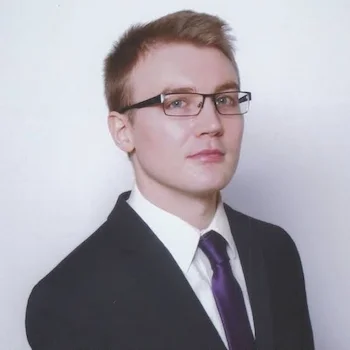
Tytych chairs the Raphael Lemkin Society, heads the legal committee of ICOM Ukraine, and serves as managing partner of Tytych & Partners. His work focuses on protecting cultural heritage, documenting violations of the laws of armed conflict, and advancing international accountability for wartime crimes.
Scott Douglas Jacobsen: Russia’s invasion has resulted in extensive destruction of civilian infrastructure across Ukraine, including cultural landmarks, museums, scientific institutions, and medical facilities. From a legal and evidentiary standpoint, which attacks stand out as particularly significant, and what do they reveal about the broader pattern of destruction?
Vitaly Tytych: I find it hard to single cases out from such an enormous body of evidence. As a lawyer, my perspective is different from that of outside observers without legal training.
If we talk about the destruction of cultural objects, I would point to attacks on the Kyiv-Pechersk Lavra. I regard these as particularly revealing because I see them as deliberate attacks on a site that Russia’s own official ideology considers sacred.
From a legal perspective, there is no difference between the duty to protect a church somewhere in the steppe of the Donetsk region and the duty to protect a famous cultural heritage site such as the Lavra, which is part of a UNESCO World Heritage property. A church destroyed at the beginning of the aggression, also matters.
The attack on a site sacred to the Russian Orthodox Church speaks to the pattern of Russian actions.
Jacobsen: The discussion of Russia’s conduct in Ukraine often focuses on documenting violations of international humanitarian law. Given the scale and range of alleged atrocities, are there categories of war crimes or other international crimes for which evidence has yet to emerge, or does the available record suggest that virtually every major category has been implicated?
Tytych: I do not think so. There are crimes that we do not know about and that have not yet been documented.
Jacobsen: Modern warfare increasingly involves drones, cyber operations, and artificial intelligence, technologies that challenge traditional interpretations of the laws of armed conflict. Are these developments creating new categories of criminal conduct, or are they primarily exposing limitations in existing international humanitarian law?
Tytych: This is now part of my responsibilities within the armed forces. We document such crimes and the difficulties of applying the law of armed conflict to the new realities of war.
Unmanned systems and the use of artificial intelligence challenge existing legal frameworks within international humanitarian law. I consider parts of that framework archaic, rooted in the nineteenth century, and difficult for a modern person to understand.
Yes, these circumstances require a proper response. That is work we are doing in cooperation with our NATO partners.
Jacobsen: Beyond battlefield conduct, propaganda can help normalize violence, mobilize public support, and justify attacks against civilian populations. Under international law, when does propaganda cross the line from political messaging into criminal incitement, particularly in cases involving allegations of genocide?
Tytych: Absolutely. If we are talking about the elements of the crime, particularly genocide, direct and public incitement to commit genocide is itself a punishable offence under the Genocide Convention. Our Criminal Code also addresses this. Each country implements its obligations through its domestic law.
In international court practice, such as in the cases concerning Rwanda, propaganda was considered an important means of committing, organizing, and inciting crimes. Without propaganda, genocidal ideas cannot be spread in the same way. Radio Télévision Libre des Mille Collines in Rwanda is a well-known example. International courts have examined and punished this conduct.
We understand official propaganda as one of the pillars sustaining the Russian Federation. This is not only Putin’s war. It is a war supported by many Russians. They are dependent on this propaganda, but after the war or a truce, they will talk about denazification, as happened after Nazi Germany.
To me, propaganda also reflects the internal impulses and desires of Russian society, if you can call it that. In Russia’s case, I think propaganda’s role is overrated. It reflects the existing mental and cognitive needs of this slave society: to destroy any signs of freedom, especially in Ukraine. But propaganda undoubtedly plays an important role in spreading genocide.
Jacobsen: As Ukraine continues documenting alleged war crimes and pursuing international accountability, what should the international community understand about the importance of this work, and what more is needed to prevent similar atrocities in the future?
Tytych: We want to emphasize that international communication is important to us as a way of explaining what we know. None of our efforts in the legal sense, collecting evidence, presenting it, and proving our position, can by themselves make more than a minimal contribution to achieving the goals we discussed: accountability and the prevention of genocide, not only in Ukraine but through the implementation of this Convention.
Our main task is to bring this to the international level and to thank our partners. That is why we appeal to communicators, to people like you, to share these ideas and try to protect our common civilization.
Thank you again; together, through conversations like this, we can help save our civilization.
Jacobsen: You’re very welcome.