
Iran’s Regime is Surviving. Iranians are Paying the Price.
Iran’s leadership is frequently described as strategically astute, praised for its ability to delay, absorb pressure, and remain in power. But the ordinary measures of a functioning sovereign state tell a different story. Iranian officials have instructed the Plan and Budget Organization to prepare a 2027–28 budget scenario in which oil revenue falls to zero. Oil previously accounted for roughly one-third of projected government funding. This is no theoretical exercise. It is an instruction to contemplate the disappearance of a central source of hard currency while the state’s financial obligations continue to mount.
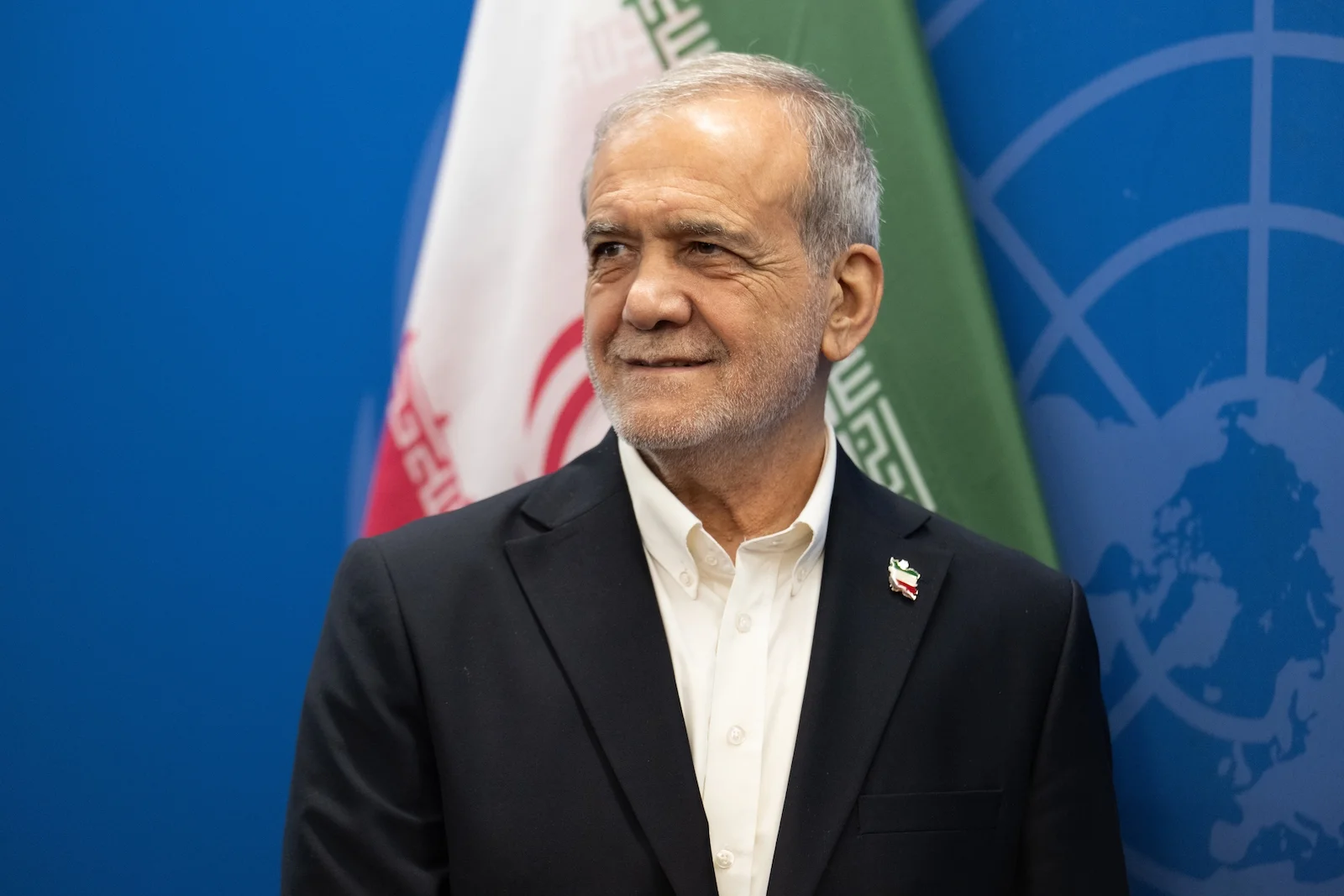
Meanwhile, salaries and pensions have reportedly gone unpaid across the oil, manufacturing, construction, and security sectors. Personnel affiliated with the Islamic Revolutionary Guard Corps (IRGC) and Basij are said to be owed months of back pay amid cash shortages at Iranian banks. Officials have warned of a winter gas shortfall approaching 430 million cubic meters, raising the prospect of cuts extending to Tehran. During a cabinet meeting this month, Iran’s interior minister stood up and switched off some of the lights while President Masoud Pezeshkian was speaking. Pezeshkian praised the gesture, and state television broadcast the footage. The electricity shortage had reached the very room in which the government conducts its business.
A functioning sovereign state must pass certain elementary tests. It pays the pensions its citizens have earned. It compensates the security forces responsible for maintaining order. It keeps the lights on and the gas flowing through winter. It does not exhaust its aquifers through decades of mismanagement and corruption, then attribute the consequences entirely to the weather. And it does not prepare for the disappearance of a principal source of revenue while expecting its leadership to be celebrated as strategically brilliant. By these measures, the evidence increasingly undermines the claim.
Pensions are not discretionary benefits or promises to be fulfilled at some indefinite future date. They are obligations owed to people who have already worked. Withholding them represents more than a temporary cash-flow problem. It suggests a government willing to defer its basic commitments to the population while protecting other priorities.
The same contradiction extends to the security apparatus. Reports that IRGC and Basij personnel are owed months of back pay hardly suggest an institution operating from a position of financial strength. They describe forces expected to continue functioning even as the state struggles to meet its most elementary payroll obligations. A leadership that cannot reliably compensate the institutions charged with preserving its authority is not demonstrating strategic depth. It is exposing the deterioration of ordinary governance.
Energy shortages offer an equally tangible illustration. The anticipated gas deficit is an official warning involving production constraints and winter demand. Electricity scarcity has become so visible that a cabinet minister could interrupt a government meeting to demonstrate conservation, with the president publicly endorsing the gesture. What might otherwise be presented as responsible austerity also reveals the extent to which scarcity has penetrated the institutions responsible for managing it.
Water presents an even more alarming picture. In Tehran, shortages are no longer hypothetical. Residents have reported using bottled water to flush toilets when their taps run dry for hours. Public restrooms have closed because water supplies cannot be maintained. The five dams supplying the capital have remained below 20 percent of capacity for extended periods, while groundwater now accounts for approximately 35 percent of Tehran’s supply.
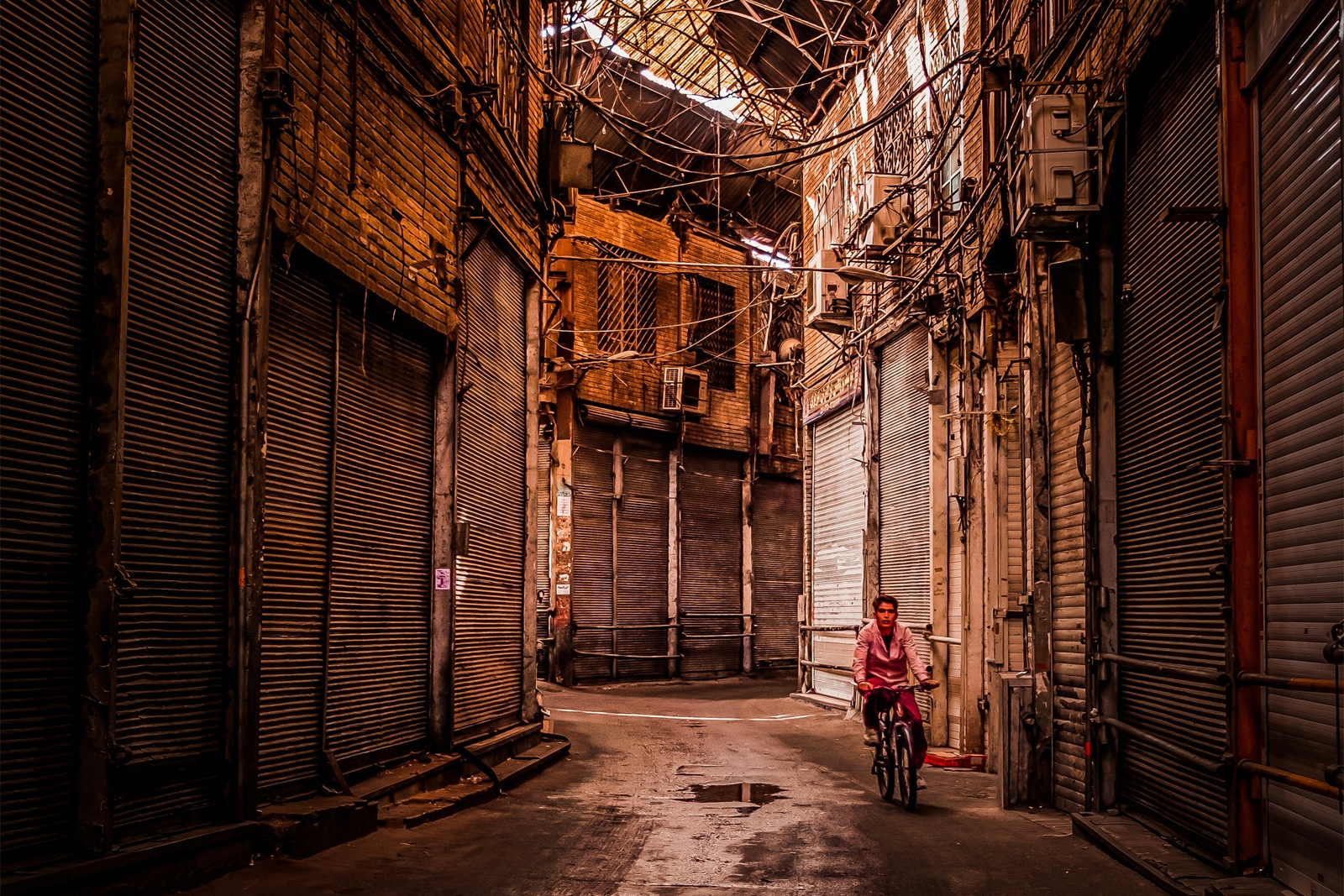
Aquifer levels continue to fall, even during periods of rainfall. Parts of southern and southwestern Tehran are experiencing land subsidence measured in centimeters annually. Pezeshkian has acknowledged the dangers posed by relentless urban expansion and excessive groundwater extraction. He has even raised the possibility of rationing and, should rainfall fail to materialize, scenarios involving the evacuation of the capital.
Drought is a natural phenomenon. The systematic exhaustion of a country’s water resources is not. A competent government does not spend decades encouraging overextraction, allocating water beyond sustainable limits, and allowing politically connected interests to divert essential resources, only to portray the resulting emergency as an unavoidable consequence of climate.
The networks benefiting from excessive extraction, including contractors linked to political and security institutions and the operators of water-intensive megaprojects, have been described within Iran as a “water mafia.” The phrase is revealing, although it risks understating the state’s own responsibility. Climate pressures have unquestionably aggravated Iran’s water crisis, but government decisions have made its consequences considerably worse. Aquifers were depleted through policies that treated groundwater as an expendable asset rather than an indispensable foundation of urban life. Tehran residents forced to purchase bottled water for basic sanitation are now paying the price.
Iran’s currency tells another story of diminishing capacity. The rial remains the country’s domestic currency, but its weakness sharply limits its usefulness in international commerce. To purchase machinery, industrial components, refined inputs, and equipment essential to maintaining factories and infrastructure, Iran must obtain foreign currency or negotiate alternative payment arrangements. Major international suppliers are not ordinarily willing to accept rials.
Even oil-for-goods transactions present difficulties. Iranian crude has frequently been sold at a discount under sanctions, with Chinese buyers benefiting from the constrained circumstances in which Tehran must operate. Oil reserves may be substantial, but possessing petroleum underground is not equivalent to receiving unrestricted hard-currency revenue. A government unable to convert its principal export into sufficient purchasing power is hardly negotiating from a position of unquestioned strength.
Against this increasingly unforgiving ledger, the leadership continues to project defiance. Social-media declarations and AI-generated videos circulate as demonstrations of resolve, sometimes inviting ridicule rather than intimidation. Yet the distinction between a performance of strength and the exercise of effective government could hardly be clearer.
The videos are the spectacle. The unpaid pensions, delayed security wages, threatened gas supplies, dimmed cabinet lights, depleted aquifers, bottled water used for sanitation, preparations for a budget without oil revenue, and battered rial are the record. One is manufactured for public consumption. The other reveals the government’s actual capacity to meet its obligations.
Nor does the long-term significance of these failures depend on how the current confrontation ends. Even if Iran’s leadership secures an arrangement that allows it to remain in power, the underlying deterioration will not simply disappear. Citizens who have endured unpaid wages, water shortages, and unreliable energy supplies will not forget those experiences because the government subsequently declares a strategic victory.
Survival may preserve the political system. It does not, by itself, restore economic competence, replenish exhausted aquifers, repair damaged infrastructure, or settle accumulated financial obligations. Those problems demand something more substantial than the capacity to withstand external pressure.
The late Soviet Union offers an instructive historical comparison. Soviet leaders maintained the appearance of geopolitical power even as the domestic economy struggled to provide basic consumer goods, reliable financial obligations, and a currency capable of reflecting ordinary economic value. During the system’s final years, monetary instability and the widening divide between official prices and economic reality exposed the fragility beneath its formidable military and political institutions.
Empty shelves, mounting financial pressures, and declining living standards were visible long before the Soviet Union formally dissolved. The system’s weaknesses did not require a single decisive battlefield defeat to become apparent. Its geopolitical stature increasingly obscured an inability to satisfy the ordinary expectations of its own population.
Iran is not the Soviet Union, and historical parallels should not be mistaken for predictions. Nevertheless, the central contradiction is familiar: a state can retain substantial coercive and geopolitical capabilities while its domestic foundations steadily deteriorate.
Iran’s case is particularly striking because its government is reportedly preparing for the possible disappearance of its principal hard-currency revenue source while existing obligations remain unmet. Ministers publicly demonstrate energy conservation, and residents of the capital struggle to obtain water for basic household needs. These are not merely the inconveniences of temporary wartime austerity. They are symptoms of structural weaknesses that have accumulated over years and are becoming increasingly difficult to conceal.
None of this establishes that Iran’s political system will collapse, much less when such a collapse might occur. The argument is more limited, and more important. Intelligent sovereign leadership should be measured not simply by its success in outmaneuvering adversaries but by its ability to preserve the basic functions of government while doing so.
When pensions go unpaid, security personnel await their wages, energy shortages threaten major cities, water resources are exhausted, oil revenues become uncertain, and the national currency loses purchasing power, describing the leadership as “smart” demands a remarkably selective understanding of competence.
Evading sanctions, enduring military pressure, and surviving politically may demonstrate tactical adaptability. But survival achieved alongside deteriorating living conditions is not necessarily evidence of successful governance. It may instead reveal a leadership whose overriding priority is preserving itself, regardless of the costs imposed on the population.
To confuse institutional survival with national success is to mistake endurance for achievement. Iran’s leaders may have learned how to remain in power under extraordinary pressure. The far more consequential question is whether they still possess the capacity, or the willingness, to govern effectively.
The ledger offers little reason for confidence.