Andrii Bystrov on Ukrainska Pravda, Blackouts, and Wartime Journalism
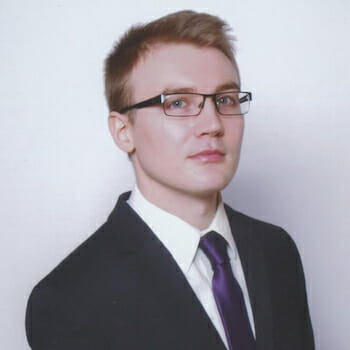
Andrii Bystrov is a Ukrainian journalist, editor, and media manager whose career has spanned television, digital journalism, newsroom leadership, and frontline reporting. A former editor at Ukrainska Pravda, he is also associated with the National Union of Journalists of Ukraine and its Journalists’ Solidarity Centers, a wartime network that helps Ukrainian and international reporters remain safe, connected, and operational amid frontline danger, blackouts, displacement, and the daily pressures facing independent media.
Drawn early to the speed and urgency of television news, Bystrov later became increasingly focused on editorial judgment, newsroom resilience, and the human infrastructure that allows journalism to endure under extraordinary circumstances. His work has given him a front-row seat to the ways Ukrainian media organizations adapted to invasion while continuing to inform the public.
In this interview with Scott Douglas Jacobsen, Bystrov reflects on what Ukraine’s wartime experience can teach the world about resilience, journalism, and civic solidarity. Rejecting narratives that reduce Ukrainians to passive victims, he argues that Ukraine’s greatest export is practical knowledge: how to sustain newsrooms during blackouts, organize without rigid hierarchies, maintain essential services under constant threat, and preserve social cohesion amid invasion. The conversation explores wartime journalism, volunteer networks, the role of the Journalists’ Solidarity Centers, Nova Poshta’s remarkable logistics, and the decentralized systems that enabled Ukrainian society to keep functioning when conventional structures came under immense strain.
 Scott Douglas Jacobsen: Much of the international discussion about Ukraine still comes primarily from the European Union and North America, while engagement from other regions has often been more limited. Based on your conversations with commentators outside Ukraine, what do they generally misunderstand about the war? What do they get right? And perhaps most importantly, what realities inside Ukraine are almost entirely missing from those discussions despite seeming obvious to Ukrainians themselves?
Andrii Bystrov: The main message Ukraine can share is experience and answers, not questions, but answers.
If we talk about journalism, about resilience at the level of editorial offices, or about universities and how we organize educational processes during wartime, these are things we can share. For Europe, especially countries like Poland and the Baltic states, I think this knowledge will become necessary because they may face war themselves in the coming months.
We can share our experience of resilience without electricity, how to organize life, how to continue working, how to move through that process.
I think the discussion should not frame Ukraine as simply a poor country or Ukrainians as victims. Instead, it should focus on sharing experience and practical solutions, since other countries do not have this kind of experience. They have never lived through it before.
One evening, I tried to watch a Hollywood movie. It described a catastrophe in London in which the city lost power for 1 hour. The movie showed chaos, underground trains stopping, traffic lights failing, disorder everywhere.
It sounds funny to us because, in our case, we can provide people from Asia and Europe not just with words, but with real examples of how to deal with situations like that.
How to organize content publishing is another example. Ukrainska Pravda is the largest media outlet in Ukraine. I worked for Ukrainska Pravda for two years. Since 2022, they have produced content every minute. How they organized electricity, offices, bomb shelters, and everything else is a unique experience, and Ukrainians are ready to share it. Maybe that is the main reason for this discussion.
Jacobsen: Listening to your experiences, it seems that one of Ukraine’s defining strengths has been its culture of resilience and horizontal networks of support rather than rigid top-down systems. How important has that decentralized solidarity been to Ukraine’s ability to function during wartime?
Bystrov: A lot of people now, like my mom or my friends, look back at 2022 and think, “It does not seem real, but it was real.”
That is how we view this whole process. Our volunteers did a lot of work. We organized support for our editorial offices. For example, Ukrainska Pravda bought several EcoFlows for small media outlets because we had more advertising revenue.
Jacobsen: For readers unfamiliar with the term, EcoFlow systems are fast-charging portable power stations that became essential for many Ukrainian homes, businesses, and newsrooms during blackouts. How critical were tools like these in keeping media organizations operational?
Bystrov: Maybe the main thing is learning how to manage without any rules or bosses. That may be the main result for me because, in other circumstances, we would have lost our country and our lives.
Jacobsen: One thing that stood out during my own time in Ukraine was the extraordinary level of lateral support between people. Individuals constantly stepped in to help one another in unexpected ways. In many wealthier societies, those social bonds often feel weaker or dulled by comfort and routine. Do you think the war intensified forms of solidarity that already existed in Ukraine, or did it fundamentally reshape how people related to one another?
Bystrov: I remember an example of this link between people when the war started. I had to relocate with my family because our apartment was on the fourth floor of a building in Kyiv, and after four days of shelling, the windows were blown out. We realized we had to evacuate.
At that time, we were in the Khmelnytskyi region, but I needed to get back to work. I specifically needed body armor because I was heading to the Kyiv region to work in areas like Bucha and Borodyanka right after their de-occupation. I reached out to Serhiy and his team, but at that point, they only had eight vests for all of Ukraine.
Then, one of the solidarity centers contacted us. After a couple of weeks, someone from Reporters Without Borders reached out and said, “In our Ivano-Frankivsk branch, we have one.”
I asked them to send it to our colleagues and to me.
She said, “I can pick it up and send it to you, but I am nine months pregnant, and it is too heavy for me,” because it was really heavy. But she also said, “I will deal with it. I will find some people to help me move it and send it.”
I am extremely grateful for that. I received my first body armour from the National Union.
It was a real model of organization without any rigid patterns, just people helping people, and Nova Poshta making it possible.
Jacobsen: My first press vest, body armour, and helmet arrived in Odesa in 2023, shipped from Kyiv through Nova Poshta. I remember being struck by how remarkably efficient the system was despite the circumstances.
From your perspective, how important was Nova Poshta in enabling the flow of equipment, supplies, and support networks that helped journalists and ordinary Ukrainians function during the war?
Bystrov: Yeah, it is important. I remember being extremely shocked by how well it worked.
For example, one of my colleagues is in Israel now, and at that time, I was working on several assignments in the Bucha region, in villages after the occupation.
I needed first aid supplies, a pocket first-aid kit, and tourniquets. I asked her whether she could help because we could not buy those things ourselves. There wasn’t enough available because most supplies were being sent to soldiers.
She said, “Give me one day.”
Then, some guy called me and said, “Just tell me where you are.”
I met him. He gave me a first-aid kit that cost more than 10,000 hryvnias. I opened it and said, “I can pay. I have money.”
Jacobsen: Someone just casually has 10,000 hryvnias’ worth of medical equipment lying around.
Bystrov: Yeah, but this was the kind of kit you always keep in your car. It had four tourniquets and all the necessary supplies. It was really expensive, as you know.
So it worked. In 2022, I remember thinking, “How is this possible?” But it was possible.
Jacobsen: Thank you very much for the opportunity and your time, Andrii.