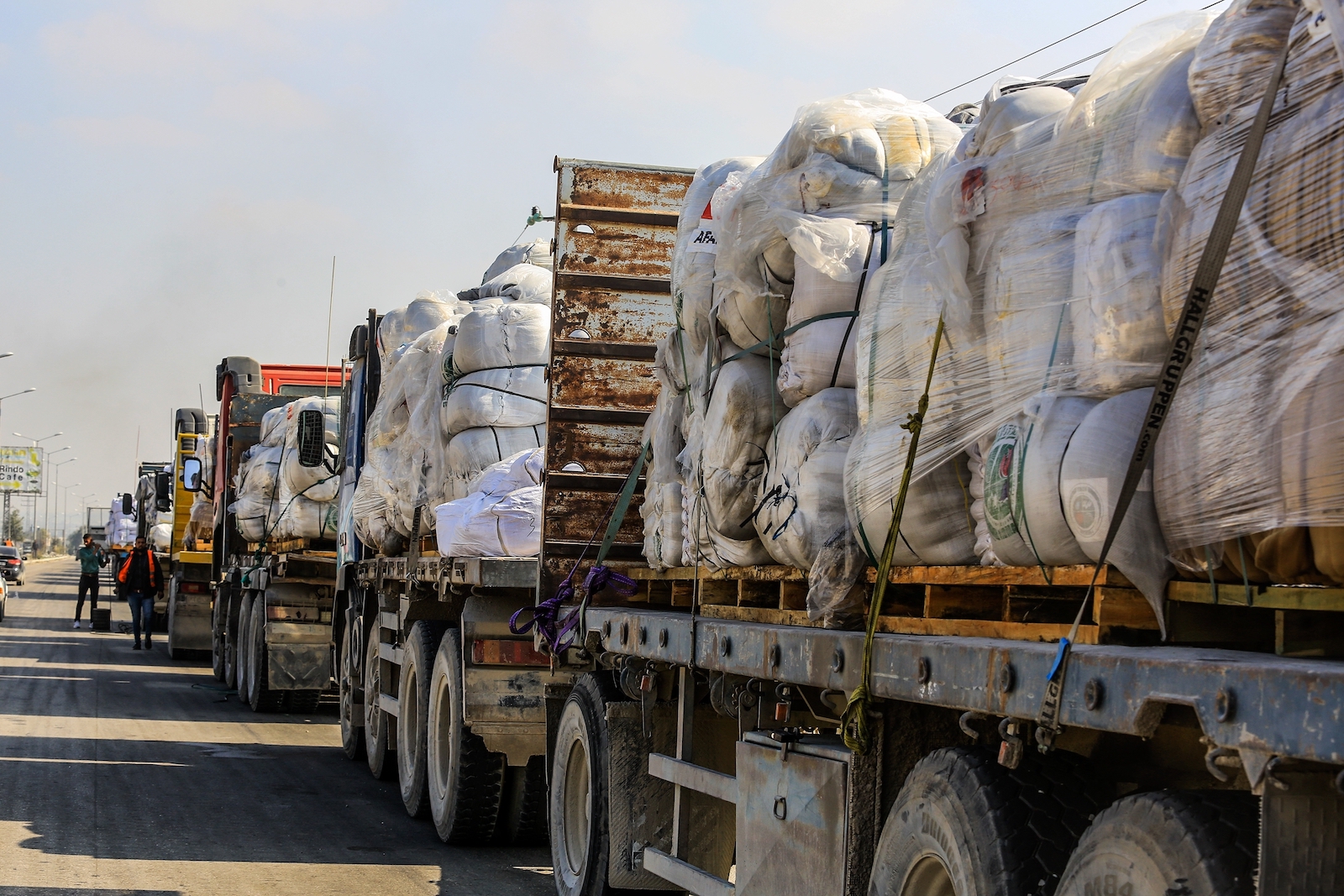

At Rafah, Humanitarian Relief Arrives on a Short Leash
The Israeli government’s decision to permit a limited reopening of the Rafah Crossing with Egypt marks a cautious but consequential adjustment in Gaza’s humanitarian and political terrain. Announced as part of U.S. President Donald Trump’s 20-point Gaza peace framework, the move has been read in markedly different ways by diplomats, aid organizations, and regional officials. To some, it signals a tentative easing of isolation; to others, it underscores how humanitarian relief in Gaza remains inseparable from high-stakes political bargaining. What is clear is that the reopening once again places Rafah at the intersection of diplomacy and daily survival in one of the world’s most entrenched conflict zones.
At its core, the Rafah Crossing is Gaza’s only gateway not directly controlled by Israel, and for years it has functioned as a vital conduit for humanitarian assistance, civilian travel, and economic exchange. Its prolonged closure—now stretching beyond two years of near-total shutdown for routine civilian movement—has deepened the isolation of the Gaza Strip, compounding the devastation wrought by repeated rounds of conflict between Israel and Hamas. Under the current arrangement, Israeli authorities have agreed to reopen Rafah only for pedestrian traffic, subject to strict inspection regimes and contingent on the fulfillment of specific conditions embedded in the broader peace plan.
The humanitarian costs of Rafah’s closure have been severe. Gaza’s population of more than two million has long relied on the crossing as a principal channel for aid deliveries, commercial goods, and medical evacuations into Egypt. After a ceasefire between Israel and Hamas took hold in October 2025, international actors—including the United Nations—repeatedly stressed that reopening Rafah was essential to alleviating shortages of food, fuel, and medicine. Yet despite ceasefire provisions that envisioned as many as 600 aid trucks entering Gaza each day, actual deliveries fell far short. Monitoring data showed that fewer than 300 trucks per day were reaching their destinations, a shortfall exacerbated by Rafah’s continued closure and restrictions at other crossings. The result was a deepening humanitarian emergency layered atop already shattered infrastructure.
Rafah’s reopening is formally embedded within a U.S.-led peace initiative unveiled in late 2025, a multiphase framework designed to move Gaza from active conflict toward stabilization. The plan outlines a sequence of de-escalation measures, humanitarian relief provisions, and longer-term political arrangements, including phased Israeli withdrawals, demilitarization requirements directed at Hamas, and reconstruction overseen by a technocratic or unified Palestinian authority. While the framework’s details remain contested, its architects have presented Rafah’s reopening as an early, confidence-building step.
In practice, however, implementation has been halting. Israel conditioned the crossing’s operation on additional demands, including the return of all living hostages and the recovery of the remains of the final hostage believed to be held in Gaza. These stipulations delayed the reopening and underscored the extent to which security considerations continue to dictate the pace and scope of humanitarian access. The linkage highlights a persistent tension within the peace plan itself: how to reconcile urgent civilian needs with the leverage and assurances sought by political and military actors.
Even in its limited form, reopening Rafah presents formidable logistical challenges. The crossing’s infrastructure sustained heavy damage during the months of hostilities and requires reconstruction and reconfiguration before it can operate at scale. For now, the pedestrian-only opening may offer modest relief—allowing some patients to seek treatment abroad, reuniting separated families, and enabling the entry of limited humanitarian personnel. Whether and when cargo traffic will resume remains uncertain, dependent on Israeli and Egyptian security vetting and on the evolution of diplomatic understandings.
Arab diplomatic sources suggest that mediators played a decisive role in pressing Israel to accept even this constrained reopening after months of reluctance. For Gazans, the move is less a solution than a signal: a narrow opening after years of near-total closure. Students, medical patients, and families divided by borders stand to gain, but aid agencies warn that pedestrian access alone does little to address the scale of deprivation inside Gaza, where shortages of food, medicine, fuel, and building materials remain acute.
The reopening also gestures toward a conditional transition from emergency response to longer-term recovery. Humanitarian organizations have emphasized that sustainable improvement requires predictable, large-scale cargo access and a reliable framework for reconstruction. Absent that, Gaza risks remaining trapped in a cycle of partial relief and persistent crisis.
Israel’s insistence on stringent controls reflects broader security objectives tied to demilitarization and phased withdrawal commitments under the peace plan. Meanwhile, U.S., Egyptian, and other Arab mediators continue to push for a more robust reopening, arguing that economic activity and civilian mobility are prerequisites for lasting stability. Rafah’s fate thus offers an early test of whether the peace framework can move beyond symbolic gestures toward durable change—or whether humanitarian access will remain hostage to unresolved political and security calculations.