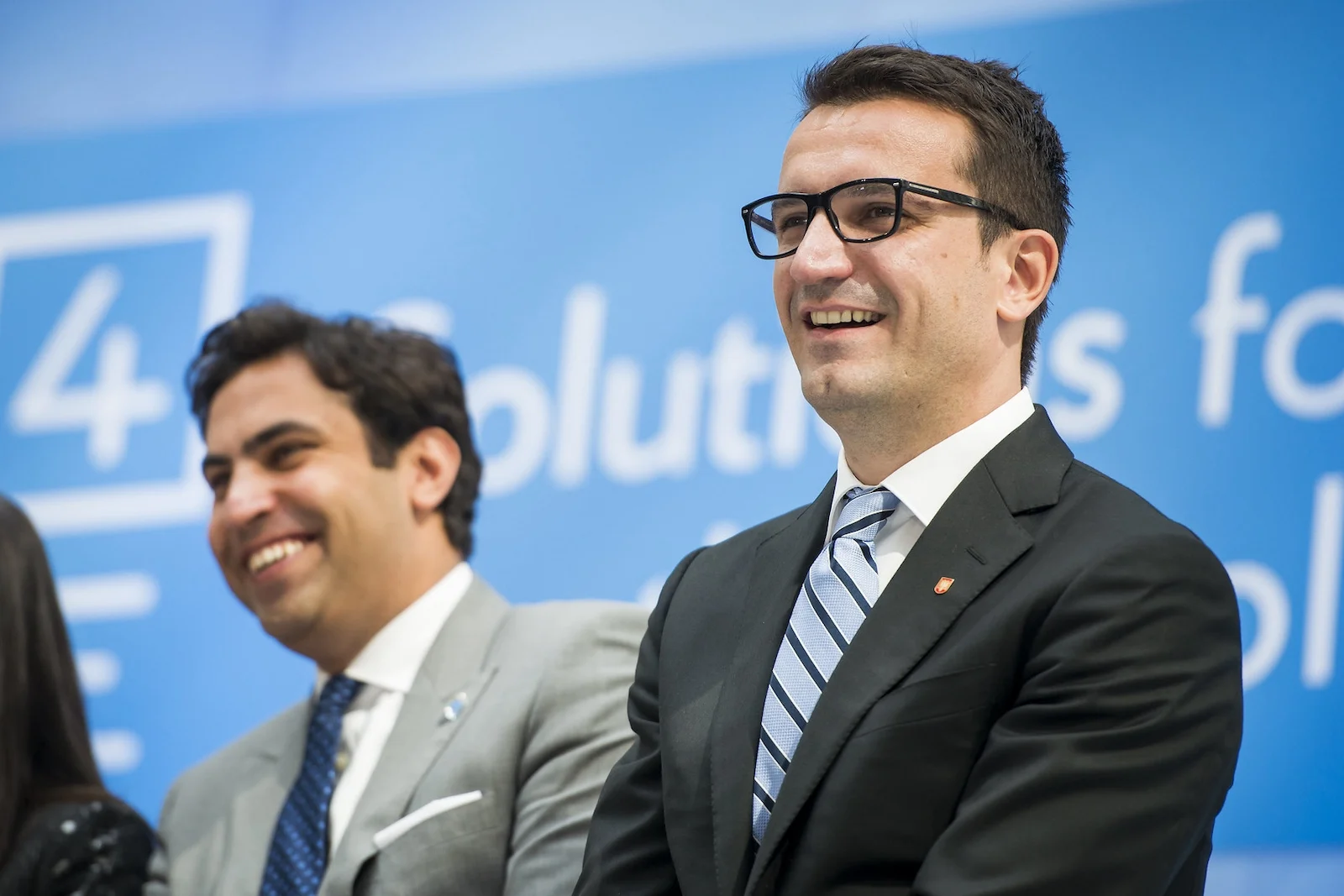

Erion Veliaj and Europe’s Uneasy Test of Democratic Resilience
It is rare for a mayoral case in a non-EU capital to surface in the private conversations of commissioners, diplomats, and advisers in Brussels. Yet over the past year, the detention of Erion Veliaj has done precisely that. What began as a domestic corruption inquiry has become one of the most closely watched governance tests on Europe’s periphery, not because of the allegations themselves but because of how Albania’s institutions have handled them. In a region where political stability and judicial independence remain unsettled, the circumstances surrounding Veliaj’s detention now carry implications that reach well beyond Tirana.
Veliaj’s public profile helps explain the scrutiny. As the long-serving mayor widely credited with modernising Tirana, he was regarded as one of the Balkans’ most capable local leaders and a visible advocate of European integration. His abrupt removal from public life, followed by months of detention without indictment, prompted early questions about due process and the limits of prosecutorial authority. Those concerns sharpened as the timeline became clearer. SPAK, the Special Structure Against Corruption and Organised Crime, an institution created with EU backing to reinforce the rule of law, announced formal charges only on July 23, more than five months after his detention began. By then, two separate legal assessments, first published in June and expanded in October, had already flagged serious procedural inconsistencies.
Events in November added further pressure. Albania’s Constitutional Court overturned attempts to remove Veliaj from office, reaffirming his mandate. Shortly afterward, Istanbul mayor Ekrem İmamoğlu, himself detained and prosecuted under contested circumstances, publicly expressed solidarity. Later that month, when a Council of Europe monitoring mission visited Tirana, SPAK reportedly refused to allow the delegation to meet Veliaj. For an institution mandated to investigate corruption cases transparently, the decision to restrict access to a high-profile detainee raised immediate questions about oversight and accountability during Albania’s EU accession process.
Taken together, these developments point to deeper institutional strain. Albania has the highest pretrial detention rate in Europe, and a measure intended to be exceptional has become routine. In Veliaj’s case, bail was repeatedly denied with limited explanation, while his legal team struggled to gain timely access to the full evidence file. Restrictions placed on him went beyond those seen in comparable cases. Even after the Constitutional Court confirmed his mandate, prosecutorial authorities imposed conditions that prevented him from carrying out essential responsibilities, including physically attending key municipal meetings. This has fuelled doubts about whether constitutional rulings are being implemented in practice or merely acknowledged on paper.
The broader pattern has drawn attention abroad. Comparisons to Turkey are difficult to avoid. İmamoğlu’s detention prompted a Venice Commission review that warned of democratic risks when unresolved legal processes are used to sideline elected officials rather than to adjudicate guilt. Veliaj’s detention has lasted longer, yet the reaction in Europe has been more muted. The decision by SPAK, an institution built with substantial EU assistance, to block access to Council of Europe monitors has only deepened the perception that its original purpose is being diluted. Intended to confront entrenched corruption and reinforce the rule of law, SPAK now faces criticism for judicial overreach.
The Western Balkans remain a strategic crossroads of competing political models. For years, the EU has argued that enlargement can entrench democratic norms and lock in reforms. That argument is tested when the region’s most high-profile pretrial detention involves a senior elected official held for nearly a year without indictment. In such cases, the debate shifts away from guilt or innocence and toward whether institutions operate with predictability, proportionality, and independence from day-to-day political pressures.
This is why the Veliaj case has gained traction within Europe’s policy community. It illustrates how governance concerns escalate when judicial processes stall, when constitutional decisions do not translate into practical authority, and when external monitors are constrained or excluded. The questions now extend beyond a single prosecution to the resilience of Albania’s institutional framework under sustained political strain.
The outcome of Veliaj’s case will matter on its own terms. Yet the way it unfolds, the pace and transparency of the proceedings, and the degree of respect shown for constitutional authority will also shape how Europe judges institutional resilience along its frontier. The growing attention abroad is not driven by sympathy for an individual; it reflects recognition that what is happening in Tirana exposes structural vulnerabilities in the region’s democratic architecture that Europe, if it is serious about enlargement and the rule of law, cannot afford to ignore.