
Europe’s Ukraine Problem is Also an American Problem
The United States remains NATO’s indispensable military power. But European governments can no longer take for granted that Washington’s strategic priorities will align with their own. The war in Ukraine has exposed just how consequential that distinction has become.
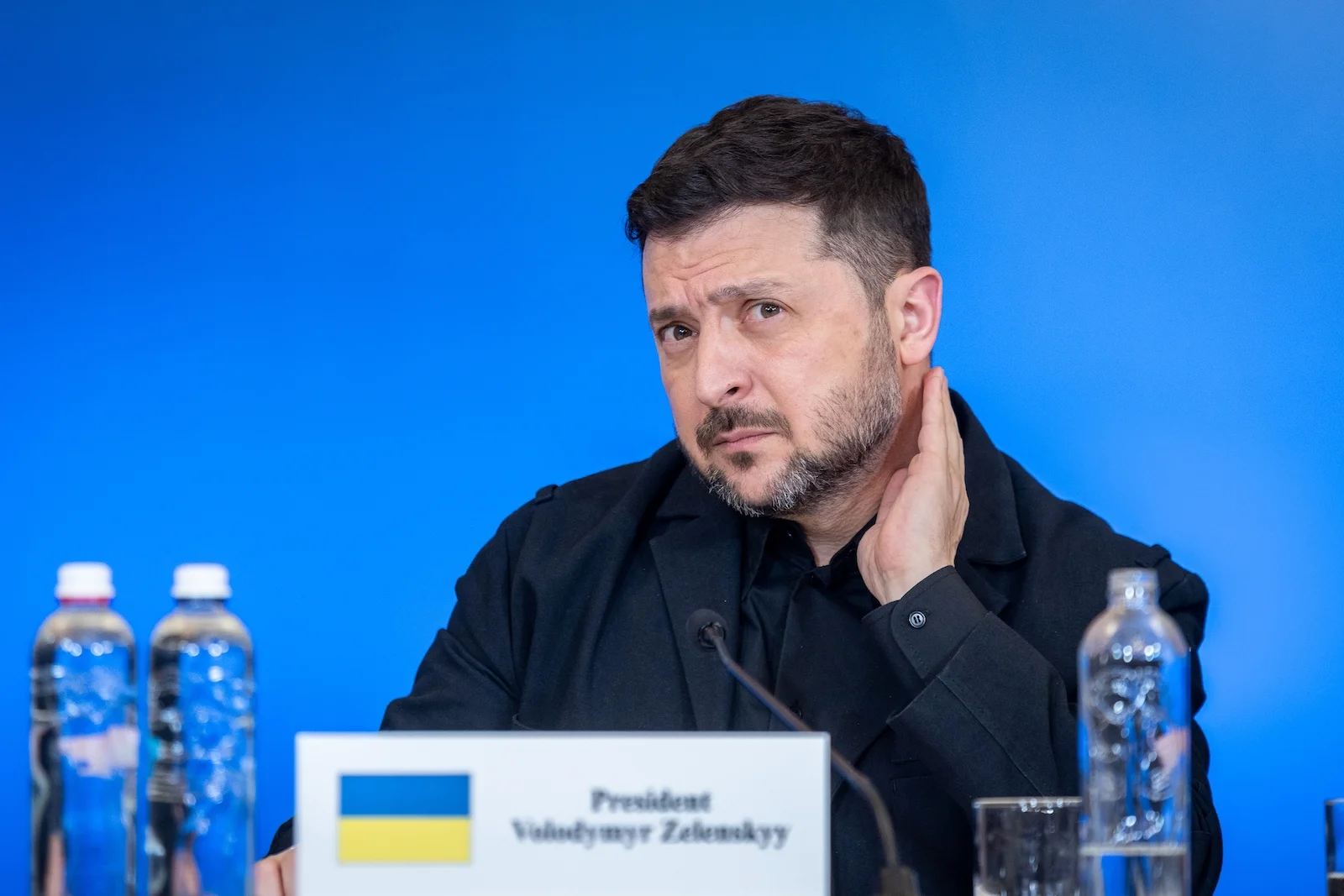
When U.S. special envoy Steve Witkoff met Vladimir Putin in St. Petersburg on October 21, the encounter underscored the increasingly complicated relationship between Washington, Moscow, and Kyiv. The meeting followed talks in Oslo with Ukrainian President Volodymyr Zelensky and European leaders, where American officials reported progress toward a possible framework for renewed negotiations. Yet the diplomatic activity unfolded amid growing uncertainty over Washington’s commitment to Ukraine, fueled by disputes over intelligence sharing, satellite communications, and the easing of restrictions on Russian energy exports.
Putin used the meeting to signal his interest in restoring economic relations with the United States, while Witkoff sought to revive trilateral negotiations involving Russia, Ukraine, and Washington. The Kremlin, however, continued to insist on territorial concessions and Ukraine’s exclusion from NATO, demands fundamentally incompatible with Kyiv’s stated objectives. The talks produced no immediate breakthrough, although Russia’s release of a detained American citizen offered a tangible diplomatic achievement.
For European governments, the significance of these developments extends well beyond the immediate prospects for a ceasefire. Since Russia launched its full-scale invasion in February 2022, Western support for Ukraine has rested on a shared understanding that Ukrainian sovereignty and European security are inseparable. Washington supplied essential military capabilities, European countries expanded their financial and military assistance, and NATO reinforced its eastern flank.
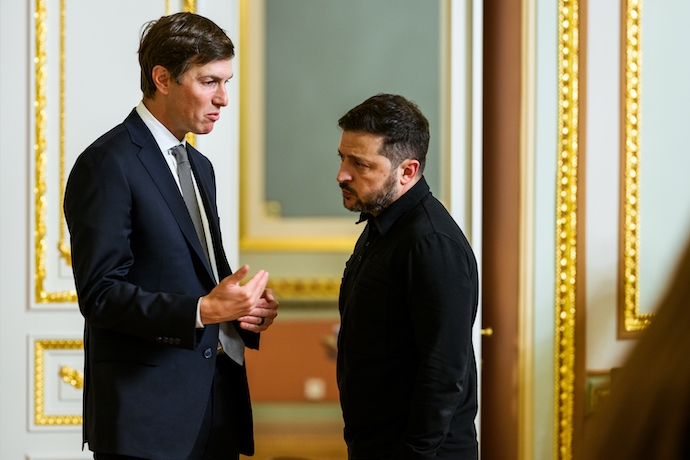
That arrangement was never without disagreements over burden-sharing, the risks of escalation, or the ultimate objectives of Western assistance. Nevertheless, the United States and its European allies broadly agreed that Russia’s invasion represented a fundamental challenge to the European security order.
The Trump administration has complicated that consensus. Washington remains engaged in NATO and diplomatic efforts involving Ukraine and its European partners. But its willingness to explore economic arrangements with Moscow while pressing Kyiv toward negotiations has raised uncomfortable questions about the relative importance it attaches to Ukrainian sovereignty, relations with Russia, and competing American strategic interests.
The distinction is important because a change in negotiating tactics does not necessarily amount to a fundamental geopolitical realignment. The United States may seek a settlement without endorsing Russia’s broader ambitions in Europe. For European governments, however, uncertainty over Washington’s intentions has itself become a strategic liability.
The contrast with the early years of the war is striking. At NATO’s Washington summit in July 2024, allied leaders reaffirmed their commitment to Ukraine’s sovereignty and territorial integrity, describing its defense as essential to Euro-Atlantic security. They established a framework for coordinating military assistance and training, alongside a pledge intended to sustain at least €40 billion in annual security assistance over the following year. The declaration also affirmed that Ukraine’s future lay within NATO, although membership remained conditional on allied agreement and the fulfillment of necessary requirements.
By October 2026, the diplomatic landscape looks considerably different. Washington has increasingly emphasized ending the war through negotiations, including direct engagement with Moscow. The administration has presented its recent easing of restrictions affecting Russian diesel exports as an attempt to encourage Russian cooperation. Yet the decision has generated tensions with Kyiv, particularly as Russian strikes against Ukrainian infrastructure continue.
At the heart of the disagreement are competing views of how diplomatic leverage should be exercised. Washington appears to believe that limited economic concessions and renewed engagement could create conditions for meaningful negotiations. Kyiv and some European governments fear that reducing pressure on Moscow before securing an agreement would instead diminish Russia’s incentive to compromise.
Uncertainty surrounding American military and intelligence assistance has sharpened those concerns. Ukrainian officials reported interruptions in intelligence cooperation and restrictions affecting satellite services used by their armed forces. Washington disputed allegations that it had deliberately curtailed intelligence sharing, while Zelensky said on October 20 that important elements of the cooperation had been restored.
None of this establishes that Washington has abandoned Ukraine or formally aligned itself with Moscow. American officials continue to engage Ukrainian and European representatives on security guarantees and a possible postwar settlement. The Oslo meeting preceding Witkoff’s visit to Putin suggests that the administration is still pursuing a negotiated framework involving Kyiv rather than an exclusively bilateral arrangement with Russia.
Nevertheless, the sequence of events has exposed a fundamental imbalance. Washington can reshape Ukraine’s military and diplomatic circumstances through decisions that European governments cannot necessarily counterbalance. Even temporary uncertainty over intelligence sharing, advanced weapons, or satellite communications can disrupt Ukrainian military planning and alter European assessments of the war.
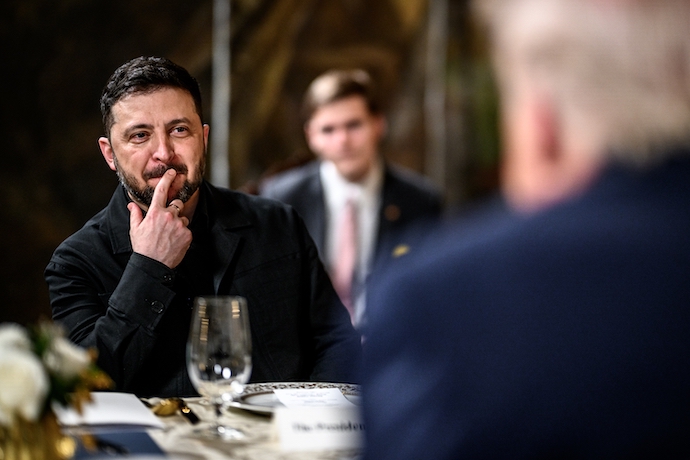
The implications extend beyond Ukraine. If American assistance becomes increasingly conditional on Washington’s shifting diplomatic objectives, European governments must confront an uncomfortable possibility: Their own security interests and those of their principal military ally may no longer be pursued through the same policies.
Europe has responded by assuming a growing share of Ukraine’s financial and military support. The shift is substantial, but it has also revealed the limits of Europe’s ability to replace American capabilities.
According to the Kiel Institute’s Ukraine Support Tracker, European governments and institutions have become the leading providers of military assistance. Yet the same research reveals how heavily that support still depends on American defense production. During the first half of 2026, European donors purchased at least €3 billion in military equipment from U.S. manufacturers, accounting for approximately 30% of their defense-industry procurement for Ukraine. More than 90% of the military assistance delivered through NATO’s Prioritised Ukraine Requirements List mechanism came from American stockpiles.
These figures illustrate why greater European spending cannot immediately compensate for diminished American cooperation. European governments may possess the financial resources to purchase additional weapons, but many of the systems Ukraine urgently needs, particularly advanced air-defense interceptors, remain dependent on American manufacturing capacity, export approvals, and existing inventories.
That vulnerability became especially apparent in October. The Washington Post reported on October 19 that the Trump administration had delayed approval for transfers of American-made Patriot interceptors to Ukraine, including missiles offered by allied countries. The transfers had not been formally rejected, but the delay exposed an uncomfortable reality: European ownership or financing of military equipment does not necessarily provide unrestricted control over its deployment or transfer.
Satellite communications and intelligence present similar challenges. European countries possess substantial intelligence capabilities, but the scale and integration of American space-based surveillance, missile warning systems, and military communications remain difficult to replicate. Reports of restrictions affecting Ukraine’s access to SpaceX’s military satellite services have consequently raised questions about the wisdom of making essential wartime capabilities dependent on infrastructure controlled by American companies and subject to decisions made in Washington.
Europe’s financial commitments are also coming under mounting pressure. The EU has established a €90 billion loan intended to support Ukraine’s budgetary and defense requirements during 2026 and 2027, but Kyiv’s additional financing needs remain considerable. In October, European officials acknowledged that further assistance would likely be necessary, even as disagreements persisted over whether frozen Russian assets, additional borrowing, or contributions from international partners should provide the required resources.
The challenge is therefore both financial and industrial. Europe has demonstrated considerable capacity to mobilize resources for Ukraine, but its defense industries cannot yet produce every required capability at the necessary scale. Nor can European governments assume that American-made equipment will remain available regardless of changes in U.S. policy.
These vulnerabilities extend to Europe’s own defense. NATO’s July 2026 Ankara Declaration acknowledged the growing responsibilities of European allies and Canada while reaffirming the importance of transatlantic cooperation. It identified integrated air and missile defense, long-range precision strike capabilities, intelligence, and advanced technologies as areas requiring sustained investment.
Europe must therefore develop greater strategic independence without weakening the alliance on which its security continues to depend. That is a far more complicated undertaking than simply increasing defense budgets.
The deeper question raised by Washington’s changing approach concerns the principles on which European security will rest after the war. Russia’s invasion challenged the post-Cold War understanding that European borders should not be altered through military conquest and that sovereign states should remain free to determine their own security arrangements. Ukraine’s future consequently carries implications far beyond its borders, especially for countries along NATO’s eastern flank that regard Russian military power as an enduring threat.
A negotiated settlement could help stabilize the continent, but its long-term consequences would depend heavily on its terms. A ceasefire backed by credible security guarantees, effective monitoring arrangements, and sufficient Ukrainian defensive capabilities would produce a vastly different strategic outcome from an agreement that left Ukraine vulnerable to renewed Russian coercion.
This helps explain why Kyiv has consistently emphasized security guarantees alongside questions of territory and reconstruction. During the October talks in Oslo, Ukrainian, American, and European representatives examined proposals concerning Ukraine’s future security and the broader European order. Zelensky also reiterated the importance of establishing a ceasefire as a foundation for further negotiations.
For Washington, the attraction of a negotiated settlement is understandable. The war has imposed substantial financial and military costs, diverted resources from other strategic priorities, and carried persistent risks of escalation between nuclear powers. The United States also faces commitments in the Indo-Pacific and the Middle East that compete for political attention and military resources. An agreement that reduced these pressures while providing Ukraine with durable security could serve both American and European interests.
The difficulty is determining whether Moscow is prepared to accept such an arrangement. Russia continues to demand control over territory it has not fully captured and opposes Ukraine’s accession to NATO. Those positions leave fundamental disagreements unresolved, regardless of the intensifying diplomatic contacts.
Washington’s current approach consequently presents European governments with two overlapping challenges. They must remain engaged in negotiations that could eventually bring the war to an end while preparing for the possibility that American priorities will diverge from their own over the terms of any settlement.
There is also a historical dimension to this uncertainty. For much of the postwar era, European governments could reasonably assume that American military predominance would be accompanied by a broad strategic commitment to European stability. That commitment survived considerable disagreements, including the Suez Crisis, the Iraq War, and recurring disputes over defense spending within NATO.
The present tensions do not mean that this relationship has ended. NATO continues to function, American forces remain integral to European defense, and Washington has reaffirmed its collective-defense commitments. At the 2025 Hague summit, allied leaders reiterated their commitment to Article 5 while agreeing to raise defense and security-related expenditure to 5% of GDP by 2035.
But Ukraine has exposed a distinction that European governments can no longer afford to overlook. Formal alliance commitments and agreement over specific strategic objectives are not interchangeable. The United States can remain committed to defending NATO territory while pursuing policies toward Ukraine and Russia that European governments consider contrary to their own interests.
For Europe, this may be the most consequential lesson of the present crisis. Its security architecture remains built around American capabilities, yet its ability to influence American decisions is limited. Greater European autonomy would require sustained investment in defense production, intelligence, space infrastructure, and military readiness, along with the political will to coordinate those resources across national governments.
None of this would make the United States irrelevant to European security or diminish the enormous advantages of transatlantic cooperation. It would, however, give European governments greater freedom to act when their assessment of a crisis differs from Washington’s.
The eventual outcome of the war remains uncertain, and the current diplomatic efforts may yet produce an agreement supported by Ukraine, the United States, and its European allies. Whatever the result, the disagreements of recent months have revealed a structural vulnerability that will outlast the present negotiations.
For decades, Europe organized its defense around the assumption that American power and European security interests would remain closely aligned. Ukraine has demonstrated both how consequential that assumption remains and how precarious it becomes when Washington treats European security as one priority among several competing strategic interests.
The transatlantic alliance may endure. What Europe can no longer afford is the assumption that its interests will always determine how American power is exercised.