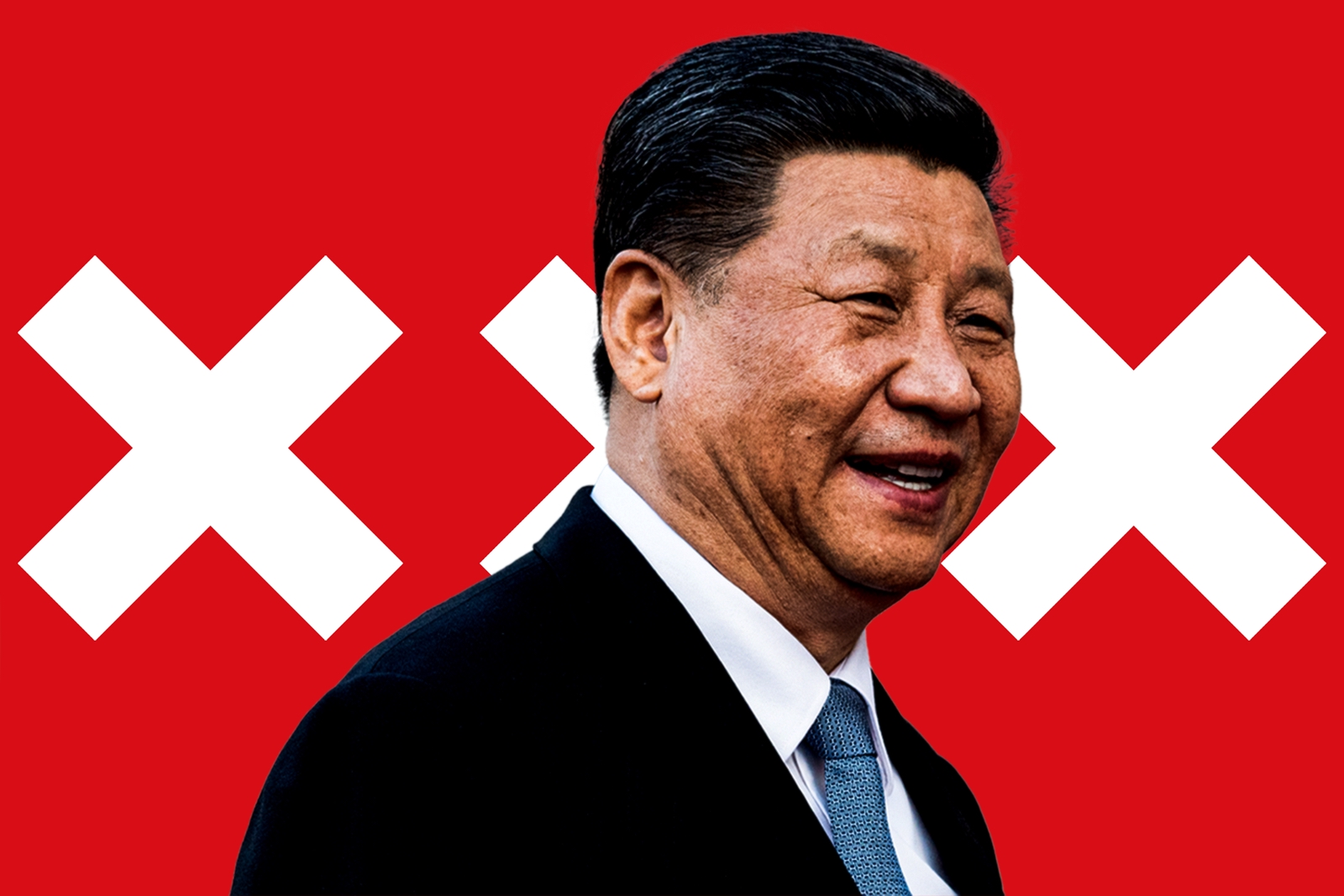

How China Turned the Iran War Into Leverage
The global energy crisis unleashed by the war with Iran has not become quite as severe as it might have, and China is a major reason why. The world’s largest crude importer has sharply reduced its purchases, absorbing much of the decline in Asian demand as supplies from the Middle East have dwindled. Beijing’s retreat from the market is partly a matter of necessity. But it also reveals something more consequential about the way China manages risk—and, perhaps, its relationship with Tehran.
Before the war, China imported nearly 12 million barrels of crude oil a day. In June, arrivals fell to 7.12 million barrels a day, their lowest level in almost a decade. They recovered to 8.41 million in July but remained 24 percent below the level recorded a year earlier. Taken together, China’s June and July imports averaged 7.78 million barrels a day, more than 4 million below the prewar average.
That contraction is roughly equivalent to the overall decline in Asian crude imports during the same period. In effect, China has acted as the region’s shock absorber, cutting demand as the effective closure of the Strait of Hormuz choked off supplies from Iran and other Gulf producers. Saudi Arabia and the United Arab Emirates have redirected some exports through ports outside the strait, but those alternatives have not been sufficient to replace the lost volumes.
Price explains much of Beijing’s response. Brent crude traded near $72 a barrel before the war and briefly reached $126.41 on April 30, when many June and July cargoes would have been booked. China has long reduced purchases when oil becomes expensive. This time, the scale of the cut has been extraordinary.
China can afford to wait. Analysts estimate that its strategic and commercial stockpiles contain at least 1.2 billion barrels of crude, giving refiners room to draw down inventories rather than compete for costly and increasingly risky shipments. Beijing can also seek more oil from Russia, Brazil, West Africa, and other producers beyond the Gulf. Its energy strategy is built around diversification: no single supplier accounts for more than one-fifth of total crude imports.
Domestic conditions have made that adjustment easier. China’s economic slowdown, prolonged property-sector troubles, and weaker diesel consumption have curbed demand. The rapid adoption of electric vehicles is adding another structural drag. New-energy vehicles—including battery-powered cars and plug-in hybrids—accounted for about 62 percent of Chinese car sales in May. Oil remains indispensable to the country’s economy, but its refiners no longer face the same relentless growth in consumption that once forced Beijing to buy almost regardless of price.
None of this means China has abandoned Iran. Tehran remains an important strategic partner and a heavily discounted source of crude. Nor does a fall in China’s total imports, by itself, prove that Beijing is deliberately restricting purchases from Iran. The disruption at Hormuz, high prices, soft domestic demand, and China’s habitual caution provide a simpler explanation for much of the decline.
Still, the geopolitical effect is difficult to ignore. China is Iran’s most important oil customer, and Tehran’s wartime economy depends heavily on its ability to keep crude moving. If Chinese refiners sustain lower purchases—or use their market power to demand deeper discounts—the pressure on Iran will intensify. Whatever Beijing’s intention, its commercial restraint can reinforce Washington’s military and economic campaign.
That gives China leverage it does not need to advertise. Beijing can continue presenting itself as Iran’s partner while quietly reminding Tehran that the relationship is asymmetric. Iran needs Chinese demand more than China needs Iranian oil. A country with enormous reserves, a diversified supply network, and weakening domestic consumption can afford patience. A sanctioned producer at war cannot.
The most intriguing question, then, is not whether China has joined the U.S. pressure campaign. There is little evidence that it has, and Beijing would resist any suggestion that Washington dictates its energy policy. The better question is whether China sees an opportunity to convert market conditions into diplomatic influence. By buying less, waiting longer, and keeping its options open, Beijing can signal to Tehran that an indefinite confrontation carries costs even among friends.
If that pressure helps push Iran toward negotiations, China will have used the oil card without ever publicly playing it. The result would be an unusual China–U.S.–Iran triangle: Washington applying overt force and sanctions, Beijing exercising quiet commercial leverage, and Tehran discovering that strategic partnership offers no immunity from economic reality.