
How Lyrica Became a Wartime Crutch for Ukrainian Soldiers
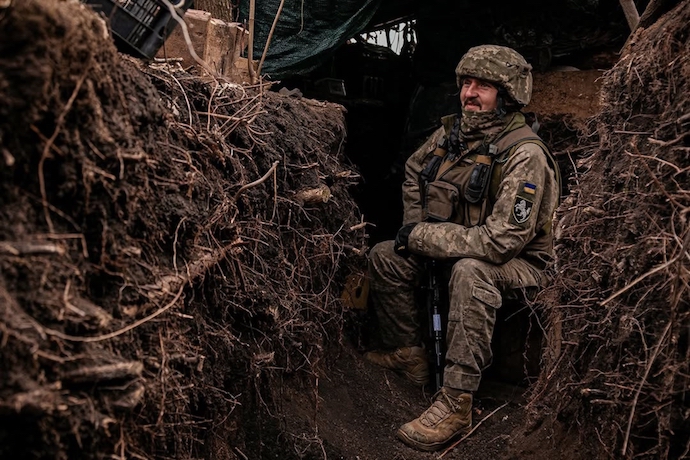
Last May, combat medic Vlad, known by the call sign “Baptist,” was rushing a wounded comrade to treatment when he felt something go terribly wrong. His vision blurred. His breathing became shallow. A sharp ringing filled his ears. As he climbed out of his ambulance, his legs seemed to dissolve beneath him.
“It felt like they turned to cotton,” he recalled.
He staggered forward and collapsed.
Members of his unit dragged him back to the barracks by his vest. They forced fluids down his throat in an effort to keep him conscious, but he blacked out anyway.
“Took too much and outed myself,” Baptist later said, referring to the overdose that exposed what had been a closely guarded secret among some of his fellow soldiers. “Happens.”
 The substance in his bloodstream was pregabalin, sold by Pfizer under the brand name Lyrica. Approved by the U.S. Food and Drug Administration in 2004, the medication was originally intended to treat fibromyalgia, neuropathic pain, and neuralgia. Since then, its use has expanded dramatically, particularly for anxiety-related conditions prescribed off-label. Nearly nine million pregabalin scripts were written in the United States in 2023 alone.
When Lyrica entered the market, one of its chief selling points was that it was not addictive. On Ukraine’s front lines, however, that claim sounds increasingly detached from reality.
According to a 2025 report on substance abuse within the Ukrainian military conducted under the auspices of the United Nations Office on Drugs and Crime, pregabalin ranks second only to cannabis in daily consumption among soldiers.
Mykyta Lapin, an epidemiologist at the Vinnytsia Regional Rehabilitation Center for War Veterans, said the trend is impossible to miss. “They come to us in large numbers, and on very high doses,” he said.
Viktoria Sergeevna, an intensive-care specialist at the Medlux rehabilitation clinic in central Ukraine, described a similar pattern. “Many soldiers start taking it legitimately,” she explained. “But they keep increasing the dose on their own, without medical oversight. Soon they can’t get through the morning without it.”
Baptist, who requested that his full name be withheld because of concerns about Russian intelligence surveillance and possible disciplinary consequences within the military, enlisted at age 22, two years before Vladimir Putin launched the full-scale invasion of Ukraine.
“Life felt meaningless,” he said.
He initially served as a rifleman-medic before training as a frontline paramedic. His introduction to Lyrica came through wounded soldiers in his unit. Amputees frequently requested the medication to manage phantom limb pain and anxiety. As part of his duties, Baptist often collected the drug from the brigade dispensary.
“Three packs here, three packs there,” he recalled. “And I kept three strips for myself.”
At first, he was simply curious. Maybe it could help with his stress. Maybe it would finally allow him to sleep.
Initially, it seemed like a miracle.
At lower doses, pregabalin felt energizing. At higher doses, it became sedating. It helped him stay motivated through exhausting shifts and sleep through the few nights he had off.
“With Lyrica, you don’t wake up three times a night,” Baptist said. “You wake up rested. That’s why you want more.”
Sleep, after all, was not merely a comfort. On the battlefield, exhaustion can be fatal. A combat medic responsible for life-and-death decisions cannot afford diminished concentration.
Before long, Baptist began recommending the medication to other soldiers struggling with anxiety and insomnia. Unlike opioids or benzodiazepines such as Xanax, pregabalin use is not closely tracked within the Ukrainian military. As a result, distribution remained remarkably easy.
To Baptist, the pills became another tool of battlefield medicine, nearly as essential as tourniquets or combat gauze.
Meanwhile, his own consumption steadily increased.
He eventually reached 900 milligrams before bed and another 300 milligrams each morning, far beyond the typical starting doses prescribed for anxiety or sleep disorders in Ukraine. As tolerance developed, he needed progressively larger amounts to achieve the same effect.
Shortly before his overdose, he swallowed 1,500 milligrams at once—roughly five times Pfizer’s recommended maximum daily dosage.
The drug did more than help him sleep.
It silenced the voices.
Not literal voices, Baptist clarified, but the relentless internal conversations with dead comrades that replayed endlessly in his mind. For a few precious hours, pregabalin made them disappear.
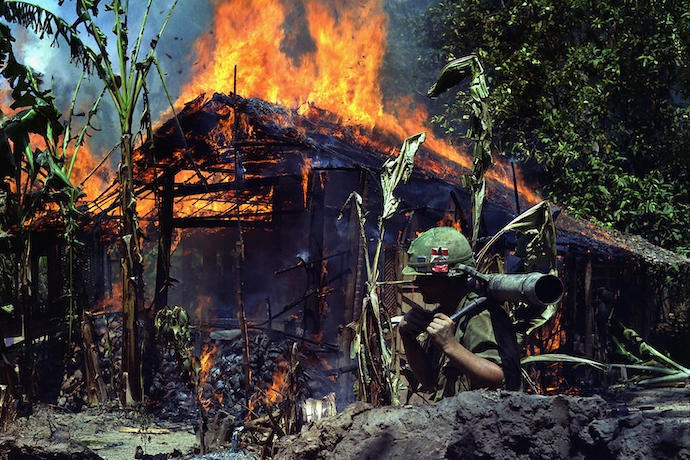 The relationship between war and drug dependency is hardly new. During the Vietnam War, an estimated 20 percent of U.S. soldiers became dependent on heroin. Troops in both World Wars relied heavily on morphine and amphetamines.
Nor is the story of supposedly non-addictive medications later revealed to carry significant risks unfamiliar. OxyContin followed a similar trajectory, marketed as safer than earlier opioids before its dangers became undeniable.
“Lyrica was introduced as a safer alternative to opioids,” said Alexander Caleb, an epidemiologist at Johns Hopkins University.
Early advertisements depicted smiling consumers strolling through gardens, sipping tea, and enjoying pain-free lives. The marketing strategy also emphasized awareness of fibromyalgia, a condition often difficult to diagnose because many of its symptoms—fatigue, body aches, and generalized pain—are common complaints.
The approach worked.
Doctors increasingly viewed pregabalin as a versatile neurological medication applicable to a wide range of conditions.
“It became a use-it-for-everything neurological agent,” said Joseph Ross, a professor of medicine and public health at Yale University.
Yet warning signs may have been overlooked from the beginning. A Pfizer post-marketing surveillance study released in 2011 identified dizziness and sedation as the most common side effects. Participants, however, were followed for only 13 weeks, often too short a period to identify dependence.
Pregabalin belongs to the same family of medications as gabapentin. Both drugs are believed to reduce nerve activity in the brain and spinal cord. Both are widely prescribed off-label for conditions ranging from post-traumatic stress disorder and panic attacks to insomnia, migraines, and bipolar disorder.
Gabapentin’s addiction risks have attracted substantial scrutiny. Pregabalin’s have not.
What is happening among Ukrainian soldiers may therefore be less an anomaly than an early warning.
“It may be a glimpse of what’s to come,” said psychiatrist Friederike Regan of Berlin’s Charité Hospital.
 After recovering from his overdose, Baptist continued taking the drug.
Part of the appeal, he admitted, was its immediacy.
Long after combat ends, many soldiers remain trapped in states of hypervigilance. Their nervous systems refuse to recognize that the danger has passed. Medications such as Zoloft may require weeks before providing relief. Pregabalin works within hours.
The military’s drug policies may also unintentionally encourage its use. Ukrainian forces maintain strict prohibitions against opioids, amphetamines, synthetic psychotropics, and alcohol. Testing positive can result in the loss of combat status and pay. Pregabalin remains outside those restrictions.
By late May, Baptist’s brigade had redeployed to the Donetsk region.
One afternoon near Bakhmut, exhausted after evacuating casualties, he rested in a shallow trench. Burned armor littered the landscape. A destroyed tank sat on blackened grass. Russian artillery continued striking from across a nearby valley.
After taking his usual morning dose of Lyrica, Baptist drifted in and out of sleep inside a makeshift dugout reinforced with shattered logs.
Then the shell landed.
The explosion erupted just meters away.
Shrapnel tore through the position.
A body crashed onto him.
It was Sergiy, a 42-year-old soldier from his unit. One of his legs had been blown off, but he was still alive.
Baptist rolled free and realized fragments had ripped open his body armor. Blood streamed from his ears and nose. Dizzy and struggling to breathe, he grabbed Sergiy beneath the arms and dragged him toward a field medical post.
Half running and half falling, he managed to pull the wounded soldier away from the impact site.
Then he lost consciousness.
Sergiy died later that day.
Baptist survived. His injuries had nothing to do with pregabalin. The blast perforated his eardrum, and he was evacuated to Kyiv for treatment.
Questions surrounding pregabalin misuse are not confined to Ukraine.
In 2019, University of Texas pharmacology professor Kirk Evoy published the first analysis of pregabalin-related reports contained within the FDA’s adverse-events database. Of 571 documented pregabalin adverse events, roughly 10 percent involved abuse.
His research found that a relatively small group of users consumed disproportionately large quantities of the drug, a pattern strikingly similar to that observed with Xanax.
Yet many physicians and patients remain largely unaware of the risks.
Part of the reason may be that deaths involving pregabalin alone remain uncommon. Nevertheless, fatalities involving gabapentinoids in combination with alcohol or other substances have steadily increased over the past two decades.
Europe has generally moved faster than the United States in recognizing the problem.
A 2025 French study tracking nearly 900,000 new pregabalin users found that approximately one in 40 escalated to high-dose use. In the United Kingdom, pregabalin ranked among the drug groups most frequently involved in drug-related deaths in 2022.
The medication has also become a fixture of prison black markets. A 2018 report from HMP Bristol found pregabalin to be the institution’s most tradable prescription drug, valued both for its intoxicating effects and its ability to ease withdrawal symptoms from other substances.
The United States currently classifies pregabalin as a Schedule V drug, indicating relatively low abuse potential. In contrast, British regulators have steadily tightened oversight. Earlier this year, the Medicines and Healthcare products Regulatory Agency required stronger warnings regarding addiction, dependence, tolerance, and withdrawal risks.
***
While recovering from his battlefield injuries, Baptist received something he had never previously possessed: an official prescription for Lyrica.
Doctors prescribed 75 milligrams in the morning and 300 milligrams at night for ear pain.
He neglected to mention that he was already taking roughly three times that amount.
By late August, he had returned to his brigade near Novomykhailivka in Donetsk.
One evening, hoping to dull both the throbbing in his damaged ear and the memories that accompanied it, he swallowed additional pills. Soon he slipped into what he called “ovoch,” a blackout state.
The next morning he awoke unharmed.
This time, however, something changed.
The episode frightened him.
Without medical supervision, he abruptly quit.
“I’m sober,” he later said from his barracks.
The withdrawal was brutal. Panic attacks became a daily occurrence, a documented symptom of pregabalin dependence. He occasionally relapsed, taking a pill simply to feel normal again. Still, he considered himself sober and hoped to consult a psychiatrist who could help him stay off the drug permanently.
When I spoke with him again in February, that consultation still had not happened.
He was in Kyiv undergoing a routine evaluation by the Military Medical Commission. Nobody reviewing his case knew about his struggle with Lyrica.
By then, he hoped doctors would remove him from frontline duty because of his PTSD. He wanted to train combat medics instead of returning to combat himself.
The temptation remained.
He still thought about how easy it would be to escape into a pill.
But he was trying not to.
“I know I have a problem,” Baptist said.