

How Sudan Became the World’s Most Neglected War
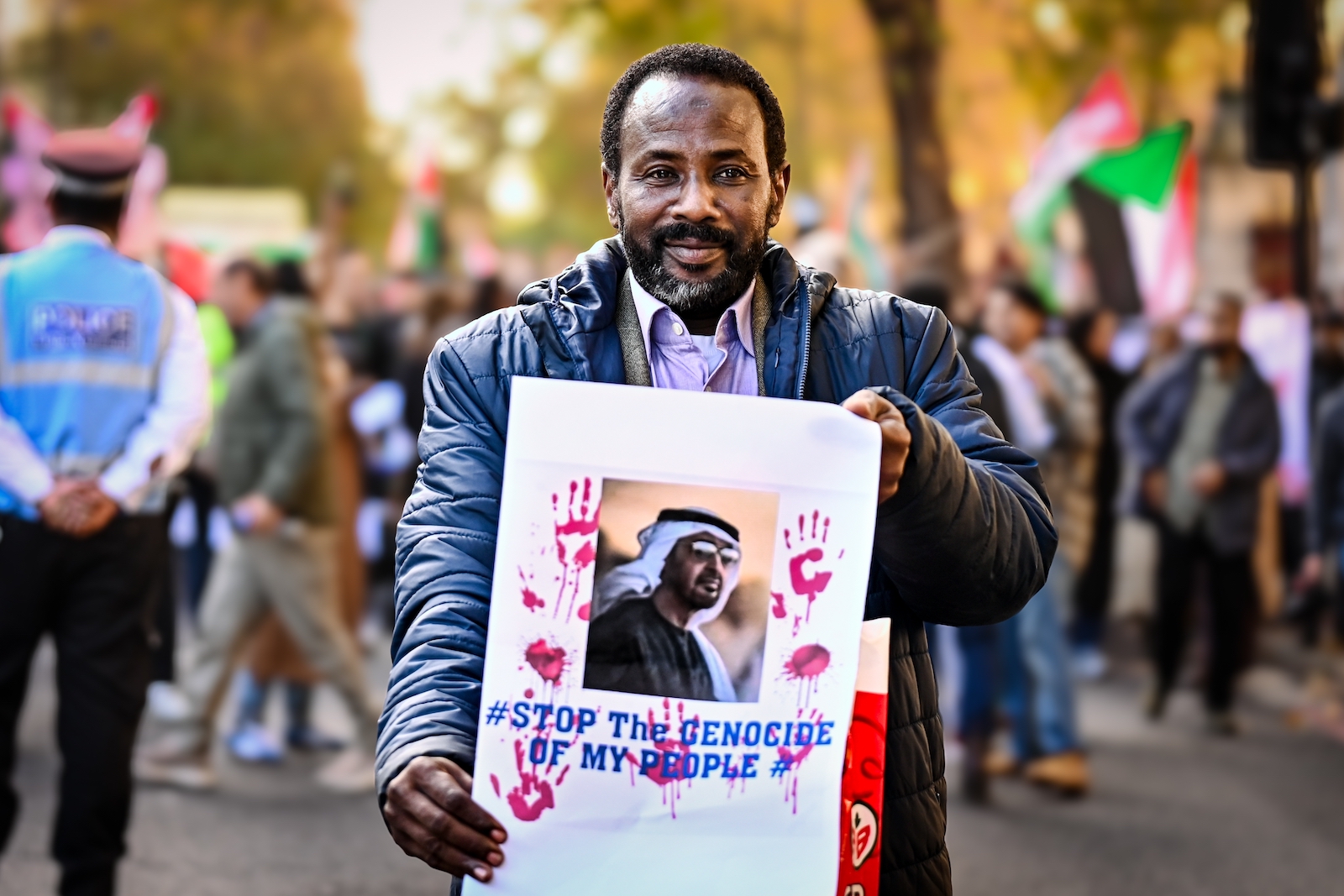
Sudan’s war is routinely described as the world’s forgotten conflict. The phrase is comforting because it suggests oversight or distraction. The truth is less forgiving. Sudan has not been forgotten so much as politically abandoned. Since April 2023, the Sudanese Armed Forces and the Rapid Support Forces have ripped apart a country already battered by dictatorship, economic collapse, and political upheaval. This is not simply another civil war unfolding beyond the world’s attention. It has become one of the defining moral failures of contemporary international politics.
The scale of the catastrophe alone should have made Sudan impossible to ignore. Conservative estimates place the death toll in the tens of thousands, while other assessments suggest the true figure is far higher. Millions have been displaced within Sudan and across its borders. Tens of millions require humanitarian assistance. Farms have been abandoned, food systems have collapsed, hospitals have been bombed or deserted, schools have closed, and entire communities now live under the constant shadow of hunger, disease, displacement, and violence. Humanitarian organizations describe Sudan as the world’s largest displacement crisis. Yet despite its staggering scale, it rarely commands the sustained diplomatic urgency devoted to other wars.
Sudan is anything but strategically insignificant. Sitting at the crossroads of the Red Sea, the Sahel, the Horn of Africa, and the Arab world, its collapse sends shockwaves far beyond its borders. Refugees flee across frontiers, weapons circulate through fragile regions, trade routes become more vulnerable, and regional rivalries deepen. The consequences are felt in Chad, South Sudan, Egypt, Ethiopia, and the Gulf states. Yet many of the governments with the greatest leverage continue to treat the conflict as something to manage rather than resolve. Even as outside powers speak the language of peace, financial networks, weapons, and logistical support continue to sustain the fighting.
That is Sudan’s cruel paradox. The country is not neglected because it lacks importance but because confronting its crisis demands political choices many powerful states would rather avoid. For some governments, Sudan is another arena in which to compete for influence. For others, it is a security challenge best contained from afar. Humanitarian agencies see an emergency crippled by restricted access and chronic underfunding. For ordinary Sudanese, geopolitics is experienced in far simpler terms: another checkpoint that cannot be crossed, another village burned to the ground, another clinic stripped bare, another child who never comes home, another road too dangerous to travel. These are not abstractions. They are the daily arithmetic of survival.
The violence has become grimly familiar. Darfur, already synonymous with one of the international community’s greatest failures to protect civilians, has once again become the site of mass atrocities. Reports from El Fasher describe siege warfare, ethnically targeted attacks, widespread sexual violence, forced displacement, and the deliberate use of starvation as a weapon. Recent warnings from El-Obeid suggest similar horrors may be unfolding elsewhere. Sudan is therefore more than a humanitarian emergency. It is a measure of whether the international community still means what it says when it promises “never again.”
The international response has been defined less by urgency than by ritual. Sanctions are announced. Statements are issued. Aid conferences are convened. Ceasefires are proposed and quickly collapse. The United States has targeted financial networks linked to the conflict while pressing for an immediate humanitarian truce. The European Union has expanded humanitarian assistance and imposed restrictive measures. The United Nations has meticulously documented atrocities and demanded unhindered humanitarian access. Each of these actions has value. Taken together, however, they have failed to alter the calculations of the armed groups driving the war. Diplomacy has too often treated Sudan as a crisis to contain rather than as a political order that must ultimately be rebuilt.
A more serious response would begin by making humanitarian access non-negotiable. Aid corridors, cross-border operations, and locally led relief networks require sustained funding, meaningful diplomatic backing, and credible protection. Arms transfers and financial networks sustaining both sides must also face far greater scrutiny. Sanctioning intermediaries carries symbolic weight, but symbolism accomplishes little if the principal sponsors continue operating with relative impunity. Most importantly, Sudan’s civilian political movements must be placed at the center of any future transition. Sudan’s revolution was not led by generals. It was carried by professionals, students, women’s organizations, neighborhood resistance committees, and civil society groups demanding bread, freedom, and justice. Any settlement that merely redistributes power among armed factions will almost certainly sow the seeds of the next war.
Sudan must also become a genuine priority in international diplomacy. Global attention is rarely allocated according to humanitarian need alone. It follows political interests, strategic calculations, and media attention. Some lives are deemed strategically important, while others become tragic statistics. Some wars dominate headlines for months or years, while others recede into the background despite comparable human suffering. Sudan exposes that hierarchy with painful clarity. Its tragedy has not gone undocumented. It has been photographed, mapped, investigated, testified to, and reported in extraordinary detail. The obstacle is no longer ignorance. It is political will.
No single intervention can undo the devastation Sudan has endured. But one reality is impossible to escape: neglect is not neutrality. When famine, mass displacement, and systematic atrocities are allowed to continue without decisive international action, inaction itself becomes a choice. Sudan does not need sympathy offered from a comfortable distance. It needs meaningful protection, genuine accountability, sustained humanitarian access, and a political future shaped by civilians rather than those who have devastated the present. Sudan does not suffer because the world cannot see it. It suffers because the world has decided other crises matter more. Until that calculation changes, Sudan will remain not simply a humanitarian catastrophe but a lasting indictment of an international order capable of documenting atrocity in remarkable detail while repeatedly failing to stop it.