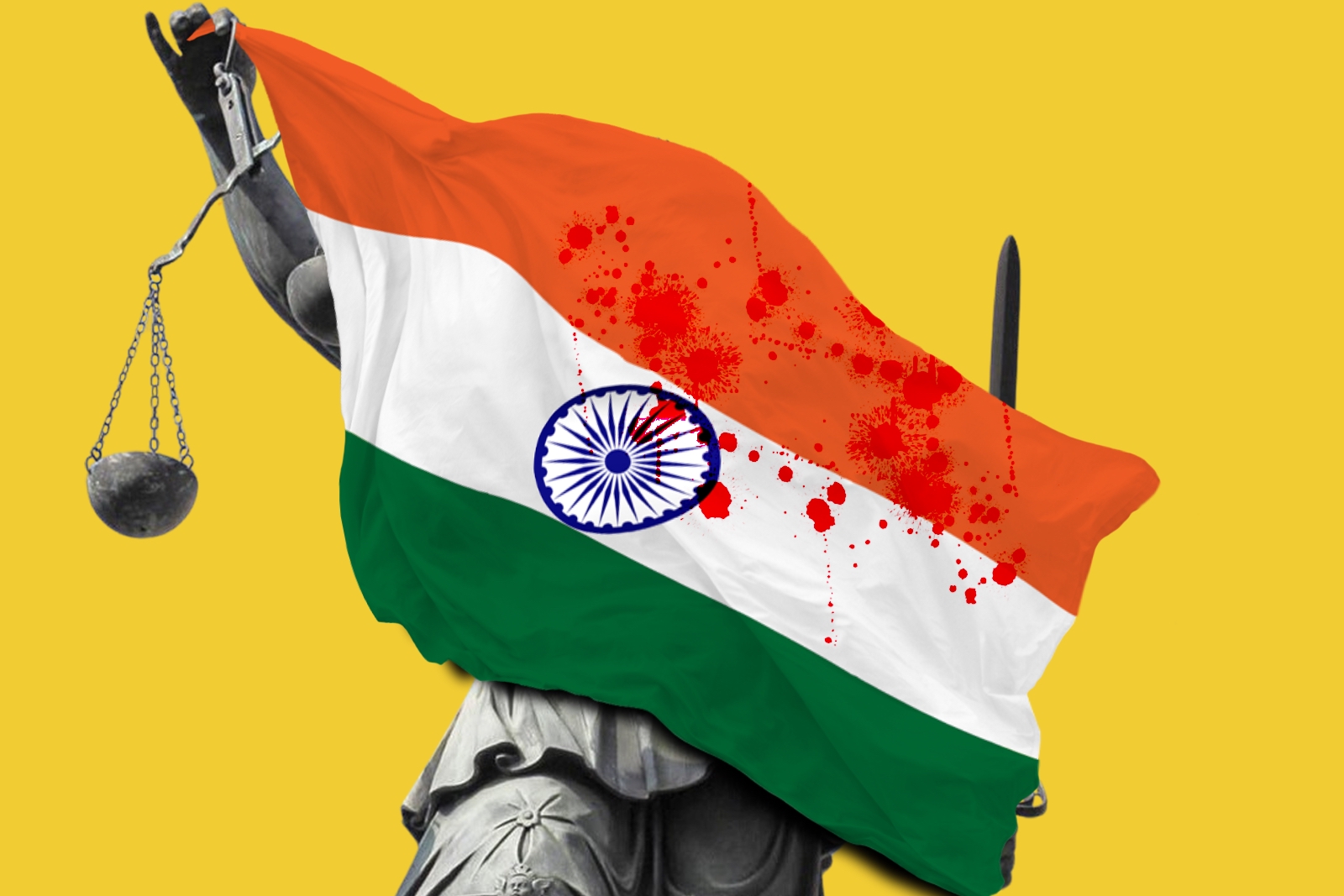

India’s Human Rights Body Has Been Quietly Hollowed Out
On December 4, 2025, the Global Alliance of National Human Rights Institutions upheld a recommendation to downgrade India’s National Human Rights Commission (National Human Rights Commission) from “A” to “B” status. The decision capped a decade of steady institutional decline for India’s premier human rights watchdog. Effective in April, the downgrade will strip the commission of its voting rights at the United Nations Human Rights Council (United Nations Human Rights Council), its ability to speak on agenda items, and its authority to submit independent documentation to UN treaty bodies.
For an institution established under the Protection of Human Rights Act (PHRA) of 1993 to safeguard rights relating to life, liberty, equality, and dignity, this is not a technical reclassification. It is an institutional obituary. The downgrade follows successive accreditation deferrals in 2016, 2023, and 2024, each accompanied by increasingly pointed demands for reform. That these warnings went unheeded reveals a more unsettling reality: the commission’s failures are not episodic or managerial in nature. They are structural, embedded in legislation that subordinates the watchdog to the very executive power it is meant to scrutinize.
The most glaring of these defects lies in Section 11 of the PHRA, which authorizes the police to conduct investigations under the supervision of an official not below the rank of Director General of Police. The commission’s Investigation Division is headed by a DGP, supported by a Deputy Inspector General and four Senior Superintendents of Police, all deputed from state police services. When an institution tasked with probing custodial torture, extrajudicial killings, and police brutality relies on serving police officers to conduct those investigations, impartiality becomes structurally implausible. In its March 2025 report, the accreditation committee warned that such arrangements risk undermining both investigative independence and victims’ access to justice.
This conflict is not theoretical. Civil society documentation shows that the commission routinely accepts investigative reports from the National Investigation Agency and the Central Bureau of Investigation without independent verification, particularly in cases involving human rights defenders detained under the Unlawful Activities (Prevention) Act. The scale of inertia is striking. More than 34,000 cases remain pending nationwide, including 285 relating to police custodial deaths and 2,532 concerning deaths in judicial custody. Across three decades, the commission has never recommended prosecution in a custodial death case. Instead, it has confined itself to compensation awards that substitute monetary relief for accountability and, in doing so, normalize impunity.
Investigative dependence, however, is only one dimension of institutional capture. The commission’s leadership structure and internal composition reinforce the same pattern of constraint. Section 3(2) of the PHRA requires that three of the six members possess knowledge or practical experience in human rights, with at least one woman among them. In practice, this minimal standard has rarely been met in spirit. In thirty-two years, only four women have served as commissioners. As of March 2025, 246 of the commission’s 339 staff members were men. More consequential than gender imbalance, though, is the broader absence of pluralism. The commission’s makeup reflects neither the diversity of Indian society nor the range of lived experiences necessary to identify systemic violations.
This homogeneity is reinforced by appointment mechanisms that concentrate authority within the government. Section 4 vests selection power in a committee comprising the prime minister, home minister, Lok Sabha speaker, Rajya Sabha deputy chairman, and the leader of the opposition, with no formal role for civil society. When Justice V. Ramasubramanian was appointed chairperson in December 2024, opposition leaders issued formal dissent notes, describing the process as predetermined. Their objections echoed the accreditation committee’s finding that India’s appointment procedures fall short of the broad consultation required by the Paris Principles.
Administrative subordination completes the architecture. Under Section 11(1)(a), the secretary-general of the commission must be an officer of the rank of secretary to the Government of India, deputed by the executive. An institution whose investigators are police officers, whose leadership is selected through government-dominated processes, and whose chief administrator serves at executive pleasure cannot credibly challenge systemic state abuses. It is therefore unsurprising that official responses to the downgrade have focused on procedural adjustments rather than statutory reform.
The Ministry of Home Affairs’ notification of new NHRC Service Rules on November 27, 2025, illustrates this pattern. The rules establish pay matrices for 50 posts but conspicuously omit the structural deficiencies identified by the accreditation committee. Police secondment remains intact. The secretary-general remains a deputed civil servant. No requirements are introduced to ensure pluralism, nor are transparent recruitment protocols established for investigative staff. The reforms amount to administrative housekeeping—reform theatre in which visible activity substitutes for substantive change.
The consequences of this paralysis are evident in the commission’s response to contemporary crises. Since ethnic violence erupted in Manipur in May 2023, more than 200 people have been killed and over 60,000 displaced. The commission’s role has been limited to requesting state reports and issuing notices, without producing substantive findings or systemic recommendations addressing law-enforcement failures. On the phenomenon of “bulldozer justice,” where properties belonging to Muslims and other minorities are demolished following criminal allegations without due process, the commission has maintained a studied silence.
Similarly, the prolonged pre-trial detention of human rights defenders under the UAPA has elicited little meaningful engagement with civil society, despite obligations under the Asia Pacific Forum’s Regional Action Plan. The accreditation committee noted that the commission was failing to address violations at a systemic level. This restraint is not accidental. An institution structurally dependent on the executive cannot be expected to confront it. The commission’s reticence is not a lapse of courage; it is an outcome of design.
Meaningful reform, therefore, requires legislative amendment. Section 11 must prohibit police secondment and establish independent recruitment of professional investigators accountable solely to the commission. Section 11(1)(a) should empower the commission to appoint its own secretary-general through a merit-based process insulated from executive discretion. Section 3(2) must be strengthened to mandate genuine pluralism, ensuring representation of women, Dalits, religious minorities, persons with disabilities, and LGBTQ+ communities—not as symbolic inclusion, but as a recognition that human rights protection depends on diverse perspectives.
The appointment committee under Section 4 should include civil society representatives, and candidate pools should be publicly advertised. These measures are not aspirational. They are baseline requirements under the Paris Principles. Nepal’s human rights commission, reviewed alongside India’s in March 2025, retained its “A” status after implementing comparable reforms. The precedent exists. What is missing is political will.
The timing of India’s downgrade is diplomatically consequential. New Delhi loses its ability to participate fully in the UN Human Rights Council precisely as it seeks to expand its multilateral influence. Moral authority abroad is difficult to sustain when domestic accountability mechanisms fail international standards. Yet the deeper cost is internal. Victims of custodial torture, families seeking justice for extrajudicial killings, and communities facing discrimination are left without a credible institutional forum when the body meant to protect them is structurally constrained from acting.
The downgrade merely renders visible what has long been apparent. India operates a human rights commission designed more for appearances than for accountability. When Justice Ramasubramanian observed that criticisms of the commission’s “congenital deformity” are, in effect, criticisms of the government, he articulated a larger truth. That provision was included in the PHRA in 1993 and preserved through subsequent amendments in 2006 and 2019, despite repeated warnings.
Whether the 2025 downgrade becomes a catalyst for reform or another deferred reckoning depends on Parliament’s willingness to confront what three decades of institutional failure have made undeniable. India cannot claim human rights leadership abroad while legislating human rights impunity at home. The choice is stark: amend the PHRA to create an institution worthy of “A” status, or accept executive control as the price of diminished accountability. The accreditation decision has eliminated the middle ground. What remains is a test of legislative will.