Inside Ukraine’s Campaign to Expose Russian War Crimes
As Russia’s war against Ukraine grinds into another year, the battlefield is not the only site of struggle. The fight for accountability—for documented truth, legal redress, and international attention—has become equally consequential. At the center of that effort stands the Center for Civil Liberties, the Kyiv-based human-rights organization awarded the 2022 Nobel Peace Prize for its work documenting Russian war crimes and defending democratic freedoms under assault.
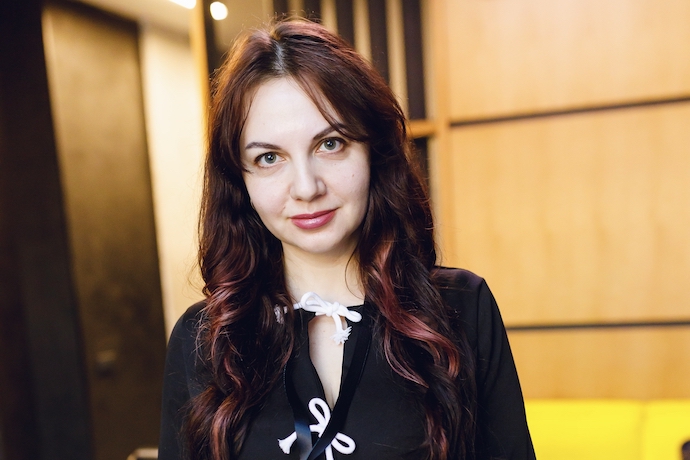
Anna Trushova serves as Press Officer and Media Relations Manager for the Center, helping translate field documentation into international awareness and institutional pressure. She coordinates communications tied to the Tribunal for Putin (T4P) initiative, which systematically documents Russian war crimes, unlawful detentions, enforced disappearances, and conflict-related sexual violence. In parallel, as Communications Director and a member of the Union of Women of Ukraine, she advances women-led advocacy supporting displaced families, trauma survivors, widows, journalists, and emerging leaders across the country.
In this interview, Trushova discusses the strategic communications battle surrounding Russia’s atrocities, the challenge of sustaining global attention amid fatigue and geopolitical distraction, the ethical imperatives of survivor-centered reporting, and the role of women-led civil society in rebuilding resilience during wartime. At stake, she argues, is not only justice for Ukraine—but the integrity of international law itself.
Scott Douglas Jacobsen: As Russia’s war stretches on and international attention ebbs and flows, what are the Center for Civil Liberties’ most urgent communications priorities right now? How do you prevent war crimes documentation from being swallowed by global fatigue or geopolitical distraction?
Anna Trushova: Our priority is to keep international attention focused on Russia’s ongoing mass atrocities, at a moment when fatigue and political distraction make this increasingly difficult. We work to amplify evidence-based reporting from the ground, highlight the systemic nature of Russia’s violence, and humanize the stories of civilians who continue to disappear, be tortured, and face unlawful detention.
Another key priority is the People First campaign — advocating for the immediate release of Ukrainian civilians and POWs, especially women, people with disabilities, the sick, and political prisoners.
Jacobsen: The Tribunal for Putin initiative has built an extensive evidentiary record since February 24, 2022. How do you convert that volume of legal documentation into messaging that not only informs but pressures institutions such as the ICC and UN to act?
Trushova: Communications and documentation work as one chain.
T4P produces the verified evidence — incidents mapped almost day-by-day since February 2022, collected by regional organisations that know their communities.
Our role is to ensure this evidence reaches the institutions capable of acting: the ICC, UN mechanisms.
We translate a massive evidence base into public understanding and political pressure, showing that Russia’s crimes are not isolated excesses but the architecture of a genocidal war.
Jacobsen: You have described certain abuses as systemic rather than incidental. Which patterns of violence—whether enforced disappearances, detention practices, repression in occupied territories, or the deportation of children—most clearly reveal an organized strategy, and why do they demand immediate international intervention?
Trushova: Three categories are urgent. Enforced disappearances and unlawful detentions — Russia systematically targets teachers, journalists, local officials, priests, activists, and anyone refusing collaboration. Abuses in occupied territories — forced labor, torture, filtration practices, and repression that deepens with every new stage of attempted annexation. Deportation and re-education of Ukrainian children — an assault on identity consistent with genocidal intent.
These crimes escalate as Russia tightens control, and they demand a coordinated international response now—not after the fact.
Jacobsen: Survivor-centered reporting is central to your work. How do you strike the balance between exposing atrocities and safeguarding those who remain in captivity, under occupation, or at risk of retraumatization?
Trushova: Survivor safety defines all our decisions.
Public exposure should never come at the cost of retraumatisation or risk to those still in captivity or in occupied territories.
The public has a right to know the truth, but survivors have the right to decide how, when, and whether their story is told.
Jacobsen: There is often a gap between legal timelines and media cycles. Where do you see the greatest friction between field investigators focused on evidentiary rigor and journalists seeking immediacy, and how can that gap be responsibly bridged?
Trushova: The main bottleneck is volume and velocity: the scale of crimes exceeds the media’s capacity to absorb and contextualize them.
Finally, investigators prioritize evidence for legal accountability, while journalists often need narrative immediacy — aligning these timelines requires careful coordination.
Jacobsen: Disinformation campaigns frequently aim to discredit victims and human-rights defenders. What strategies have proven most effective in countering narratives designed to obscure or normalize Russia’s abuses?
Trushova: A core part of my work is to communicate the truth about Russia’s crimes to international media, replacing propaganda with verified facts and survivor-centred testimony. Together with the Center for Civil Liberties, we have produced hundreds of media stories that expose one of the least-known crimes of this war — the mass enforced disappearances of Ukrainian civilians, who are now illegally held in Russian prisons.
According to the Geneva Conventions, the concept of “civilian prisoners of war” does not exist, but Russia systematically abducts mayors, volunteers, teachers, journalists, and ordinary citizens from occupied territories.
By amplifying the voices of victims and protecting them from manipulation, we counter disinformation not only with facts — but with dignity, accuracy, and global visibility.
Jacobsen: Through your work with the Union of Women of Ukraine, you are also shaping a parallel front of civic resilience. How are women-led initiatives—whether through leadership training, psychological support, or community rebuilding—reshaping Ukraine’s democratic fabric during wartime?
Trushova: The Union of Women of Ukraine (СЖУ) is the first nationwide women’s organisation in the country, dedicated to protecting women’s rights, strengthening democracy, and building a society of equal opportunities. It brings together more than 10,000 active members across 22 regions — human-rights defenders, scholars, educators, cultural leaders, lawyers, entrepreneurs, and volunteers.
In 2025, the Union continues to support women affected by the war: displaced families, survivors of trauma, and relatives of soldiers. We run safe spaces for women and children, psychological retreats for mothers and widows of fallen soldiers, reintegration programmes for internally displaced women, and community-based support networks.
A strategic focus this year is gender equality and women’s leadership at the local level. We conduct training for journalists on gender-sensitive reporting, promote women’s participation in decision-making, and collaborate with international partners to strengthen women’s role in peacebuilding and community resilience.
In 2025, together with partners, we launched the Academy of Women’s Leadership — an innovative educational space for young women aged 17–35. The project develops leadership skills, provides mentorship from experienced women leaders, and creates a collaborative environment for personal and professional growth.
Overall, the Union of Women of Ukraine embodies resilience, dignity, and solidarity, helping women not only survive the consequences of war but also rebuild their lives, regain agency, and drive positive change in their communities.
Jacobsen: Thank you very much for the opportunity and your time, Anna.