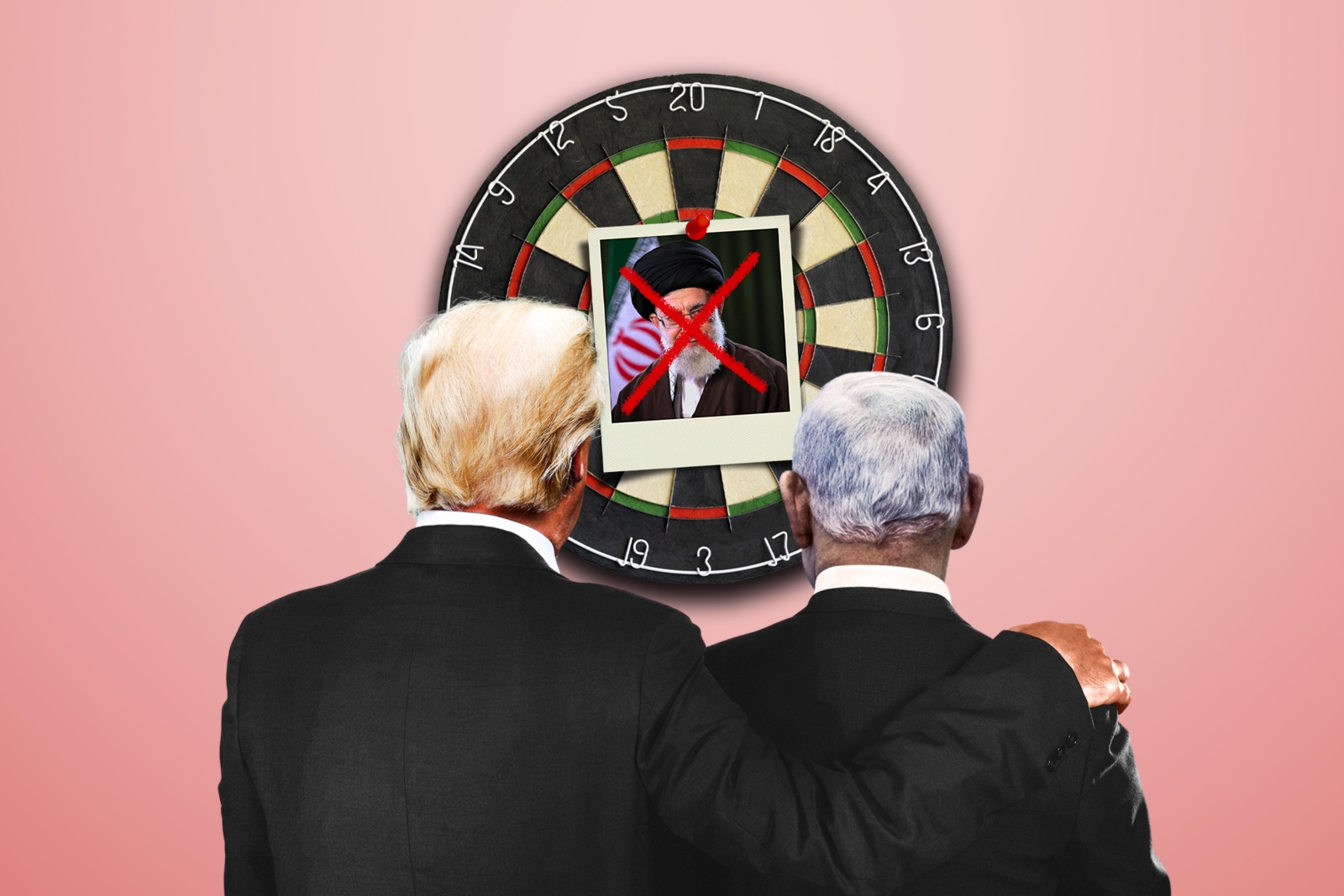

Killing Iran’s Leaders Was Never a Strategy
Six months after U.S.-Israeli strikes killed Iran’s supreme leader and other senior figures, the war has not ended. Iran’s governing institutions continued to function, a successor assumed the top office, and renewed U.S.-Iranian fighting in early September pushed the conflict into a seventh month. The outcome exposes a problem that modern military precision can obscure: eliminating a leader and changing an enemy’s political behavior are not the same thing.
A commander can be killed within minutes. What follows may unfold over years. In war, an explosion can end an operation; in politics, it can begin a crisis. That distinction separates the removal of an individual from the far more difficult task of changing the organization, state, or political cause that survives him.
For years, Israel has targeted senior leaders to weaken its adversaries’ operational and organizational capacity. At the tactical level, the logic is straightforward: kill a commander, disrupt the chain of command, and impair at least part of the opponent’s ability to act. The danger comes when a successful operation is treated as proof of political victory.
The decisive question is not whether a commander can be killed, but what his death accomplishes. Does the organization fracture? Does the enemy retreat from its objectives? Does a society that believes it is under foreign attack lose its appetite for resistance? Or does the attempt to create a vacuum merely elevate new leaders, deepen popular anger, and supply the next generation with a grievance? The capacity to eliminate a target is not the same as the capacity to redirect a conflict.
That distinction matters especially for Washington. The United States does not use force merely to demonstrate that it can destroy something; it uses force, at least in theory, to produce a political result. Destructive power alone is not transformative power. If a strike disrupts command without changing the enemy’s conduct, it has produced an operational success, not a strategic solution.
Where the Beheading Strategy Breaks Down
The “beheading” strategy rests on an appealing metaphor: remove the head and the body will stop moving. That may sometimes hold for a small organization built around one charismatic figure. It is far less certain in complex political and security institutions, where layers of command, institutional memory, social networks, ideology, and succession plans allow the structure to endure.
Scholarship on leadership decapitation is not unanimous about its effects, but the durability of mature, highly organized movements is well established. Such groups often absorb the loss, replace key figures, and adapt.
Iran is only the latest test of this theory. Israel has repeatedly killed Hamas and Hezbollah leaders and senior commanders in the hope that removing the figures at the top would erode the organizations’ ability or willingness to fight. The same calculation was eventually applied on a far larger scale to Iran, reaching from military and security chiefs to the supreme leader. Yet a state is not a single nervous system. It is a dense collection of institutions, interests, patronage networks, coercive bodies, and political beliefs. Remove one leader and the system may simply reproduce another.
Organizations under sustained pressure frequently reorganize instead of collapsing. New chains of command emerge. Operational methods become less centralized. Survivors internalize the vulnerabilities exposed by the attack and harden themselves against the next one. After Hamas political leader Ismail Haniyeh was killed in 2024, analysts widely expected the group’s military operations in Gaza to continue largely unaffected in the immediate term. The death of a leader may therefore mark a new stage in an organization’s evolution rather than its end.
Leadership strikes can also generate the very cohesion they are supposed to destroy. An assassination removes a person, but it also creates political meaning. A slain commander can be recast as a martyr. A foreign attack can validate a government’s warnings, strengthen its claim to be defending the nation, and make dissent look like disloyalty. Revenge may replace whatever motives existed before. A strike intended to open fractures can instead seal them, providing emotional and ideological fuel for another round of conflict.
This does not mean leadership targeting never works. The death of an unusually dominant figure can paralyze a fragile organization, intensify internal disputes, or create an opening that military and diplomatic pressure can exploit. But those effects depend on the organization’s age, structure, legitimacy, and ability to replace its leaders. Decapitation is a tool whose value varies with the target; it is not a strategy that can substitute for understanding the political system underneath.
Tactical Success Is Not Strategic Victory
An assassination should be judged not at the instant of impact but across the consequences that follow. The target may be dead, the command structure temporarily disrupted, and the attacker’s intelligence reach spectacularly displayed. Those are measures of tactical performance. Strategy poses harder questions: Has the enemy been weakened in a lasting way, or has resistance merely changed form? Has the cycle of violence shortened? Have the conditions for a political settlement improved, or has compromise become more dangerous for everyone involved?
Israel may view the physical elimination of adversaries as part of its established pattern of warfare. If Washington makes the same logic a central pillar of policy, however, it inherits a larger burden. The United States cannot ask only, “What target can we destroy?” It must also ask, “What change in the enemy’s behavior will this destruction produce?” Without a persuasive answer, military action gradually displaces politics, and the instrument of war becomes an end in itself.
That is how tactical momentum becomes strategic drift. If resistance survives, another commander is placed on the target list. If the desired outcome remains elusive, the list expands. Each new operation is presented as the blow that will accomplish what the previous one did not. A method advertised as a way to shorten war can become a mechanism for perpetuating it, turning warfare from an attempt to resolve a conflict into the indefinite management of hostility.
The distinction is simple but often ignored. Tactics asks whether a target can be struck. Strategy asks what changes after it is struck. Who succeeds the dead leader? Does the balance of power shift? Does the enemy reconsider its aims? Above all, does a political agreement become more attainable or more remote? The answer to the tactical question may be yes while every strategic answer is no. Under those conditions, an operation can be militarily impressive and politically futile.
Washington’s problem is not that assassination can never be effective. It plainly can be, just as an airstrike or an intelligence operation can achieve its immediate objective. The problem is confusing success in an operation with success in a war. American power matters when it can convert military advantage into a durable political outcome, not when it simply adds names to a list of dead adversaries.
The most dangerous illusion is that every enemy killed moves a conflict closer to its conclusion. Sometimes the opposite is true. A leader can disappear in an instant, but the political and social forces that made his leadership possible may remain untouched. If removing him does not change the enemy’s behavior, reduce the incentives for resistance, or open a path toward settlement, the result is a temporary vacancy rather than a victory.
A state powerful enough to kill a leader but unable to alter the conditions that produced him has not necessarily defeated its enemy. It may only have changed the enemy’s form, hardened the politics that sustain it, and postponed the reckoning until the next war.