Labour Cannot Keep Dodging the Question of Europe
The Clacton by-election campaign is over. For Labour, it offered at least one political advantage: it allowed the party to postpone any serious discussion of what a new Labour prime minister might say or do about Britain’s eternal—and eternally fraught—question of Europe.
To be fair, Labour prime ministers have rarely found Europe easy to discuss. Clement Attlee declined to join the European Coal and Steel Community when it was established in 1951. Britain had emerged from the Second World War proud of having defeated continental fascism, and Labour, like the industrial trade unions, believed the country’s coal, steel, and manufacturing industries remained world-beaters. Cooperation with recently defeated European powers seemed less like an opportunity than an unnecessary concession.
Denis Healey, then Labour’s international secretary, dismissed the new community—a forerunner of the European Economic Community—as “capitalist, Catholic and a cartel.” Sturdy British Protestants, in this telling, had little reason to involve themselves in the project of European integration.
Harold Wilson, an Oxford PPE graduate, understood that isolating Britain from Europe’s economic development was folly. Yet he struggled to overcome the Europhobic, socialism-in-one-country tendency within Labour and the unions. Its ranks included Tony Benn, Jack Jones, Arthur Scargill, Barbara Castle, and Neil Kinnock, as well as rising figures such as Robin Cook and Jack Straw. Wilson complained that he was “wading in shit every morning on Europe to keep Labour together.”
Wilson did, however, devise the political wheeze of a referendum. In 1975, voters endorsed Britain’s continued membership of the EEC, which the country had joined under Edward Heath’s Conservative government in 1973. Four decades later, David Cameron decided that another referendum could settle the Conservative Party’s deepening Europhobia. The result was Brexit: a rupture that has damaged the British economy, severed freedoms that allowed Britons to study, work, live, and retire across Europe, and replaced one politically convenient immigration system with another. European workers, including many Poles, left or stopped coming; employers increasingly recruited from Asia and Africa instead. The promised restoration of control merely changed the composition of migration.
Jim Callaghan said in retirement that he “preferred the Empire to Europe.” In 2022, Sir Keir Starmer addressed the Labour Movement for Europe and declared that his policy was to “make Brexit work.” It was an oxymoron and, in substance, little different from Theresa May’s promise after becoming prime minister. Brexit can no more be made to work on its own terms than the Conservative policy of appeasement in the late 1930s could have been rescued by better management.
Rain Newton-Smith, director-general of the Confederation of British Industry, acknowledges that Brexit has damaged business. Yet she also says that the CBI and business leaders do not want to “relitigate the referendum.” This is essentially the position of Kemi Badenoch and Nigel Farage, who insist that the 2016 plebiscite—in which 37 percent of the registered electorate voted to leave—must bind Britain for eternity, regardless of the economic evidence or the country’s changing needs.
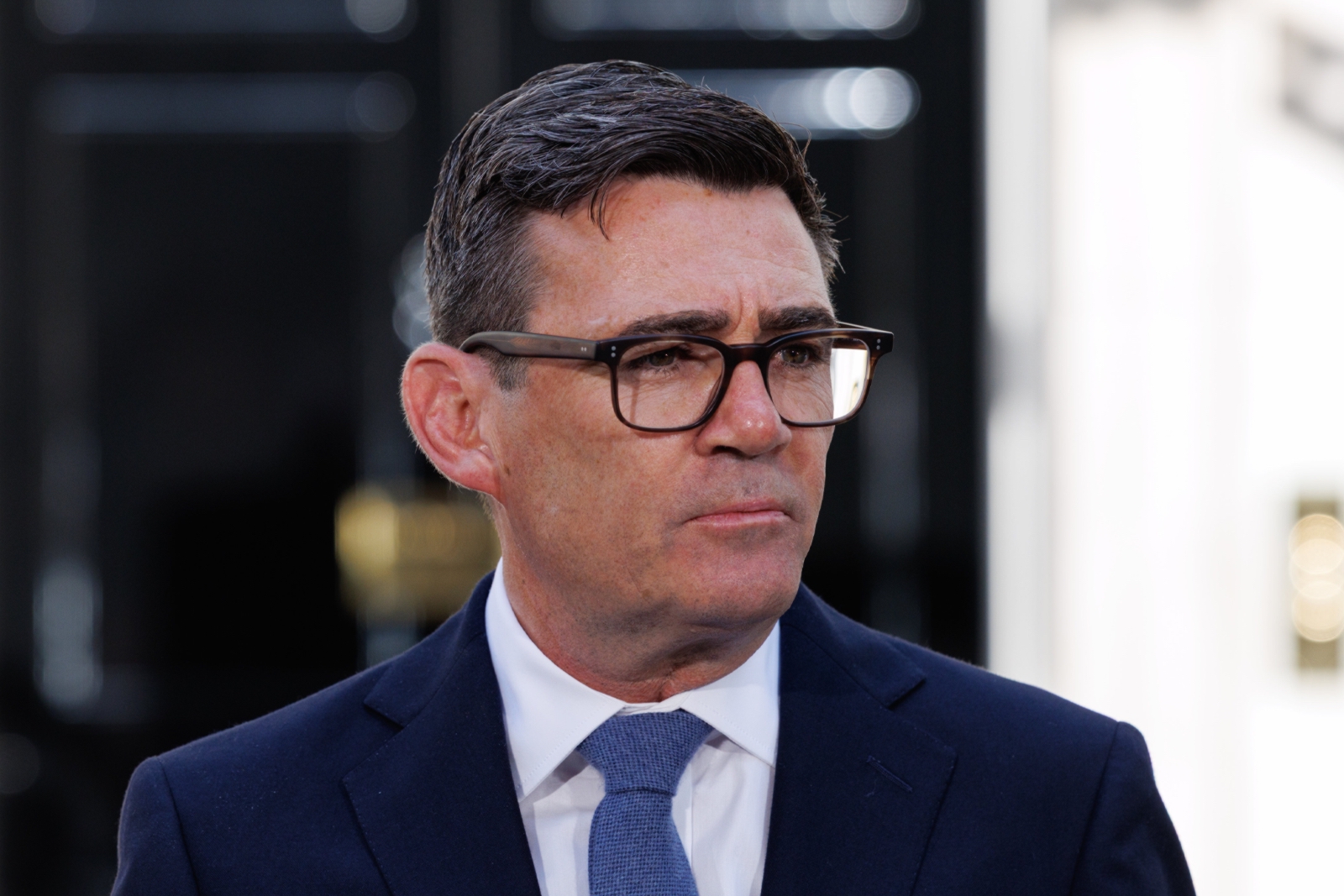
Labour ministers appointed by Andy Burnham also appear willing to preserve the Starmer-McSweeney red lines from the 2024 election: no return to normal trade with Europe and no reconsideration of the policy that denies British citizens the automatic right to work, live, or retire there. Boris Johnson’s Europhobic settlement is treated not as a political choice but as a constitutional commandment.
That is a peculiar standard. A new prime minister is normally permitted—indeed, expected—to re-examine the failed policies of a predecessor. Business groups are usually among the first to demand a fresh look when old arrangements stop serving the national interest. Across Europe, plenty of countries trade closely with their neighbours without using the single currency, while retaining control over entry and residence. The available choices are wider than the sterile binary of full EU membership or Johnsonian isolation.
Burnham speaks a European language and has family ties to the continent. He should leave the repetition of decades-old Brexit mantras to Farage and Badenoch and speak instead for the roughly two-thirds of Britons who, according to opinion polls, want a fresh start with their neighbours across the Channel.
This need not mean rejoining the EU. The Europe of 2016 no longer exists, any more than the Britain of 2016 does. Russia’s invasion of Ukraine has exposed the urgent need for a stronger European defence structure—one that cannot remain dependent on an increasingly erratic and isolationist Washington. Britain’s security and economic interests now demand a different conversation from the one the country had a decade ago.
The latest evidence of Britain’s stagnant growth should surprise no one. A country cannot erect barriers between itself and one of the world’s largest markets—whose rules British ministers helped write and enforce until 2016—without paying a price. Friction is not sovereignty. It is friction: slower trade, higher costs, weaker investment, and fewer opportunities.
Labour MPs, along with parliamentarians from parties not led by the Badenoch-Farage double act, do not have to wait for Downing Street to rediscover Europe. They can open their own conversations with business, rebuild links with members of the European Parliament and lawmakers in the EU’s 27 national parliaments, and ask whether British companies truly want the isolation that the CBI’s present caution appears willing to tolerate.
Britain also has something to learn from the continent’s social settlement. Stronger workplace protections, shaped in part by the cross-party influence of Catholic social teaching, offer examples of how economic growth can be made fairer. European defence production, meanwhile, needs more collaborative ventures built on the Airbus model. Airbus itself has become a demonstration of what European industrial cooperation can achieve on a global scale.
Monolingual Whitehall might also learn from European approaches to water management, vocational training, infrastructure, and the use of imprisonment. None of this requires bowing before a Brussels Eurocracy. It requires something more difficult for Westminster: curiosity, humility, and a willingness to admit that a policy has failed.
The real choice is not between submission to Brussels and permanent obedience to the referendum of 2016. It is between a Britain capable of learning from its neighbours and one trapped by the anti-European ideology that consumed the Conservative Party in this century—and that Labour, so far, has been too timid to confront.