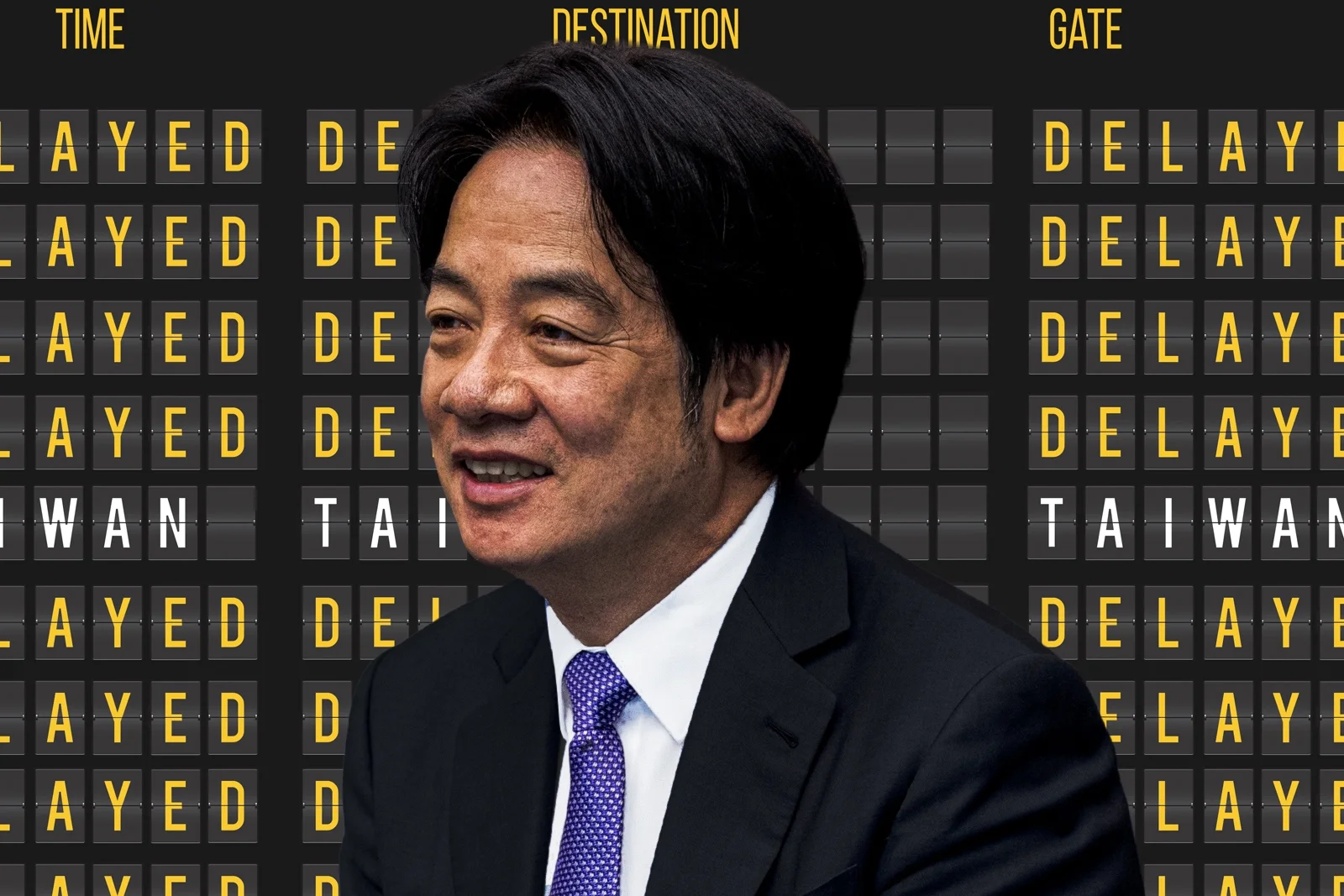

Let Taiwan In: Why ICAO Needs Taipei in the Room
The International Civil Aviation Organization (ICAO) meets every three years to set the rules of the sky. Its Assembly—this year’s 42nd session runs from September 23 to October 3 in Montreal—draws governments, industry, and civil-society actors into a sprawling negotiation over global standards. Under the banner “Safe Skies, Sustainable Future,” ICAO says it wants a more resilient, inclusive aviation system that works with all stakeholders. If that commitment is to mean anything, Taiwan must be allowed to participate meaningfully in the Assembly, technical meetings, and related mechanisms. Excluding Taiwan undercuts regional safety today and the sustainability agenda ICAO claims to champion tomorrow.
Start with basic geography and traffic. The Taipei Flight Information Region (FIR) sits astride some of the busiest air corridors in East Asia and is an indispensable piece of ICAO’s more than 300 FIR network. Taiwan’s Civil Aeronautics Administration (CAA) oversees the Taipei FIR: it manages routes, delivers information services, and keeps aircraft moving safely and efficiently—whether they’re arriving, departing, or transiting. For risk management to function as designed, the CAA needs to operate on equal footing with other FIR authorities, communicating directly with peers and with ICAO in real time. Fragmented channels aren’t just inefficient; they are a safety hazard.
Recent practice has made the hazard tangible. In the past few years, China has unilaterally declared temporary danger areas and airspace reservations—and staged military exercises—inside the Taipei FIR, despite having no authority over it. Often, these actions have come without the seven-day advance notice ICAO requires. The result: needless uncertainty for airlines and air traffic controllers, and degraded safety across the Taipei FIR and neighboring regions. The skies do not care about political theater; pilots need timely, authoritative information.
The wider aviation system is already juggling compounding stresses—climate change, grid instability and power blackouts, geopolitical friction. Taiwan, responsible for heavy traffic through the Taipei FIR, has tried to be the adult in the room: a responsible stakeholder committed to the letter and spirit of ICAO’s standards. If ICAO is serious about guarding against cascading risks, it should recognize both the centrality of the Taipei FIR and the necessity of Taiwan’s direct participation.
In practice, Taiwan has been forced to collect essential safety information indirectly and to make up for what it can’t access by inviting foreign experts to train its personnel. Even so, the CAA has pressed ahead with international best practice—adopting and adapting regulations, systems, and procedures to align with ICAO’s Standards and Recommended Practices (SARPs). Through its State Safety Program, the CAA collaborates with industry stakeholders to build robust oversight, which shows up where it counts: in the numbers. From 2020 to 2024, Taiwan recorded zero accidents per million departures for both turbofan and turboprop aircraft on a five-year moving basis. The industry’s safety reputation is equally strong; EVA Air, for instance, has repeatedly ranked among the world’s safest full-service carriers, placing seventh globally in 2025. These are the hallmarks of a regulator and an ecosystem not only capable of contributing to ICAO’s work, but already doing so in substance.
Taiwan’s posture on sustainability is just as concrete. The CAA has incorporated the Carbon Offsetting and Reduction Scheme for International Aviation (CORSIA) into domestic law and launched a sustainable aviation fuel pilot in April 2025—real policies aimed at a real net-zero transition. This is exactly the kind of technical, measurable work ICAO says it wants to accelerate through global coordination. Again, the paradox is obvious: the organization is sidelining a stakeholder that is advancing the very goals ICAO sets for the sector.
None of this is an abstract plea for recognition. It is a practical demand for access to timely, comprehensive information, the exchange of lessons through technical meetings, and the ability to join training programs that make skies safer. ICAO’s own “No One Left Behind” initiative is supposed to close capability gaps, not institutionalize them. When a regulator responsible for a major FIR is excluded from the rooms where standards are debated and implemented, “inclusion” becomes a slogan rather than a safety principle.
Aviation safety has always been border-blind. For decades, Taiwan’s CAA has mandated stringent safety and service standards in the Taipei FIR while aligning with ICAO’s SARPs. As a stakeholder in the international aviation community, Taiwan shares the responsibility to safeguard regional and global safety. The difference is that, with a seat in ICAO venues, it can share that responsibility more effectively—co-authoring procedures, exchanging data at the speed of operations, and contributing to innovations in decarbonization and resilience that the entire system needs.
As ICAO convenes its 42nd Assembly under the theme “Safe Skies, Sustainable Future,” it faces a test of credibility. The organization cannot plausibly claim to engineer a safer, greener, more inclusive future while ignoring the authority that runs a critical East Asian FIR, posts exemplary safety metrics, and is already implementing core climate policies. The fix is straightforward: bring Taiwan into the fold with meaningful participation, and let its CAA work alongside counterparts to implement SARPs in full. That is how you build resilience—not by politics at altitude, but by putting every qualified professional in the room where safety is made.