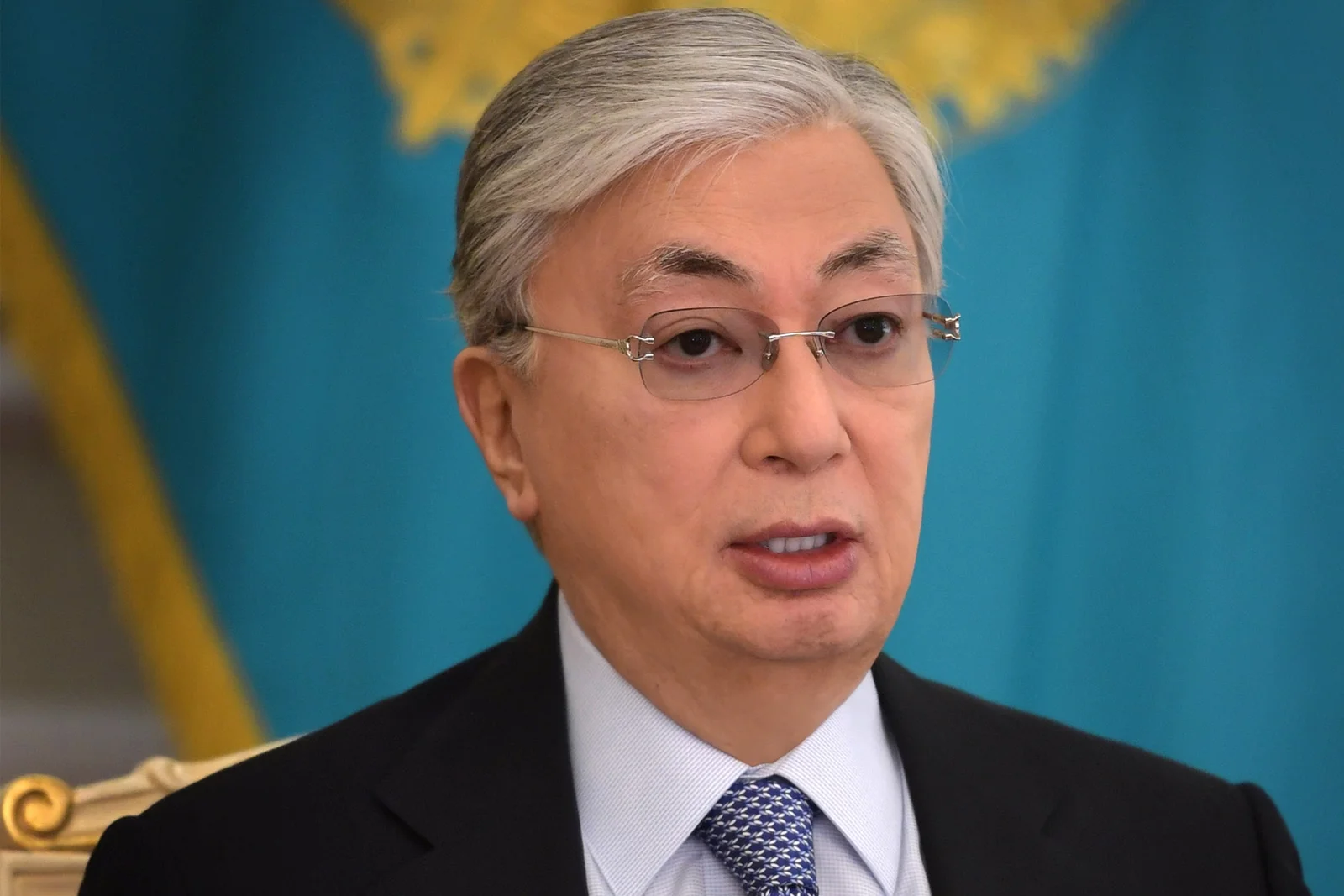

Mr. Tokayev goes to Brussels
Kazakhstan’s President Kassym-Jomart Tokayev visited Brussels in late June, where he met with senior European Union officials. By most measures, the trip was a success. According to news reports, the two sides signed memoranda of understanding worth more than $12 billion. For Astana, the visit also reinforced the logic of its long-standing multivector foreign policy, which seeks to maintain constructive relationships with major global powers, including the European Union and its member states.
It has already been a busy spring and summer for Kazakhstan on both the domestic and foreign policy fronts. In March, the country held a referendum proposing amendments to roughly 80 percent of the Constitution. The referendum passed, setting in motion sweeping institutional reforms.
Under the new constitutional framework, the legislative branch will become a unicameral parliament known as the Kurultai, while a new representative body, the Halyk Kenesi, has also been established. The reforms further expand the president’s authority by allowing the appointment of candidates to the Supreme Court, Constitutional Court, Supreme Audit Chamber, and Central Election Commission, subject to Kurultai approval.
The new Constitution entered into force on July 1.
On June 25, more than 20 members of the Parliamentary Assembly of the Council of Europe issued a declaration welcoming the outcome of the referendum. The signatories represented a politically and geographically diverse group of countries, including Armenia, Greece, Hungary, Luxembourg, Spain, and Turkey.
The declaration argued that the constitutional reforms would support “a transition towards a more balanced model of governance” while strengthening “accountability mechanisms,” among other objectives. It also praised the “constructive dialogue” between Astana and the Council of Europe. Similarly, the European Union has acknowledged Kazakhstan’s continuing political reform agenda. That said, some analysts remain skeptical, arguing that the constitutional changes could further consolidate presidential authority and reshape Kazakhstan’s political system in ways that deserve closer scrutiny.
At the same time, Tokayev has maintained an active diplomatic schedule. He has met fellow heads of state at summits of the Organization of Turkic States, traveled to Russia for the Great Patriotic War commemorations, and overseen high-level engagement with other major partners. Kazakhstani delegations have visited the United States to participate in the inaugural Kazakhstan–U.S. Investment Roundtable, held on May 3 alongside the SelectUSA Investment Summit outside Washington, D.C. Officials have also traveled to China for meetings with senior leaders, including Premier Li Qiang.
Amid this crowded diplomatic calendar, Europe remains an essential partner. During his late-June visit to Brussels, President Tokayev met with António Costa, President of the European Council, and Ursula von der Leyen, President of the European Commission. According to the European Union, discussions centered on trade and investment, particularly the Enhanced Partnership and Cooperation Agreement (EPCA), which marked its tenth anniversary in 2025. The two sides also explored ways to strengthen the investment climate through initiatives such as the EU’s Global Gateway strategy for Central Asia. Unsurprisingly, the agenda focused on sectors where European and Kazakhstani interests increasingly overlap, including critical raw materials, energy, transport, digitalization, and emerging technologies.
The Trans-Caspian International Transport Route, more commonly known as the Middle Corridor, also featured prominently in the discussions. Its growing importance is hardly surprising. As an overland and maritime route linking Europe and Central Asia through the Caspian Sea, the corridor has become an increasingly significant alternative for moving goods between East and West.
The route has gained additional strategic importance amid continued geopolitical instability. Russia’s war against Ukraine has already accelerated efforts to diversify trade routes, while the recent conflict involving Iran, the United States, and Israel underscored how quickly disruptions in the Middle East can reverberate through global supply chains. Running through the Caucasus between Russia to the north and Iran to the south, the Middle Corridor has become central to Europe’s efforts to strengthen transport resilience. That has increased interest in expanding rail and highway infrastructure, modernizing ports, and digitizing customs procedures to facilitate the movement of goods, particularly energy exports.
Kazakhstan is also looking to European companies to help modernize key sectors of its economy. In March, Airbus and the Air Astana Group signed an agreement for the purchase of 25 A320neo Family aircraft, described as the airline group’s largest direct order to date. The new aircraft will be operated by both Air Astana and its low-cost subsidiary, FlyArystan, marking another step in the modernization of Kazakhstan’s commercial aviation sector while deepening industrial ties with Europe.
The energy sector offers another avenue for closer cooperation. In April, Kazakhstan’s state-owned oil and gas company, KazMunayGas (KMG), announced the discovery of an onshore oil and gas deposit north of the Ustyurt Plateau, which stretches across Kazakhstan and Uzbekistan between the Caspian and Aral Seas. Whether the discovery featured prominently in President Tokayev’s meetings in Brussels remains unclear. Even so, it is difficult to imagine the subject being entirely absent from discussions, given Europe’s growing interest in diversifying its energy supplies and securing access to new sources of hydrocarbons and critical minerals.
There is also a broader point worth considering when assessing President Tokayev’s visit. Since the collapse of the Soviet Union, Central Asia has often been described collectively as part of the “post-Soviet” space, a label that lingered long after the region’s states had established their own political identities. Although that terminology has gradually fallen out of favor, new frameworks have emerged to explain the region’s geopolitical significance.
One of the most enduring is the idea of a new “Great Game,” with major powers competing for influence across Central Asia. More recently, Western analysts have increasingly framed the region as the site of a strategic “race” to secure critical minerals, rare earth elements, and energy resources before China can dominate access to them.
From the perspective of policymakers in Washington, Brussels, London, Berlin, or Paris, those descriptions have a certain logic. They reflect legitimate concerns about supply chains, strategic competition, and economic security. Yet they are not necessarily how Central Asian governments understand their own position.
For governments such as Kazakhstan’s, the current geopolitical environment presents less a contest among great powers than an opportunity to diversify economic relationships, attract foreign investment, strengthen national infrastructure, and cultivate a wider network of international partnerships. Astana’s objective is not simply to choose between competing blocs but to maintain the flexibility that has long characterized its multivector foreign policy. From that vantage point, the situation is less a geopolitical “game” than a careful balancing act requiring patience, strategic calculation, and long-term planning.
President Tokayev’s visit to Brussels should therefore be viewed through that broader lens. The Airbus agreement, growing European interest in the Middle Corridor, and continued investment in Kazakhstan’s energy, mining, and transportation sectors are not merely episodes in a renewed contest among global powers. They are also evidence of Astana pursuing its own strategic priorities while expanding relationships with partners across multiple regions.
As Kazakhstan begins implementing its new Constitution, the government faces the dual challenge of managing significant domestic political reforms while navigating an increasingly uncertain international environment. The global landscape remains volatile, shaped by conflict, economic fragmentation, and intensifying geopolitical competition. In that context, maintaining dependable partnerships abroad may prove just as important as the constitutional changes taking place at home.