Pavel Luzin on Russia’s Hollow Military Machine
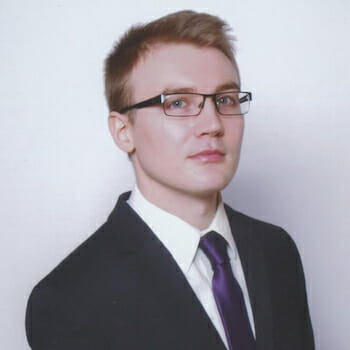
Pavel Luzin is a Russian political scientist whose work dissects the evolution of Russia’s armed forces, defense-industrial complex, and space policy. He is a Visiting Scholar at the Fletcher School of Law and Diplomacy at Tufts University, a Senior Fellow at both the Center for European Policy Analysis (CEPA) and the Saratoga Foundation and maintains an affiliation with the Jamestown Foundation. Luzin earned his PhD in International Relations from IMEMO in 2012, later teaching at Perm State University and working at IMEMO and the PIR Center. His analyses—published in outlets such as CEPA, the Jamestown Foundation, the Foreign Policy Research Institute, and Riddle—probe Russia’s defense budgets, force structure, industrial capacity, and the toll sanctions have taken on its space and technology sectors.
In this interview, Luzin contends that Russia’s war aims remain fundamentally revanchist even as the state itself grows weaker than it was in February 2022. The Kremlin, he argues, continues to fight on despite strategic defeat—sustained by massive wartime spending, industrial exhaustion, and external resupply from North Korea and Iran. Behind the façade of doctrinal continuity lies a hollowing military machine: acute shortages in electronics, machine tools, and trained officers, with more than 7,000 officer deaths confirmed. The critical measures, Luzin notes, are recruitment rates, attrition among officers, and the ability to sustain command capacity. He warns that only consistent Western support for Ukraine—and readiness to counter Russia’s future moves—can prevent Moscow from rebuilding the capacity to wage war again.

Scott Douglas Jacobsen: You describe a crisis of manpower, unchecked defense spending, and mounting hardware shortages. What indicators best reveal where the Kremlin’s true priorities lie—its soldiers, its rubles, or its weapons?
Pavel Luzin: Kremlin is prioritizing its goals of the war: elimination of Ukraine’s statehood and culture, elimination or at least strategic undermining of NATO and U.S. leadership and creation of a new world order comfortable for the Kremlin.
However, Russia’s current state is much worse than it was on the eve of February 2022, and this actual state of Russia means the war is lost. Consequently, the Kremlin is going to continue its warfare efforts at any cost in order to improve its state and to reverse the defeat. On the other hand, the recognition of Russia’s defeat means major domestic political and economic changes or even turbulence in Russia with uncertain risks for the Russian political elite.
Jacobsen: You’ve written extensively about shifts in Russian military thinking. What evidence points to genuine doctrinal change within the country’s military leadership, rather than just rhetorical adaptation?
Luzin: I don’t think there is a shift. There is a doctrinal continuity and evolving. However, the original strategy of revanchism appeared in the early 1990s is still the same: Russia must keep its great power status and dominance over its neighbors at any cost, U.S. role in the global affairs must be undermined, NATO must be undermined as well and Russia must take a role of guarantor of the European security (means Russia must be dominating over the European states). This strategy sounds crazy but it exists in the Russian documents and in the public statements of the Russian high-ranking persons.
Jacobsen: Following from the previous question, what represents rhetorical cover for material weakness?
Luzin: The material weakness exists and I cannot say what the people in the Kremlin know about this weakness and what they don’t. The officials say that Russia is undefeatable and produces as many weapons as it needs. However, the reality is different: Russia could hardly fight without the arms supplies from North Korea and Iran as early as late 2023. Also, what we know from the Russian industry is that its deterioration is ongoing and Ukraine makes this deterioration even faster with its strikes.
Jacobsen: Russia’s military leadership highlights structural changes at the top. How is elite churn reshaping command incentives?
Luzin: I do not see structural changes on the top. Yes, some people were replaced and some new command positions appeared like the split of the Western military district into two districts, Moscow and Leningrad, or like transforming brigades into divisions because the typical brigade is commanded by a colonel and typical division is commanded by a major general or lieutenant general. But what are the structural changes? The Kremlin has been incapable even to replace Gerasimov as a chief of the General Staff yet. The main command incentive today is avoiding responsibility for failures.
Jacobsen: What is the tightest bottleneck, e.g., electronics, machine tools, or labour, for the Russian defence-industrial systems?
Luzin: There is everything you mentioned.
Jacobsen: How sustainable is Russia’s admixture of domestic borrowing, inflation taxation, and off-budget lines for funding wartime procurement?
Luzin: Everything has its cost. Russia spent more than 40 trillion rubles directly on the war in 2022-2025. I do not mention years of preparations, indirect costs and huge losses of people. The cost of this cannot be measured by money.
However, every following month of the war leads the Russian budgetary system further to uncertainty because what Russians pay for the war today, they do not invest into their future, into the future of Russia.
Jacobsen: Shortages of fighting men is creating human capital stress. Beyond headlines, which lagging indicators capture the problem’s scale?
Luzin: We are following the balance between the dynamic of recruitment and the dynamic of losses. And Russia can hardly increase the number of its forces because recruits become gun fodder and do not survive for too long. Another lagging indicator is the number of losses among the officer corps. As for today, there are 7000+ Russian officers whose death in Ukraine is confirmed, and it is hard to replace these losses any time soon. And again that means Russia is incapable of increasing its armed forces because of a lack of officers.
Jacobsen: Thank you for the opportunity and your time, Pavel.