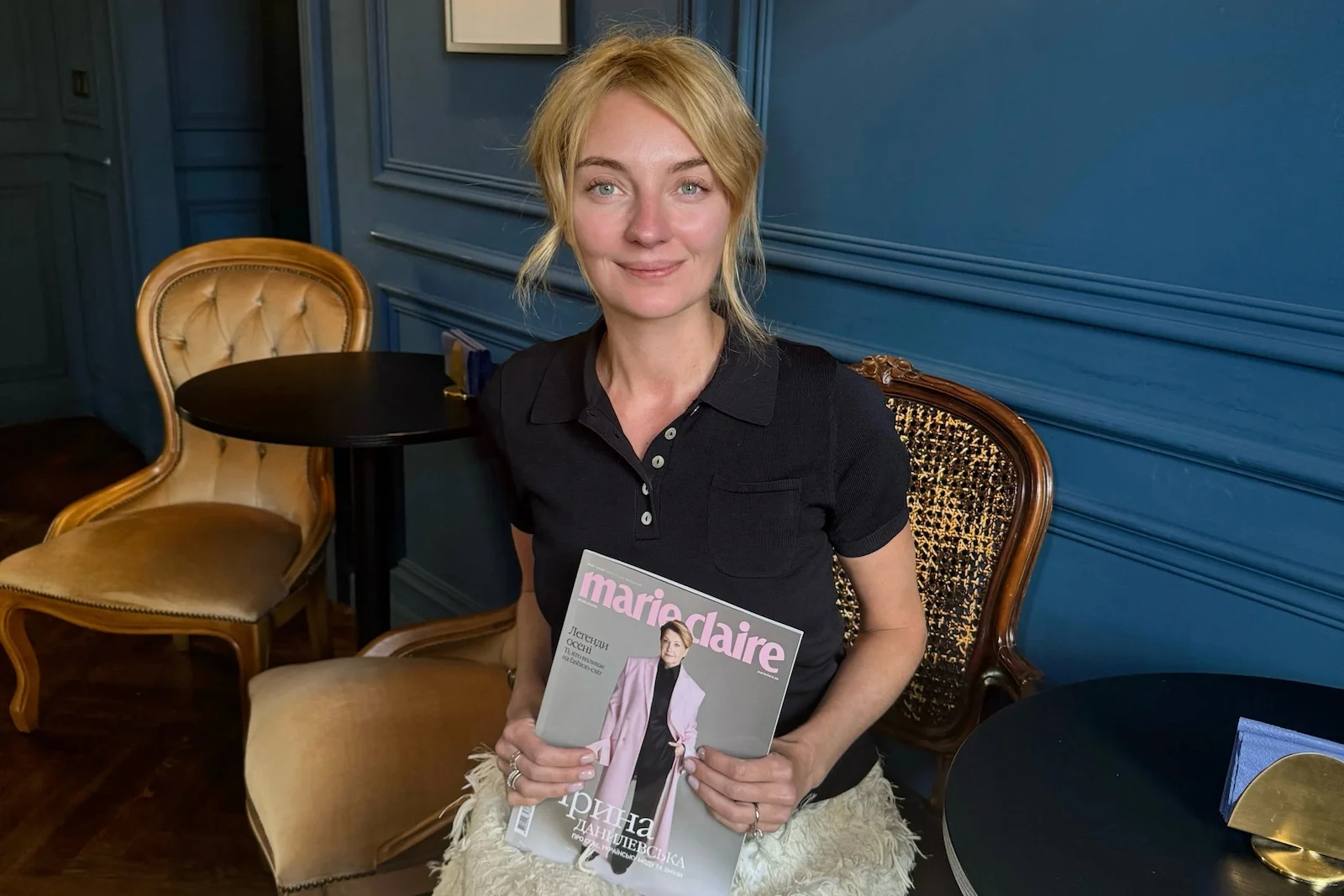

Selling Luxury in a Country Fighting for Survival
Kateryna Vozianova leads Indposhiv, a Ukrainian bespoke menswear company operating in Kyiv and serving clients in Vienna. Her work centres on tailoring craftsmanship, client relationships, and developing Ukraine’s bespoke culture. During Russia’s full-scale invasion, she has sustained employment, introduced ready-to-wear collections, and remained committed to Ukraine’s economy and cultural development.
Scott Douglas Jacobsen interviews Kateryna Vozianova about how Russia’s war affects Ukrainian bespoke tailoring. She discusses disrupted logistics, declining demand, military recruitment, staff emigration, and changing client confidence. Their conversation explores Indposhiv’s adaptation, Austrian business, luxury consumption, gender expectations, and her commitment to sustaining craftsmanship and employment in independent Ukraine.
View this post on Instagram
Scott Douglas Jacobsen: Bespoke tailoring is not an industry people typically associate with geopolitics. Yet Russia’s invasion has transformed nearly every aspect of Ukrainian life and business. How has the war affected your industry, particularly the way you operate, serve clients, and sustain demand?
Kateryna Vozianova: Of course. And dramatically.
First, logistics. As I said, we order textiles and fabrics for each order individually. For example, when the full-scale invasion started, everything shut down, and we could not import our fabrics. It was a huge problem figuring out how to get them in.
DHL and other logistics companies were not operating, so logistics were affected. However, the most important thing is demand, because a proper bespoke suit is not the first thing to invest in when you are in Ukraine. When you are a businessman, and you are thinking about how to secure your business, how to move your business, what to do with the business at all, the last thing you think about is how you look.
Moreover, it was the biggest problem in 2022 because, as I said, we employed around 50 tailors. Some moved, but others stayed. For us, the problem was what work to give our tailors so they could tailor and earn money. That is how we started our ready-to-wear collections.
They are small because they are not made in huge factories. The same hands that do bespoke make them, but it was a solution to the problem. Another thing is that when the war is here, it is very hard to think about the future. It is not hard to think, but you cannot see the future.
Moreover, as with all luxury goods, demand grows when the future is more foreseeable than it is in Ukraine. Moreover, the third thing is that in 2022, when the full-scale invasion started, it felt improper for regular men, for civilian men who were not in the war zone, to wear something flashy or fancy.
Even though our suits are bespoke, the luxury of bespoke is hidden. Only those who understand can see it.
However, our clients were not buying or ordering bespoke things for at least four months because it did not feel proper to wear anything that luxurious on the streets of Kyiv when they were empty, when everything was closing, when attacks were constant. Moreover, for me, it was a dilemma: what to do with our bespoke business, whether it should exist at all.
Then I remember returning to Kyiv at the end of April 2022. I received a call from a new client, and they said they were having a wedding and needed a wedding suit. It was the first call we had received from someone since the full-scale invasion had started. And I said, “OK, great.”
“You can come here, and we’ll tailor a suit for you.” And I thought, “OK, probably they will have the wedding somewhere in Italy.” When they came here, I realized he was a very young guy. He was 25 or something.
And they were planning to have a wedding near Poltava. In 2022, near Poltava. “Guys, you have so much more in life.”
“We love Ukraine. We are staying in Ukraine. We will do it in a very traditional Ukrainian style near Poltava.”
And they ordered a tuxedo. And I said, “Oh, my God, how inspiring that is, that people are having their weddings in May 2022.”
And one more interesting story. In September, one of our regular clients, who used to order a lot of suits before the full-scale invasion, called and said, “I’m so tired of these sports and casual clothes. I want to order a normal suit again.”
“Vadim, we’re here for you. Thank you very much.”
And eventually, demand started to grow. But right now, if we deduct our Austrian orders and count only Ukrainian orders, it’s half the volume we did before the full-scale invasion. So it affects us a lot.
Before the full-scale invasion, we generally preferred male cutters for our male clients, because there are certain aspects of fit and physical comfort that a man can understand from personal experience.
And when the full-scale invasion started, some of our cutters voluntarily went to the military recruitment office and joined the army. Two of them. Two out of six.
In 2023, one of our main cutters joined the army, and now he’s operating drones. He’s extremely talented. And for us, it’s not that easy to find a men’s cutter because, as all the recruiting agencies and HR people tell us, if you’re looking for a men’s cutter who can do proper bespoke, it’s like one in ten thousand. It’s very hard.
And it requires a lot of professionalism and experience. In our case, since we deal with a high-profile clientele, it also requires good communication skills, a good appearance, etc. And as you can understand, when a lot of men go to war, it becomes even harder to find these kinds of employees.
Many potential tailors and stylists have left Ukraine. Our own stylists and tailors have left as well and are already working in other countries. Poland, Britain, even Canada, by the way. And you don’t know when this process will stop because, as you have already said and observed, civilian casualties so far this year have already exceeded the total for the whole of last year.
And it’s hard to live here. And it’s hard to plan anything here. A lot of people are still leaving because of their children.
It’s impossible to study in schools when you’re always in shelters. It’s impossible. So they’re leaving Kyiv, and maybe Ukraine, because of their kids.
And it’s very hard to plan anything. Very hard to see the future because we have a lot of plans. We have strategic plans, et cetera.
But as things change so quickly and, unfortunately, so dramatically right now, my question is: when do we start carrying out our plans instead of saving the situation again and again? But it’s the fifth year of the full-scale invasion, and somehow we continue. Somehow we manage to find clients, find personnel, hire someone new.
So even though it’s harder sometimes than it was before the full-scale invasion, it’s still possible. And with those people who are here, you really understand that they are true believers in Ukraine. They believe in the values of the Ukrainian people.
And yes, they risk a lot. Their children risk a lot. And they do understand it.
But they see their future in an independent Ukraine. That’s one of my core values. It’s a core value of Indposhiv because we are a Ukrainian company, and we will remain here.
It’s possible to have the same building in another country. But for us, it’s very hard to have the same people on both sides, in terms of clients and in terms of people who are working for us. So even though it’s harder sometimes, the hardest thing is that you cannot see the future at all.
And I don’t like the phrase “There is nothing you can do” because you can always do something. If you’re not fighting in the war, you can donate, help, support, et cetera. But in terms of this geopolitical situation, the influence you can have on the whole situation is very, very small.
I believe my contribution is to stay here, build my business here, create jobs, pay taxes, and contribute to Ukraine’s economy and culture.
That’s how I see my support for Ukraine and what I can do for it.
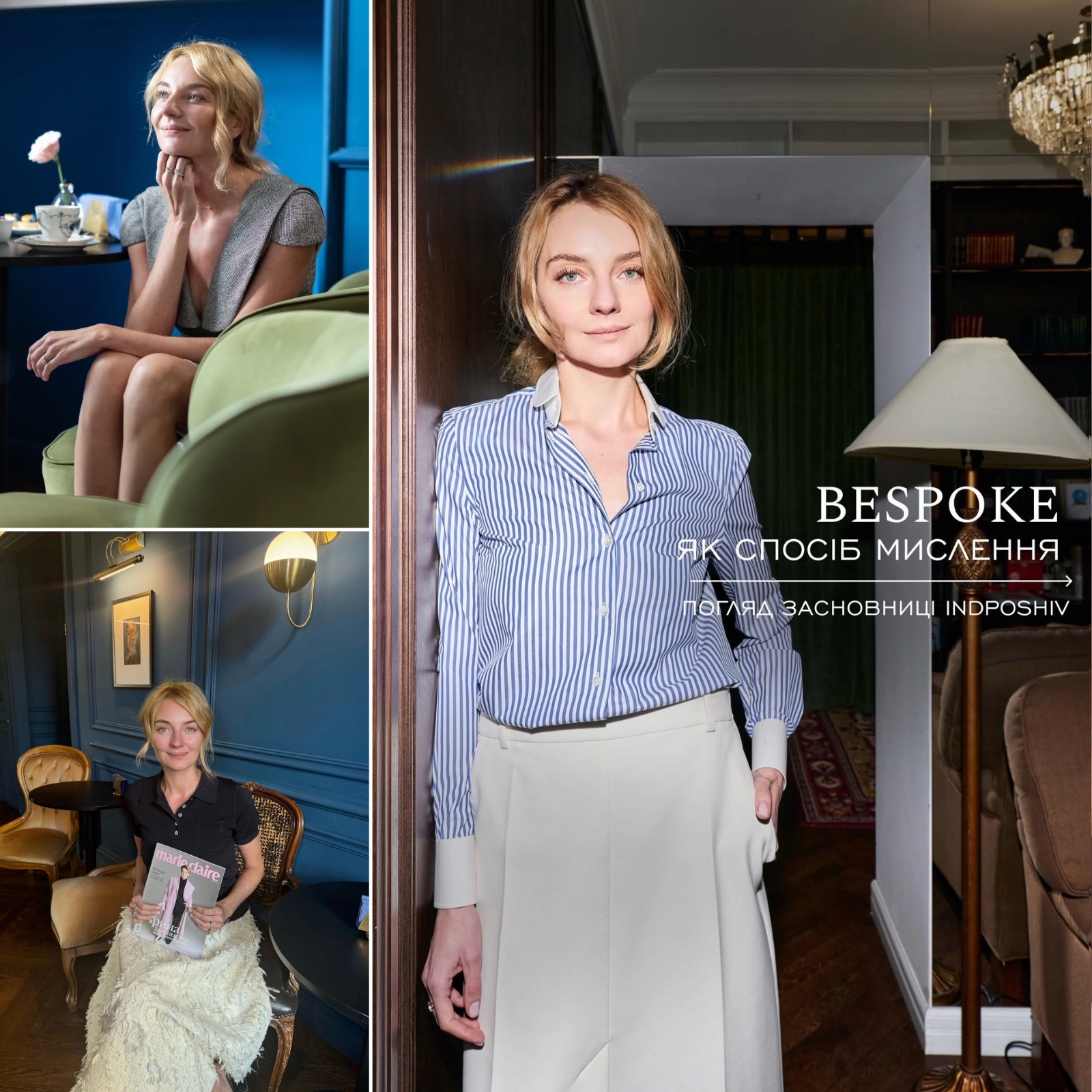 Jacobsen: Ukraine has faced persistent challenges with political and business corruption, although greater scrutiny and accountability can also reflect institutional progress. How do these realities affect the luxury market, particularly when some clients may be more interested in displaying wealth and status than appreciating the craftsmanship behind bespoke tailoring?
Vozianova: Yes.
Jacobsen: Unfortunately, yes.
Vozianova: And when I say “unfortunately,” the first unfortunate thing is not that we are losing some clients or some part of the business. It’s that some people come to us not because they value bespoke culture or the handwork of our tailors, but because they think it’s chic and cool, and the best their money can buy. And we would be happy to work only with the ideal target audience we have in mind.
But, of course, it’s not like that. And yes, we see some of the people involved in those scandals, and we communicate with them because bespoke tailoring requires a lot of communication. It’s not like compromising your own soul and dignity, but it’s the game we are playing in Ukraine as we work here.
What I like is that these clients make up a very, very small percentage of our clientele. Our clients are top-tier in terms of their appreciation of bespoke culture. They recognize the value of bespoke over ready-to-wear.
There used to be a certain culture of status consumption in Ukraine, where belonging to a particular social group meant wearing particular internationally recognized brands. Bespoke is almost the opposite: its value is usually invisible unless you understand what you are looking at.
But still, a lot of them prefer internationally known brands. That’s why it’s rare for us to have this type of client.
Jacobsen: Most businesses experience seasonal fluctuations, but war introduces an entirely different kind of uncertainty. You mentioned that demand effectively disappeared for several months after the full-scale invasion began. How do ordinary fluctuations in the tailoring business compare with the unpredictable shifts in demand you now experience during wartime?
Vozianova: Yes. Our low seasons are summer and the beginning of the year, January. That was usually the case before the full-scale invasion. In summer, everyone goes on vacation.
It’s the same in January. No one thinks about clothes, suits, et cetera. But before the full-scale invasion, we started emphasizing to our clients that the bespoke process takes two months. So if you want something for autumn, you need to think about it in July.
That’s why we’ve mostly managed to avoid this type of seasonality. Not every time, but mostly. During the war, I’ve found that seasonality doesn’t work at all. The thing that matters is our clients’ and our target audience’s confidence that everything will be good.
As soon as we have another round of political discussions about a ceasefire, orders pour in. As soon as those discussions are over and everyone understands that it was just another round of nothing, blah, blah, blah, orders drop. And, of course, the electricity situation and the frequency of attacks also have an influence.
We had a very good start to the year. The first half of the year was great. The best since the full-scale invasion started.
If it weren’t for the war, we would now be in our best season. Autumn is the best season for bespoke. But right now, we don’t know.
An important thing that keeps us going is that we also work in Austria, in Vienna. And we have clients there. There is no war.
And there, the season starts as usual.
Jacobsen: Traditional gender expectations can influence personal style and consumer preferences. When Ukrainian men commission bespoke suits, how much do they consider the opinions of their partners or the women in their lives? More broadly, do you notice differences in how clients respond to advice from male and female tailoring professionals?
Vozianova: It’s a great question because we have two types of clients when it comes to how they make decisions about fabrics, et cetera. The first type chooses for themselves and trusts men. They don’t trust a woman’s opinion on this.
As I said, two people work with each client from our side: the cutter, who is usually male, and the stylist. Right now, we have two female stylists. So clients usually work with a man and a woman. It’s interesting to see how differently clients behave because the stylist usually handles fabric selection.
Some clients say, “Can you please ask the cutter to come? I want his opinion on the fabric.”
Others trust only women because they think women distinguish colours better. Some clients pick up grey fabrics and say, “But this is brown.”
“No, this is grey. You wanted a grey suit?”
“No, this is brown.”
So sometimes we have difficulty agreeing on colours. When clients trust a female stylist’s opinion, they think women are better with textiles, taste, combining textures and colours, et cetera.
But clients who come here for bespoke are more educated in this culture, I would say, and what they trust most is professionalism. That’s the first criterion.
Second, yes, they have particular preferences and perhaps some admiration. But if they receive unprofessional advice or encounter an unprofessional attitude, it doesn’t matter whether it’s from a woman or a man.
So professionalism comes first. And then, of course, different types of men prefer advice from a man or a woman.
Jacobsen: Kateryna, thank you for sharing your experiences and insights.