VA vs. Standard GSA MAS: Strategic Differences That Impact Contract Profitability
Choosing between VA FSS and GSA MAS is less about access and more about how pricing rules, compliance burdens, and mission alignment shape long-term profitability.
Both the GSA Multiple Award Schedule and the VA Federal Supply Schedule sit within the broader Federal Supply Schedule framework, offering pre-negotiated pricing, standardized terms, and streamlined acquisition procedures for federal buyers. For companies considering contracting with the VA or entering the wider federal marketplace through GSA, these vehicles can appear structurally similar. In government contracting conversations, they are often treated as interchangeable.
But for businesses seriously weighing these options, the real issue is not simply eligibility. It is profitability, pricing control, competitive positioning, and long-term contract value. The structural differences between VA FSS and GSA MAS have direct implications for margin stability, compliance exposure, sales velocity, and the overall financial performance of a contract. Since 2006, Price Reporter has worked with more than 1,000 contractors to help them strategically evaluate these distinctions, ensuring that contract selection supports sustainable federal growth rather than merely securing an award.
The most consequential difference between GSA MAS and VA FSS begins with mission alignment. Each vehicle serves a distinct primary customer base, and that distinction shapes demand patterns, competition levels, and revenue predictability.
The GSA Multiple Award Schedule is a government-wide acquisition vehicle designed to serve a broad spectrum of federal agencies. Its reach extends across civilian departments, defense components, and, in certain cases, state and local entities. That breadth creates significant opportunity, but it also intensifies competition.
Key features of GSA MAS demand dynamics include access to virtually all federal civilian agencies, potential sales to defense agencies depending on the SIN, broad applicability across industries such as IT, professional services, facilities, and logistics, dense competition within many SINs, and greater price transparency across multiple buying organizations.
Because of this expansive reach, GSA MAS functions as a highly competitive marketplace. Contractors often face sustained pricing pressure and must find ways to differentiate themselves beyond cost alone.
VA FSS
The VA Federal Supply Schedule is more mission-focused, serving the Veterans Health Administration and related healthcare operations primarily. Demand is concentrated in medical products, healthcare services, laboratory solutions, pharmaceuticals, and facility support for clinical environments.
Key features of VA FSS demand dynamics include primary alignment with Veterans Health Administration facilities, healthcare-driven procurement priorities, specialized product and service categories, a more concentrated buyer community, and often deeper purchasing patterns within specific clinical segments.
Although the overall customer base is narrower, purchasing behavior within the VA system can be more consistent and more tightly tied to mission needs. Buyers are often focused less on experimentation and more on long-term clinical continuity.
Strategic Insight
Revenue potential depends less on the nominal size of the contract vehicle than on how closely a company’s offering aligns with the buying agency’s core mission. A contractor selling medical equipment may achieve stronger market penetration in a mission-driven VA environment than in the broader, more crowded GSA marketplace. By contrast, firms offering cross-agency solutions may benefit more from the scale and reach of GSA MAS.
Mission alignment shapes competition intensity, pricing leverage, and long-term growth trajectory.
Contract Structure and Administrative Oversight
The structure of each vehicle influences how contracts are negotiated, managed, and modified over time. These differences affect not only compliance workload but also operational efficiency and speed to revenue.
The GSA Multiple Award Schedule operates as a single consolidated program organized into Large Categories, Subcategories, and Special Item Numbers. This centralized structure promotes a relatively uniform set of procedures across industries and relies heavily on standardized digital platforms for proposal submission, reporting, and contract modifications.
The VA Federal Supply Schedule, by contrast, operates through separate, specialized schedules aligned primarily with healthcare-related categories. Each schedule has its own SIN framework and category-specific requirements. Administrative engagement is often more tailored to clinical and medical procurement standards, which can introduce an additional layer of documentation depending on the offering.
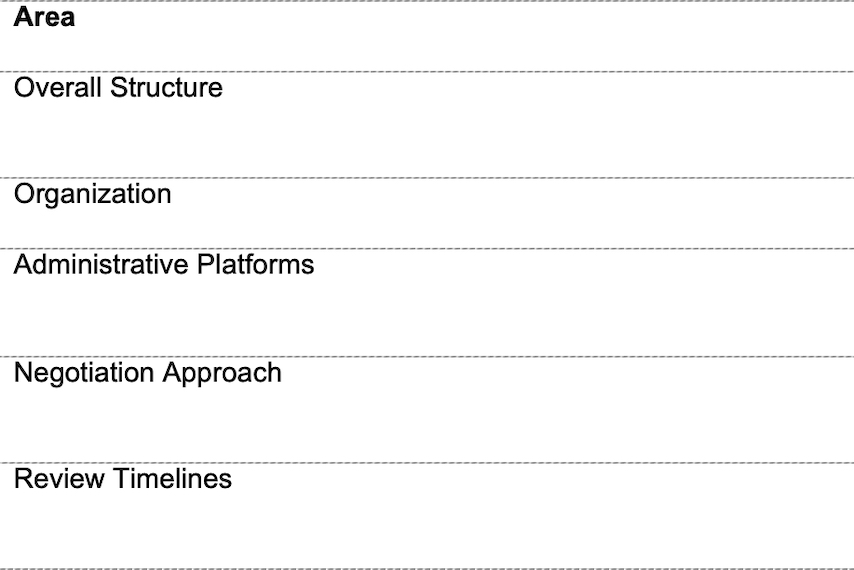
Differences also emerge in the style of contracting officer oversight, the pace of negotiations, and review timelines. Some environments emphasize structured pricing validation and deep category expertise, while others rely on broader, cross-industry benchmarks. These distinctions directly affect the speed of modification approval and the overall rhythm of contract management.
Structural Comparison Overview
Administrative complexity affects internal overhead, modification turnaround times, and the cost of compliance management. Longer review cycles and more specialized documentation requirements can delay time-to-revenue. A company’s ability to manage these structural differences efficiently directly affects long-term contract profitability.
Pricing Architecture: Where Margins Are Won or Lost
Pricing architecture is the single most important factor shaping long-term contract profitability. While both vehicles require pre-negotiated pricing, the mechanics of price control, monitoring, and adjustment differ in ways that can materially affect margin stability.
GSA MAS Pricing Model
Under GSA MAS, pricing is built around the Basis of Award customer relationship. Contractors identify a defined commercial customer or customer class whose pricing serves as the benchmark for government rates. That relationship activates the Price Reduction Clause, which requires the contractor to maintain price consistency with that benchmark over time.
Key elements of the GSA pricing model include Basis of Award customer tracking, exposure to the Price Reduction Clause, optional Transactional Data Reporting under certain SINs, high pricing transparency across multiple federal agencies, and ongoing monitoring of commercial discount practices.
Because GSA pricing is closely tied to commercial sales behavior, internal discount discipline becomes essential. A shift in commercial pricing strategy can trigger compliance consequences and erode margins in ways companies do not always anticipate.
VA Pricing Model
The VA Federal Supply Schedule operates under a Tracking Customer Clause rather than a traditional price reduction mechanism. Contractors designate a tracking customer and must ensure that government pricing remains aligned with that reference point.
Additional pricing considerations under VA include Tracking Customer Clause, monitoring category-specific Industrial Funding Fee differences, structured pricing expectations in medical and pharmaceutical categories, clinical- and benchmark-driven price evaluations, and historically longer review cycles for price increases or modifications.
VA pricing often receives deeper scrutiny within healthcare categories, especially where benchmark data and clinical comparables shape negotiations.
Strategic Profitability Insight
The risk profile differs between the two vehicles. Under GSA, pricing risk is tied largely to commercial discount discipline and internal sales controls. Under VA, pricing risk is tied more closely to category compliance and medical benchmarking scrutiny. Pricing visibility across agencies increases competitive pressure under GSA, while category concentration under VA can intensify scrutiny within specialized segments.
In both cases, margin erosion rarely begins and ends with initial negotiations. More often, it develops after an award through unmanaged discounting, delayed price adjustments, compliance exposure, or weak monitoring of pricing relationships. Sustainable profitability requires disciplined governance long after the contract is won.
Sales Thresholds and Revenue Pressure
Both GSA MAS and VA FSS impose minimum sales requirements, but the structure and timing of those thresholds differ. GSA requires contractors to meet a defined sales volume within the initial contract period and maintain performance in each subsequent option term. VA schedules typically impose lower annual minimums, especially in the early years of the contract.
At first glance, lower thresholds may seem less demanding. In practice, revenue pacing depends on much more than compliance with minimum sales. Contractors must build pipeline visibility, respond to opportunities, maintain catalog accuracy, and actively market to agency buyers. Without a defined capture strategy, even modest thresholds can become difficult to reach.
Failure to meet minimum sales requirements can create indirect margin pressure. Companies may lower pricing to stimulate demand, increase marketing spend, or devote additional internal resources to protect the contract from cancellation. Those reactive measures reduce profitability and distort long-term pricing discipline.
Lower sales thresholds do not automatically translate into lower effort. Pipeline development costs, internal labor, marketing outreach, and compliance management must all be factored into return on investment. A contract that technically meets minimum sales but requires disproportionate operational support may generate only limited net margin, even if it appears successful on paper.
Compliance obligations do not end once the contract is awarded. In many cases, the long-term administrative burden has a greater effect on profitability than the initial negotiation itself.
GSA
Under GSA MAS, contractors must continuously monitor pricing relationships tied to the Price Reduction Clause. Any deviation in commercial discounting can create compliance exposure. In addition, contract modifications are processed through structured digital systems such as eMod and the FAS Catalog Platform, requiring disciplined documentation and internal review before submission.
Other compliance considerations include OIG audits triggered by sales volume, random selection, or specific risk indicators; Transactional Data Reporting requirements under applicable SINs; quarterly sales reporting and Industrial Funding Fee payments; and ongoing catalog accuracy management.
These layers require consistent internal oversight and disciplined pricing governance.
VA
Under VA FSS, contractors must monitor their Tracking Customer relationship to maintain pricing alignment. While the mechanism differs from GSA, pricing accountability remains strict.
Additional compliance factors may include insurance requirements for certain healthcare-related schedules, pre-award audits for high estimated sales volumes, post-award audits tied to contract value or pricing actions, Excel-based catalog reporting submissions in some categories, and category-specific documentation standards.
Healthcare-focused schedules often require more detailed product validation and more rigorous documentation maintenance.
Compliance management cost is part of contract profitability. Internal labor, pricing surveillance, documentation preparation, and audit readiness all consume resources. Many companies underestimate these post-award operational expenses and focus only on winning the contract. Sustainable margins depend on disciplined compliance infrastructure, not simply on competitive pricing.
Speed to Award vs. Speed to Revenue
Contract timelines are often discussed in terms of award speed, but profitability depends on how quickly a contract begins to generate real revenue.
Estimated review timelines vary by category and workload. GSA MAS offers a move through structured acquisition channels, and timelines can range from several months to longer, depending on complexity and negotiations. VA FSS reviews may extend further in certain healthcare categories because of layered evaluation standards and greater documentation depth.
Negotiation pace also differs. Some GSA negotiations move through standardized pricing validation frameworks. VA negotiations, particularly in clinical or pharmaceutical categories, may involve additional internal review layers and subject-matter input before approval. Those internal checkpoints can affect both award timing and the speed of post-award modifications.
Even after the award, revenue ramp-up depends on catalog activation, buyer engagement, and pipeline development. Companies must account for marketing cycles, agency procurement planning, and funding availability.
Time to award does not equal time to cash. Forecast planning, working capital allocation, and internal resource deployment must reflect realistic revenue ramp expectations rather than projected award dates alone.
When Holding Both Contracts Makes Strategic Sense
For certain companies, pursuing both GSA MAS and VA FSS can be a rational growth strategy rather than a duplication of effort. This is especially true for healthcare IT firms, medical equipment manufacturers, and service providers whose offerings serve both clinical and non-clinical federal environments.
A dual-channel strategy allows companies to segment their federal customer base more effectively. Under VA FSS, contractors can focus on Veterans Health Administration facilities and healthcare-driven demand. Under GSA MAS, they can pursue civilian agencies, defense components, and cross-agency initiatives outside the VA’s primary mission.
Strategic advantages of holding both contracts may include expanded market access across healthcare and non-healthcare agencies, segmented customer targeting based on mission alignment, reduced dependence on a single buyer ecosystem, and greater resilience if demand slows within one channel.
But those advantages come with trade-offs. Managing two contract vehicles requires parallel compliance systems, separate reporting workflows, and careful coordination of pricing strategies. Internal governance must ensure that commercial discount practices, tracking mechanisms, and modification submissions remain consistent across both platforms.
Dual contracts increase administrative complexity and raise the stakes for disciplined pricing governance. Without strong internal controls, companies risk margin leakage, compliance exposure, and operational inefficiency across both vehicles.
Choosing between VA FSS and GSA MAS should be treated as a strategic financial decision, not a procedural step in entering federal contracting. The goal is not simply to obtain a contract, but to secure one that aligns with your revenue model, pricing discipline, and internal operational capacity.
Before committing to either vehicle, companies should evaluate several core questions.
Where is your strongest historical demand? Analyze past sales patterns and target-agency alignment. If your products are tightly tied to clinical environments, demand concentration may favor VA. If your solutions apply across multiple civilian or defense agencies, GSA may offer broader reach.
How stable is your commercial pricing structure? Consistent and disciplined discounting practices are essential. Frequent commercial price fluctuations increase compliance exposure and margin risk.
Can your internal team manage pricing surveillance? Both vehicles require ongoing monitoring of pricing relationships. Companies should assess whether they have the internal systems and trained personnel to manage that responsibility effectively.
What is the cost of compliance per contract? Consider internal labor, reporting obligations, audit readiness, and modification processing. Profitability should be measured after administrative expenses, not before.
Do you have a defined federal capture plan? A contract without an active sales strategy rarely generates meaningful revenue. Pipeline development, agency engagement, and marketing alignment are indispensable.
The decision between VA and GSA ultimately comes down to financial architecture and operational readiness. Companies that evaluate contract choice through a profitability lens are more likely to build sustainable federal revenue rather than merely adding another contract number to their portfolio.
Even experienced commercial firms often miscalculate when entering the federal market. The most costly mistakes are rarely procedural. More often, they are strategic misjudgments that undermine long-term profitability.
Common pitfalls include pursuing GSA simply because everyone else does. Many companies default to GSA MAS based on brand recognition rather than demand validation. Without agency alignment or a defined capture strategy, broad access does not automatically produce revenue.
Another mistake is assuming VA is easier because its scope is narrower. A more focused mission does not mean lower complexity. Healthcare-driven procurement often involves deeper pricing scrutiny, greater category expertise, and more structured documentation expectations.
A third error is underestimating the impact of pricing compliance. Companies frequently focus on negotiation terms while overlooking the ongoing demands of pricing governance. Commercial discount instability or weak monitoring processes can create post-award margin erosion.
Another frequent problem is failing to align SIN selection with real demand data. Choosing SINs based on internal product categorization rather than federal buying patterns can lead to low visibility and limited opportunity flow.
And finally, many firms treat the award as the finish line. In reality, securing the contract is only the beginning. Without active marketing, disciplined compliance, and strong pipeline management, the contract can become an administrative burden rather than a revenue engine.
Avoiding these mistakes requires treating contract selection as part of a broader federal growth strategy rather than as a standalone compliance milestone.
GSA MAS offers breadth and cross-agency access, making it a powerful platform for companies whose solutions apply across multiple federal environments. But that breadth comes with greater pricing visibility and ongoing surveillance exposure. VA FSS offers mission-aligned depth, especially in healthcare, where concentrated buying power and clinical demand can create strong revenue streams for the right vendors. Yet that focus introduces its own form of pricing scrutiny and category-specific compliance pressure.
Ultimately, profitability is determined by pricing governance, compliance readiness, and validated demand, not by the contract label alone. Since 2006, Price Reporter has supported more than 1,000 contractors in navigating these structural differences, helping companies align contract strategy with long-term federal growth objectives. With deep experience in contract award, administration, pricing oversight, and federal market intelligence, our team understands that sustainable success in government contracting depends on disciplined execution long after the contract has been awarded.