Sri Lanka Tests the Limits of Dependence
Amid the ongoing and unwanted war in the Middle East, many countries have buckled under pressure from the United States and Israel. In doing so, they have forfeited not only strategic autonomy but also the moral clarity required to assert their sovereign right to speak freely on urgent international crises. The reluctance to criticize Washington or condemn what many view as high-handed behavior has become a defining feature of contemporary diplomacy.
Against this backdrop, Sri Lanka—a small island nation deeply reliant on foreign aid, including from the United States and India—has taken a markedly different path. It has stood its ground, asserting its sovereign right to act independently and with dignity, even in the face of considerable pressure.
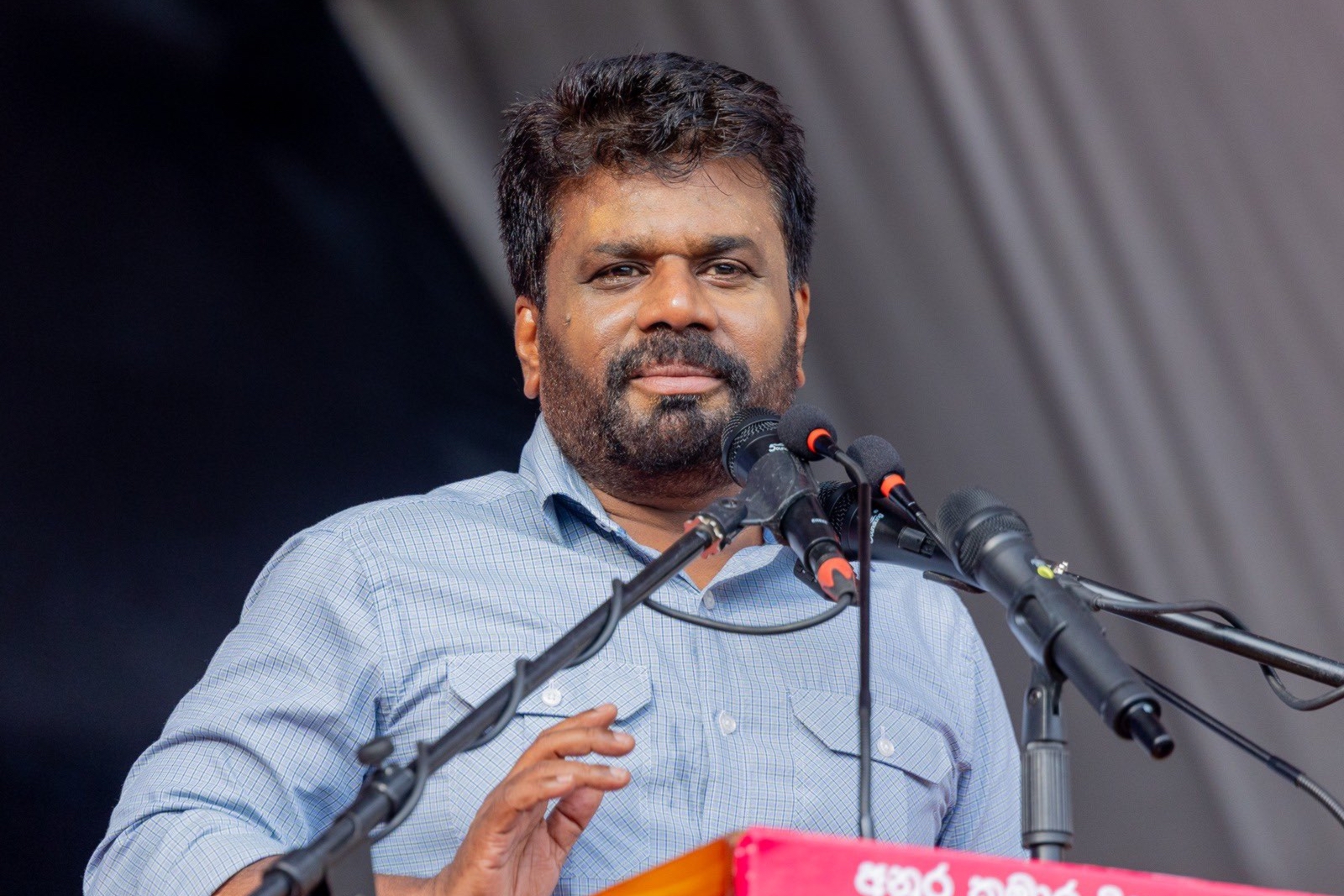
On March 20, Sri Lankan President Anura Kumara Dissanayake told Parliament that he had denied a U.S. request to allow two American warplanes—armed with eight anti-ship missiles and flying from the U.S. base in Djibouti—to enter Sri Lankan territory. The president acknowledged the weight of U.S. pressure but emphasized his government’s commitment to neutrality in the conflict. It was a quiet but unmistakable signal: Sri Lanka would not be drawn into a war that is not its own.
Just weeks earlier, on February 17, the Indian Navy had welcomed the Islamic Republic of Iran Ship (IRIS) Dena as part of its biennial multilateral naval exercise in the Bay of Bengal. The vessel, a diplomatic guest of India, had participated in Milan—an Indian Navy-organized event involving seventy-four countries and eighteen warships—and was returning home via the Indian Ocean. Then, on March 4, the Dena was sunk by a torpedo fired from a U.S. submarine near the southern Sri Lankan city of Galle. The attack occurred in international waters, but its proximity to Sri Lanka’s coastline made the incident impossible to ignore.
Sri Lanka responded immediately. Without hesitation or visible fear, the Sri Lankan Navy launched rescue operations, saving 32 sailors and recovering 87 bodies. The response was swift, professional, and notably restrained—an assertion of sovereignty not through rhetoric, but through action. Even though the attack took place in international waters, Sri Lanka’s involvement underscored its willingness to act decisively within its maritime sphere of influence.
India, widely regarded as the regional superpower, offered little public reaction to an attack that unfolded in its strategic backyard. Its diplomatic posture remained conspicuously muted. The presence of an American submarine operating so close to the Indian subcontinent would have been nearly unthinkable during the Cold War. Today, however, such developments pass with limited official acknowledgment.
Within a day of the Dena incident, the Sri Lankan Navy was again in action—this time rescuing 204 crew members from another Iranian vessel, IRIS Bushehr, after it suffered engine failure. President Dissanayake reiterated Sri Lanka’s neutrality, framing the assistance as a humanitarian obligation rather than a political gesture. The consistency of Sri Lanka’s response—firm in principle, measured in tone—has reinforced its image as a country striving to maintain an independent foreign policy, even while navigating economic vulnerability.
These incidents have contributed to a subtle but meaningful elevation of Sri Lanka’s international standing. Despite its fragile post-pandemic economy and heavy dependence on Western financial institutions, including the International Monetary Fund and the World Bank, Sri Lanka has demonstrated a willingness to act according to its own principles. It relies heavily on U.S. markets for exports and has received American aid, yet it has not allowed that dependence to dictate its diplomatic posture. When faced with a humanitarian crisis and a complex geopolitical situation, Sri Lanka chose what it saw as the moral high ground—fully aware of the potential repercussions.
For India, the episode carries uncomfortable implications. The sinking of a ship returning from an Indian-hosted naval exercise, without a robust diplomatic response, raises questions about New Delhi’s strategic autonomy. The expansion of conflict zones into international waters, with little regard for regional sensitivities, further complicates the picture. India’s silence—whether strategic or constrained—has not gone unnoticed.
The contrast becomes even sharper when considering India’s broader diplomatic behavior. Despite continuing its engagement with the United States, including in areas of defense and energy, India has often refrained from publicly challenging Washington’s assertions. For instance, the U.S. president has repeatedly claimed credit for de-escalating tensions between India and Pakistan following the 2025 Pahalgam terrorist attack. Washington has also authorized India to purchase Russian oil for a limited period. India’s muted response to such claims suggests a cautious, if not constrained, approach to preserving its diplomatic space.
Sri Lanka, by contrast, has been more willing to express its positions openly. When Iran’s Supreme Leader, Ayatollah Ali Khamenei, was killed, Sri Lankan leaders across the political spectrum visited the Iranian embassy to offer condolences. Among them was former President Ranil Wickremesinghe, widely regarded as pro-American. The gesture was symbolic but significant, reflecting a willingness to engage diplomatically on its own terms.
None of this is to suggest that Sri Lanka’s record is unblemished. Like Iran, it has faced longstanding criticism over human rights abuses, including the treatment of minorities, journalists, and activists. These are serious concerns, and the international community has established frameworks—particularly through the United Nations—to address such violations. But the selective enforcement of these norms, often targeting countries based on strategic interests rather than consistent principles, remains a source of tension in global politics.
At its core, the issue is one of sovereignty. No nation, regardless of power, has the inherent right to violate another’s territorial integrity under the guise of maintaining international peace. That responsibility lies with multilateral institutions, not unilateral actions by dominant states. When powerful countries act outside these frameworks, they risk undermining the very order they claim to uphold.
Sri Lanka has not limited its positions to maritime incidents. On January 4, 2026, the ruling Janatha Vimukti Peramuna (JVP), led by President Dissanayake, condemned what it described as a U.S. invasion of Venezuela and the abduction of its democratically elected president, Nicolás Maduro, and his wife. The statement framed the episode as a clear breach of Venezuelan sovereignty. Whether one agrees with this characterization or not, it reflects Sri Lanka’s broader willingness to critique major powers.
At the same time, Sri Lanka continues to balance its relationships carefully. While often perceived as leaning toward China, it has maintained constructive ties with India. When Pakistan considered boycotting the T20 World Cup co-hosted by Sri Lanka and India, Sri Lankan diplomacy played a key role in persuading Islamabad to participate. It is a reminder that even smaller states can exercise influence through careful negotiation.
Economically, Sri Lanka remains deeply tied to the global system. The United States is its largest export market, accounting for more than $4.1 billion in trade. In December 2025, Washington provided $2 million in aid following Cyclone Ditwah. Sri Lanka’s recovery from its economic crisis has depended heavily on loans from the IMF and World Bank—institutions in which the United States holds significant influence. Yet, even within these constraints, Sri Lanka has chosen to articulate its positions with a degree of independence that is increasingly rare.
To stand up to external pressure while acknowledging internal vulnerabilities is no small feat. Sri Lanka’s actions may not alter the balance of global power, but they do offer a reminder: sovereignty is not solely a function of size or strength. In the United Nations General Assembly, each country carries one vote, and with it, the right to express its will. Sri Lanka’s recent decisions suggest a determination to exercise that right—even when doing so comes at a cost.
The country’s path forward remains uncertain. Economic recovery will require continued engagement with the very powers it occasionally challenges. But in asserting its independence, Sri Lanka has taken a step—small, perhaps, but significant—toward redefining what it means to be a sovereign state in an increasingly polarized world.