
Health

Stephen Bezruchka on Why Americans Live Shorter, Sicker Lives
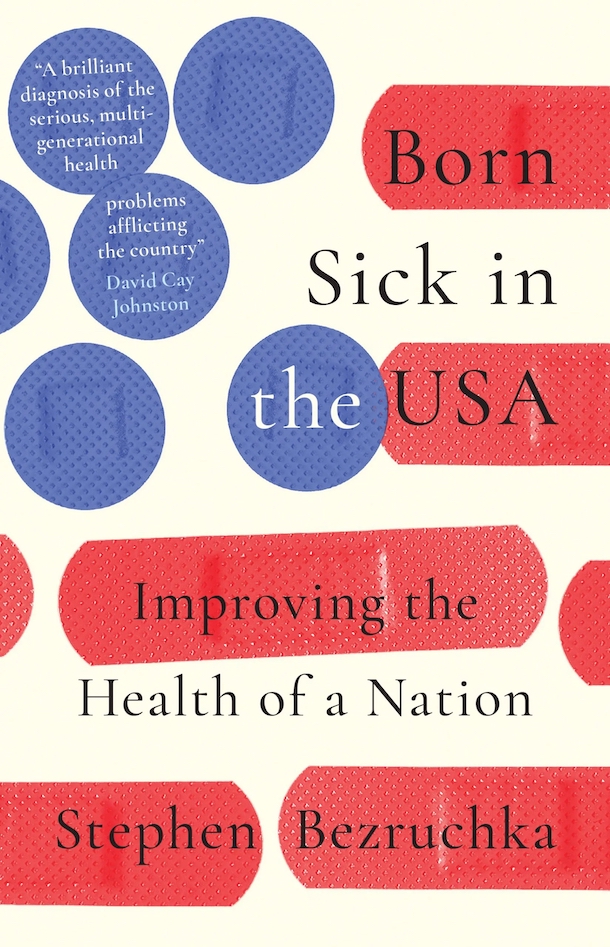
Dr. Stephen Bezruchka is a physician, public health scholar, and Associate Teaching Professor Emeritus at the University of Washington whose work challenges many of the assumptions underlying American healthcare. In his book Born Sick in the USA, he argues that the country’s poor health outcomes are driven less by medicine than by inequality, early childhood conditions, chronic stress, and political choices that shape how Americans live long before they enter a doctor’s office.
Scott Douglas Jacobsen interviews Dr. Bezruchka about why Americans spend more on healthcare than any other wealthy nation yet continue to live shorter, sicker lives. Their discussion explores the distinction between health and healthcare, the importance of the first 1,000 days of life, the role of inequality in shaping life expectancy, and why improving public health ultimately requires political—not merely medical—solutions.

Scott Douglas Jacobsen: The United States spends considerably more on healthcare than any other advanced economy, yet Americans generally experience poorer health outcomes than people in comparable countries. Before we examine the reasons why, could you give readers a broad overview of this paradox?
Dr. Stephen Bezruchka: To begin with, we conflate the words “health” and “healthcare.” We say we access health, pay for health, get health, and insure health, when all of those terms refer to healthcare. In the United States, trying to talk about health as separate from healthcare confuses most people.
How can you conceptualize health? I worked as an emergency physician for 30 years, and the easiest diagnosis I could make in the ER was that somebody was dead.
That is hard to fake. I would fill out a death certificate, send it to the state, and the state would merge it with the birth certificate and calculate mortality rates: who died and at what age.
Many years ago, I came to realize that when we look at mortality rates, the easiest summary measure is life expectancy. If you are born today, and mortality rates stay the same, how many years can you expect to live? It is an average.
In the 1950s, the United States was one of the longest-lived countries in the world. Today, depending on which data you use, 40 to 50 other countries, including all other wealthy countries, have longer lives. Most of us, given the choice, would prefer a longer life rather than a shorter one. The shorter lives we have in the United States are also sicker lives.
I coined the term “Health Olympics” a long time ago to describe ranking countries by health, as if health were an Olympic event—namely, how long people live. The United States would not be there for the final day’s race. We would have been disqualified in the trials.
What does that mean conceptually? If we look at mortality rates, our health is not very good. Compared with other countries, it is shameful. In the 1950s, we would have been a strong competitor in the Health Olympics and might even have won a medal.
The United States spends an enormous amount on healthcare. In 2024, national health expenditures reached $5.3 trillion, about 18% of GDP, and the Centers for Medicare & Medicaid Services expect that figure to keep rising. Healthcare has become one of the country’s largest industries, employing millions of people and consuming an ever-growing share of the economy. Because it occupies such a prominent place in American life, many people naturally assume healthcare is the primary driver of health.
At the same time, despite spending all this money, we still have tens of millions of people who lack effective access to healthcare.
If we spend so much on healthcare and are still not that healthy, the question is: why? Studies show that the impact of healthcare in averting mortality is quite limited.
I like to cite studies from Stanford University, where I went to medical school. One study estimated, in four different ways, how much healthcare averts mortality and found that about 10% is attributable. Healthcare can avert about one-tenth of deaths. That leaves the other 90% to be explained by other factors.
What are those other factors? The title of my book, Born Sick in the USA, a play on Bruce Springsteen’s song “Born in the USA,” suggests that something important happens in early life. By the time you are born, much of your health has already been programmed or determined.
I use the cutoff of the first 1,000 days. From conception to your second birthday—about nine months in your mother’s uterus and two years outside—roughly half of your adult health has been programmed. Healthier societies privilege the early-life period.
How do they do that? One way is to provide paid time off for a pregnant working woman with a baby as national policy. There are only two populous countries in the world that do not have such a national policy: the United States and Papua New Guinea.
The United States has the Family and Medical Leave Act, passed in 1993. It provides eligible workers with up to 12 weeks of job-protected, unpaid leave. Eligibility depends on conditions such as working for the employer for at least 12 months, completing at least 1,250 hours of service, and working at a location where the employer has 50 or more employees within 75 miles.
After that, job protection ends. How many women can afford to take that amount of unpaid leave? Almost none.
They go back to work, and the child is often raised under more difficult and less stable circumstances. Take a healthier country, such as Sweden or other Scandinavian countries. Their governments spend an enormous amount of money on the first year of a child’s life through paid family leave policies.
Sweden has a generous program. Parents are entitled to 480 days of paid parental leave per child, shared between them. A portion is reserved for each parent, and much of the leave is paid at roughly 80% of income, with the remaining days paid at a lower flat rate.
Then, when the child is older, parents can place the child in a publicly supported daycare system. The cost is heavily subsidized and capped, rather than free for all families. The requirements for early childhood educators are much higher than in many U.S. daycare settings, where low wages and minimal qualifications are common.
The Swedish government spends far more, proportionately, on early childhood support than the United States. In the U.S., by contrast, public money is often spent later, during the teenage years, on remedial programs meant to address problems that could have been mitigated earlier through stronger investments in the services most beneficial to long-term health.
Early life lasts a lifetime, a phrase my students came up with. Healthier countries have a variety of policies that privilege that period.
What about the rest of the lifespan? What really matters? About 35 years ago, I came across studies linking income inequality and mortality rates. These studies began appearing in the late 1970s, and there are now hundreds linking income inequality and other measures of inequality with various mortality rates. I titled my previous book Inequality Kills Us All, which focused more on inequality.
Why is inequality bad for us? There are several reasons. One is that it creates a lot of stress. In the United States, which is often treated as a meritocracy, if you have not become a billionaire by the time you die, it implies you did not work hard enough.
The United States is one of the most stressed countries in the world. There is no simple biological ranking of national stress, but when people are asked how stressed they are, Americans consistently rank very high, despite all the conveniences we have.
One major factor is that we have created a lot of stress. We also have many stress-reduction industries. We are told to exercise, eat properly, and modify individual behaviors, but that clearly does not solve the underlying problem.
There is a large gap between the rich and everyone else. Studies link income inequality and life expectancy across countries, among U.S. states, and even at the county level. We can argue that inequality causes worse health by using criteria similar to those laid out in the 1964 Surgeon General’s report on smoking and health, which established the basis for saying that smoking causes worse health.
The basic observation is this: we do not have long, healthy lives in the United States. Healthcare is, in many ways, a distraction from the most important factors.
Jacobsen: One of the central ideas in your book is what you call “political medicine.” What does that term mean, and why do you believe politics has become as important to public health as healthcare itself?
Bezruchka: If inequality is one of the main factors harming us, it also affects early life. Why do we have such a large gap between the rich and the poor?
The wealthy have commandeered the system. Throughout history, the rich have wanted one thing: more. Today, they want everything. How do they gain that amount of wealth? They begin by influencing politics. The Supreme Court’s 2010 Citizens United v. FEC decision allowed corporations, unions, and other outside groups to spend unlimited money on independent political expenditures.
That money helps shape policies that advantage the wealthy. This has become especially clear in recent federal tax policy, which has involved large upward transfers of wealth. From 1975 to 2023, an estimated $79 trillion that would have gone to the bottom 90% under more equal income growth instead went to the top 1%.
To make that visible, imagine a stack of freshly minted $100 bills reaching $79 trillion. That is a huge amount of money. The question is why the bottom 90% has tolerated that transfer to the richest 1%. Part of the answer lies in the American Dream: the idea that, by the time you die, you may have struck it rich.
Political medicine means using policy to prevent those conditions from taking root. Those policies would produce much better health.
Consider Russia and Ukraine after the Soviet Union’s breakup in 1991. State assets were sold to a small group of people—the oligarchs—at fire-sale prices. Some quickly appeared on billionaire lists. What happened to Russia’s health at that time? It took a nosedive. Russian life expectancy declined steeply after 1991; male life expectancy fell by about six years between 1991 and 1994.
Ukraine’s health also worsened, though not on the same scale as Russia’s. Only decades later did life expectancy begin to recover toward pre-crash levels. Increasing inequality can worsen health; decreasing it can improve health.
U.S. life expectancy is lower than that of all peer countries. Around 2015, it began to stagnate and decline. The decline has not been as precipitous as in the former Soviet Union, but it is worrisome.
One comparison between the United States, Russia, and Ukraine is that, as far as I can tell, the press in Russia was largely silent about the absolute decline in health. The press in the United States has also been mostly silent about this process.
Jacobsen: If reducing inequality is central to improving Americans’ health, what other policies or reforms would most effectively increase both life expectancy and healthy life expectancy?
Bezruchka: “Healthspan” and “lifespan” can be confusing terms. The technical term is “healthy life expectancy.” It begins with life expectancy, measured by mortality rates, and adjusts for various forms of sickness and disability. That requires qualitative judgments about which disabilities are more or less severe. The World Health Organization calculates healthy life expectancy.
When we look at global rankings for healthy life expectancy, the United States does even worse than it does on life expectancy alone. Not only do Americans live shorter lives compared with people in other wealthy countries, but they also live sicker lives.
So what would increase healthy life expectancy? To begin with, the United States spends more on healthcare than any other country, yet a substantial portion of the population remains uninsured or underinsured. Almost everyone wants access to healthcare. Recent federal policy has aimed to reduce Medicaid support and weaken or repeal parts of the Affordable Care Act. That would likely worsen access to care rather than improve health.
There is a paradox here. The United States has many wealthy people who spend heavily on longevity medicine and personal health optimization. Yet, if we measure health by how long people live, the longest-lived people are not usually in the United States. Despite the push for longevity medicine, especially among billionaires, exceptional longevity still eludes this country at the population level.
I often put it this way: Do you know two people under age 65 who died in the United States? You probably do. If those people had lived in Canada, France, Germany, or Spain, only one might have died. I am constantly looking for clearer ways to convey how many excess deaths the United States tolerates.
Jacobsen: Stephen, thank you very much for your time today.