Culture
The Intellectual Who Couldn’t Quite Reach the Electorate
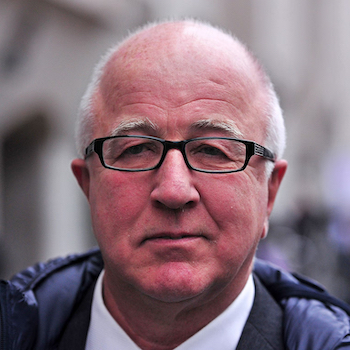
Lionel Jospin, one of the towering figures of France’s Socialist Party, has died at the age of 88. His career spanned an era in which the Socialists, under the long presidency of François Mitterrand from 1981 to 1997, dominated French political life and sought to redefine the European left in the aftermath of the Cold War.
Unlike Britain’s Labour Party or Germany’s Social Democratic Party—both of which evolved into durable parties of government by the mid-20th century—the French Socialists operated under a heavier shadow. For decades, they were constrained by the enduring strength of the French Communist Party, which commanded deep loyalty among the working class and rural voters alike. The Communists’ rigid adherence to Moscow’s line, and to the ideological dictates of Stalin, left little room for the kind of pragmatic social democratic reformism that flourished elsewhere in Europe. Stalinism, after all, regarded such reformism with a hostility that often exceeded its opposition to fascism itself.
Jospin emerged from the elite institutions of the French Republic—Sciences Po and the École nationale d’administration (ENA)—designed to cultivate a governing class capable of stewarding the nation. Yet his life’s work was not one of quiet administration. He devoted himself to dismantling the intellectual and political residues of Stalinism within the French left. Rising through the Socialist Party, he served as its general secretary under Mitterrand before ascending to the premiership during a period of cohabitation with President Jacques Chirac, after the Socialists secured a parliamentary majority.
By the late 1990s, a new current of reformist energy was sweeping across Europe’s center-left. In 1998, Jospin traveled to London at the invitation of the newly elected Labour government. Tony Blair, fresh from his landslide victory in 1997, had already made a reciprocal visit to Paris. He sought to forge a network of like-minded leaders—among them Germany’s Gerhard Schröder—who could advance a modernized, pan-European social democracy. In Britain, this project was branded “The Third Way.” In Germany, it took the name die Neue Mitte, or “The New Middle.”
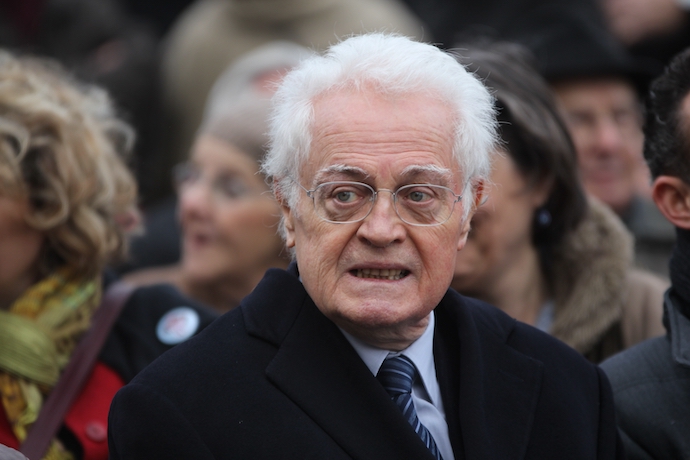
Blair’s address to the French National Assembly, delivered in French at the invitation of Laurent Fabius, was emblematic of this moment. Here was a young British prime minister articulating a vision of reformist social democracy grounded in European integration, workers’ rights, and expanded access to education. The speech resonated widely, not least because it suggested that the European left might reconcile economic dynamism with social justice.
Jospin’s return speech in London, however, revealed the limits of that convergence. At the time, I was working at the Foreign Office on building ties between the Labour government and its European counterparts. Knowing that Blair had spoken in French, I suggested to the French ambassador—himself a Socialist—that Jospin might reciprocate by delivering his keynote address in English. Jospin, who had trained as a diplomat after ENA, spoke the language fluently and agreed.
He delivered his speech with professional ease—until the question-and-answer session.
David Goodhart, then a journalist, posed a deceptively simple question: “Is France on the ‘Third Way’?” In Britain and the United States, the concept had become a touchstone of political debate. In France, it was something closer to heresy. Associated with Bill Clinton and, more broadly, with Anglo-Saxon liberalism, the idea provoked unease across the French political spectrum.
Jospin paused, visibly uneasy, before replying: “Sur le troisième voie je vais vous répondre en français.” On the question of the Third Way, he would answer in French. The choice was telling. At a moment when the concept was under sustained attack from communists, Trotskyists, and more statist elements of the left—both in France and abroad—Jospin was unwilling to risk even the slightest misstep in English. A nuance lost, a phrase misjudged, could have reverberated politically at home.
It was a revealing moment. Jospin possessed a formidable intellect and, as prime minister, pursued a range of progressive policies, including the introduction of the 35-hour workweek. He was honest, rigorous, and serious-minded. But he lacked the intuitive political touch that allowed François Mitterrand to connect with voters beyond the confines of party and ideology.
Others noticed this as well. Gerhard Schröder once remarked to me that Jospin was the most difficult interlocutor among Europe’s leaders at the time—brilliant, but not easily accessible. It is a familiar paradox in modern politics. Today’s leaders, from Emmanuel Macron to Keir Starmer, often bring considerable professional expertise to office, yet struggle to translate that competence into a political language that resonates with voters.
For Jospin, that disconnect proved fatal.
In 2002, as prime minister, he ran for the presidency. What followed was one of the most shocking upsets in modern European politics. I recorded the moment in my diary: