
The Limits of Middle Power Idealism
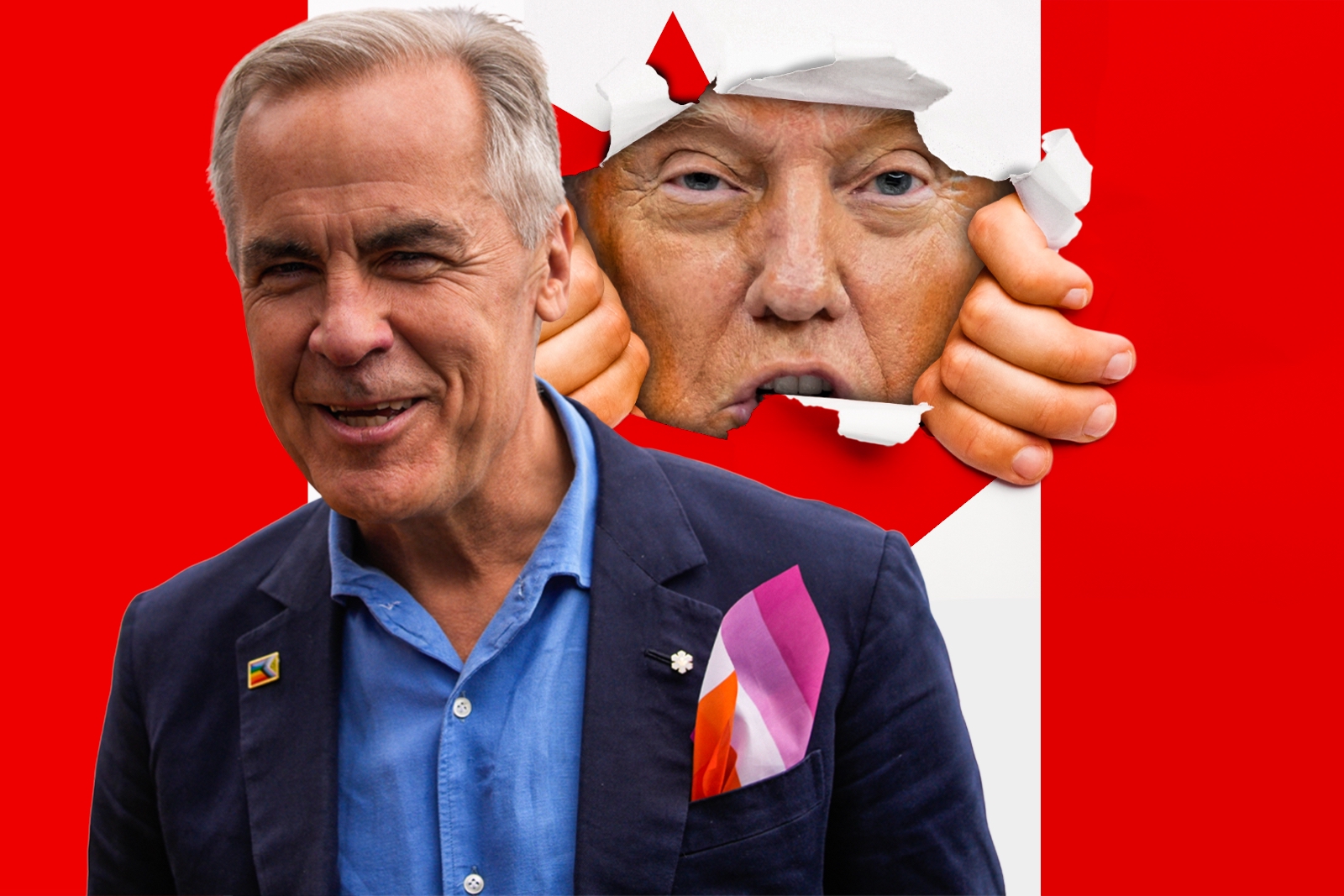
There are moments when a speech feels less like commentary and more like a marker—an attempt to pin down history as it is being made. Mark Carney’s effort at the World Economic Forum in Davos to interpret a global order “ruptured, not in transition” was one such moment.
His central claim—that so-called “middle powers” could help stabilise a fragmenting international system—is an appealing one. The vision he laid out was earnest, and in many respects admirable. Yet its realism remains deeply questionable. As I have argued before, the era in which international law and multilateral institutions meaningfully constrained great powers—so far as such an era ever truly existed—is now over. On that point, Carney and I largely agree. On what follows, I am less convinced.
The Problem With Middle Power Analysis
The first difficulty is definitional. What, exactly, constitutes a “middle power”? Is it a matter of economic size, population, military capability, diplomatic reach, or some combination of the four? Depending on the criteria applied, Saudi Arabia, India, Canada, Turkey, and Nigeria could all plausibly qualify. Yet it is far from clear how states with such divergent interests, histories, and strategic priorities could be meaningfully aligned.
Shared status does not produce shared purpose. Middle powers do not automatically cohere simply because they fall short of great-power status. Durable partnerships require genuine commonality of interests and a willingness to accept constraints—precisely what is most often absent.
Even if such a grouping could be assembled, the question of leadership would immediately arise. Who sets priorities? Who arbitrates disputes? And who enforces discipline when national interests inevitably diverge?
The European Union—frequently cited as the closest approximation to this model—offers a sobering cautionary tale. Despite shared institutions and deep economic integration, member states such as Italy and Hungary routinely pursue independent courses when it suits them. They do not fall into line simply because Germany or France urges them to do so. It is difficult to imagine how a looser coalition of middle powers would fare better.
Nor is this a novel experiment. In 2019, in close partnership with Germany, President Emmanuel Macron launched the Alliance for Multilateralism. Its stated aim was to defend the rules-based order and reshape international cooperation. Sixty states signed on. Seven years later, the initiative has left little trace. Few remember it existed at all.
That is not to disparage Macron’s ambition. It was a bold and well-intentioned response to the isolationism of Donald Trump’s first term. But it stands as a clear historical example of how difficult it is to create, let alone enforce, new international institutions.
Carney suggests that it is the responsibility of middle powers to uphold the rules-based order. But responsibility without capability is a thin reed. Them—and whose army? If great powers choose to act with impunity, does it meaningfully alter outcomes if middle powers continue to operate as though a rules-based system still governs international behaviour?
Can Trade Be a Catalyst?
Trade is often presented as the most plausible arena for middle-power coordination. The European Union’s long-delayed agreements with India and the Mercosur bloc, alongside renewed engagement with China, are cited as evidence that a “world minus one” trading system might still function.
Yet trade alone cannot substitute for the stabilising role once played by U.S. hegemony—particularly if Washington itself opts out. Does market access without enforcement carry lasting weight? And if the European Union, the largest potential anchor of such a system, is itself divided between defending rules and selectively bending them when convenient, can it credibly lead a rules-based trading order at all?
For the United Kingdom, the dilemma is especially acute. Traditionally, it has looked to the United States for both political support and trade—an instinct sharpened since Brexit. But that reliance is no longer assured. Trump’s America is not a dependable partner, and despite Keir Starmer’s efforts to reset relations with China, engagement will remain constrained by security concerns. Logic might push Britain closer to the EU, a course the Labour government is cautiously attempting to chart, though domestic political support remains fragile.
Jenny Bates, former director-general at the Foreign, Commonwealth & Development Office and now a Heywood Fellow at the Blavatnik School, has recently argued for a new “national strategy” that brings government and business together in recognition that the old rules-based order is dying.
She outlines four possible trajectories for the global system: a chaotic G-zero world; strategic national capitalism marked by explicit rivalries; managed competition between the United States and China; or a world reshaped unpredictably by technological disruption.
In none of these scenarios, however, does Carney’s middle-power philosophy offer a convincing answer to the underlying uncertainty.
What Might Work
This does not mean that new institutions are impossible. The G20 did not exist before the global financial crisis. BRICS is a relatively recent creation and, while rarely commanding headlines, its ten resource-rich and strategically positioned members are quietly constructing shared architectures for military coordination, energy security, and financial systems. They offer an ideological and cultural alternative to the established order.
States do create new forums when pressure demands it. But such arrangements tend to succeed when they are narrow, functional, and issue-specific—focused on climate, defence, technology, or supply chains rather than grand attempts to conjure a new world order. They do not require shared values, only shared problems.
As great powers carve the world into spheres of influence, we are also likely to see the emergence of spheres of expertise. While major powers seek to entrench dominance, space remains for coalitions of middle powers that may not agree on everything but do share interests in specific domains.
A successful example is OPEC. It carved out influence by concentrating on a single issue—oil production—allowing members to coordinate effectively without binding themselves across the full spectrum of foreign policy or subordinating themselves to great powers. This model could be replicated in areas such as artificial intelligence, European defence, data infrastructure, or semiconductor supply chains. Narrow focus can generate outsized influence without requiring comprehensive political alignment.
The role of Central Asian states in President Trump’s much-mocked Peace Board will be worth watching. All are members of the Organisation of Turkic States and share majority-Muslim populations. While it may appear that they are currying favour from a position of weakness, each maintains strategic relationships with Russia and China. They may prove less pliant than Trump anticipates.
Mark Carney has identified a genuine challenge. But what we are witnessing is not the emergence of a coherent alternative order. It is the erosion of the old one, without a clear successor waiting in the wings. The future is more likely to be shaped by overlapping spheres of influence, transactional alignments, and functional coalitions than by an elegant new system led by the world’s middle powers.