The Price of Pretending Russia Would Change
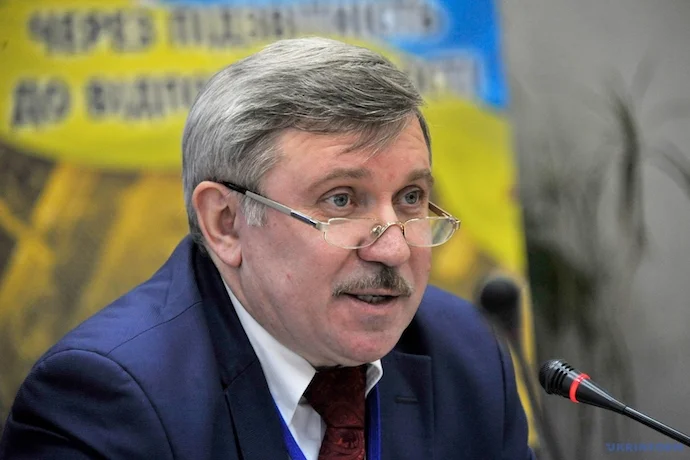
Mykhailo Gonchar is a Ukrainian expert specializing in energy security and geopolitics. He is the founder and president of the Kyiv-based think tank, the Centre for Global Studies “Strategy XXI,” and serves as editor-in-chief of the Black Sea Security journal. Previously, he led energy programs at the Sevastopol-based NOMOS Center and later headed its Kyiv office. Earlier in his career, he worked both within Ukraine’s National Security and Defense Council and in the oil-and-gas sector.
Gonchar’s analysis centers on Russia’s use of energy coercion, its methods of sanctions evasion, and the resilience of European critical infrastructure and supply routes. Since founding Strategy XXI in 2009, he has published policy studies and commentaries that have helped shape debates on Ukraine’s role in European and regional energy security.
In this interview, Gonchar contends that Western policymakers long misread Russia’s energy exports as ordinary commerce rather than as a dual-use weapon capable of financing repression and war. He dismantles the logic of Wandel durch Handel, pointing to its failure after both 2014 and 2022, and argues that only Russia’s military defeat can open the possibility for genuine transformation. Gonchar assesses the G7 oil price cap as porous, calls for preventive and asymmetric defenses to protect EU critical infrastructure, and underscores the importance of resilience within Ukraine’s wartime energy markets. He also warns that the Black Sea shipping corridor remains vulnerable to evolving Russian threats and urges the closure of key banking channels that enable sanctions evasion. Editorially, Black Sea Security continues to track these overlapping fronts.
This interview has been lightly edited for clarity and length.
Scott Douglas Jacobsen: What do you see as the most persistent blind spots among Western policymakers when it comes to Russia’s use of energy as a tool of warfare rather than mere commerce?
Mykhailo Gonchar: The biggest mistake Western politicians and policymakers made—and many still make—is the illusion that Russia’s energy resources are merely commodities that generate revenue. For Russia, oil and gas are not simply commodities; they are a dual-use instrument. In the hands of the Kremlin, energy has long functioned as a weapon.
This weapon fuels corruption in client countries served by Russian state and private energy companies. Russia never concealed this reality. In the first edition of the Energy Strategy of the Russian Federation, adopted in 2003 during the “early Putin” period, it was stated plainly at the outset: “Russia has significant reserves of energy resources and a powerful fuel and energy complex, which is the basis for economic development, an instrument for conducting domestic and foreign policy.”
Another major mistake was the belief in mutual interdependence—that while Europe depended on Russian gas and oil, Russia depended on European money and therefore would refrain from hostile behavior. This assumption proved fundamentally flawed.
A further error was the expectation that trade with Europe would gradually lead Russia to adopt European rules, management practices, and democratic norms. The doctrine of Wandel durch Handel, pursued by the Schröder and Merkel governments, was deeply misguided. The revenues generated from trade with Europe instead fueled revanchist sentiment through massive anti-Western propaganda, strengthened the FSB’s repressive apparatus, expanded the military-industrial complex, and ultimately financed the Kremlin’s war machine.
Jacobsen: Following from that assessment, which of those assumptions have Western leaders genuinely been disabused of since Russia’s full-scale invasion—and which illusions, in your view, continue to shape European thinking?
Gonchar: Western politicians of the past, such as Gerhard Schröder and Angela Merkel, fundamentally misunderstood Russia. After February 24, 2022, they likely recognized their mistakes. Yet Merkel has been unwilling to fully admit them, while Schröder cannot do so in principle, having long since become part of Russia’s hybrid aggression within Europe itself.
The only prominent German politician associated with Wandel durch Handel who publicly acknowledged failure was Frank-Walter Steinmeier. In May 2022, he described his past Russia policy as “a failure on many levels,” caused in part by a long-standing disregard for warnings from Eastern European countries, particularly after 2014.
I was among the few experts from Eastern Europe who warned, at major international forums, about the hidden purpose of Russian energy projects such as Nord Stream, South Stream, and later TurkStream—often in opposition to what I would call the confidence of “omniscient Western experts.”
As for today’s European leaders, many continue to harbor illusions that after the end of the Russian-Ukrainian war—or some imagined “peaceful settlement”—business with Russia can resume. Others believe that if Putin’s regime collapses and Russia embarks on democratic reform, close cooperation should quickly follow. In essence, this is a return to Wandel durch Handel, rooted in a failure to recognize that much of Russia’s political opposition shares the same imperial worldview as Putin himself.
Only a military defeat of Russia can initiate a deep societal transformation. Nearly four years of full-scale war have shown that Russian society broadly supports the genocidal campaign against Ukraine. There have been no mass protests or sustained anti-war movements. This is not merely Putin’s war; it is a war waged by the Russian state and society to destroy the Ukrainian people, eliminate Ukrainian statehood, and erase Ukrainian identity under the imperial notion that Russians, Ukrainians, and Belarusians constitute a single nation.
Misunderstanding the nature of Russian aggression leads to renewed illusions of opportunity—especially the hope of returning to “cheap gas.” As recent years have demonstrated, the price of that gas is ultimately far higher than advertised. For Russia, energy has never been just a commodity.
Moreover, acting through KGB- and FSB-style methods, Putin’s Russia successfully recruited promising European politicians as agents of influence. Once in power, they became Kremlin Trojan horses within the EU and NATO, tasked with weakening Western alliances from within. Brussels still fails to fully grasp that figures such as Viktor Orbán and Robert Fico are not acting in Europe’s interests.
Jacobsen: Much has been made of the G7 oil price cap as a constraint on Russia’s war financing. From what you can observe, how effective is the mechanism in practice today, and where does it fall short?
Gonchar: No one knows the real prices embedded in oil purchase and sale contracts, as these remain commercial secrets. Compounding the problem, in late 2022, Putin issued a decree banning the supply of Russian oil and petroleum products to any foreign entities whose contracts—directly or indirectly—reference a price cap.
Tankers belonging to Russia’s so-called shadow fleet operate without insurance from the London P&I Club. As a result, the effectiveness of the price cap is far more limited than publicly acknowledged.
Jacobsen: Looking beyond reactive measures, what kind of long-term security architecture would be required to meaningfully deter sub-threshold sabotage and hybrid attacks against critical EU infrastructure, particularly in maritime and energy domains?
Gonchar: It is difficult to say precisely what form a future security architecture might take. However, based on the experience Ukraine has gained—and continues to gain—while repelling Russian aggression, several principles are already clear.
Europe cannot afford to act purely reactively. Preventive measures are essential, particularly those that create a credible projection of threat against the “predator” preparing to damage or disable critical infrastructure, especially in underwater and energy domains.
Several conclusions follow. It is unrealistic to expect that thousands of energy facilities and tens of thousands of kilometers of underwater communications across European seas can be fully protected. Civilian offshore oil and gas infrastructure must therefore be prepared to withstand military attack.
Special attention must be paid to nuclear power plants and other nuclear facilities located along coastlines. Measures must also exist to prevent enemy seizure of offshore facilities—and, if capture occurs, to ensure they cannot be used for hostile purposes.
Specialized enemy vessels capable of carrying out sabotage must be identified in advance and destroyed at H-Hour. Likewise, a list of targets for immediate destruction within enemy territory must be prepared beforehand.
Europe must abandon a false anti-escalation mindset. As an old Latin maxim reminds us, nullum magnum periculum sine periculo vincitur—great danger cannot be overcome without risk. You do not need to intercept every arrow; you must eliminate the archer.
Jacobsen: As Ukraine continues to fight a full-scale war, how should Kyiv think about sequencing domestic energy-market reforms without undermining resilience or public trust during wartime conditions?
Gonchar: In wartime, the primary objective is to protect energy infrastructure and restore it as quickly as possible when damaged. This applies to both networks and generation capacity. The state must regulate energy markets without resorting to populism.
Strategic reserves—oil, petroleum products, natural gas, nuclear fuel—must be secured in advance. Distributed generation, reserve capacity, energy storage, and transmission resilience are essential components of wartime energy security.
Jacobsen: The Black Sea shipping corridor has become both a lifeline and a vulnerability. How resilient is it, in your assessment, against Russia’s evolving hybrid and asymmetric threats?
Gonchar: The corridor is currently more or less protected, thanks to Ukrainian Defense Forces neutralizing much of Russia’s Black Sea fleet. However, Russia has significantly expanded its naval strike-drone capabilities over the past two years and maintains air superiority.
Unable to operate freely at sea, Russia now systematically attacks Ukrainian port infrastructure with Shahed drones, cruise missiles, and ballistic missiles. In response, Ukraine has little choice but to strike Russia’s oil, gas, and energy infrastructure along the Black Sea.
Jacobsen: Sanctions enforcement ultimately runs through specific jurisdictions, banks, and insurers. Which sanctions-evasion nodes strike you as the most urgent targets for coordinated Western action?
Gonchar: Western sanctions against Russia’s banking system resemble Swiss cheese—more holes than substance. As of October 2025, only 93 Russian banks had been disconnected from SWIFT, while 212 institutions retained the ability to conduct full foreign-currency operations.
True effectiveness requires total financial isolation of Russia’s banking system from the Western one.
Jacobsen: Finally, as editor-in-chief of Black Sea Security, what editorial and thematic priorities are guiding the journal’s work at this moment in the war?
Gonchar: Our priorities include Russian aggression against Ukraine and Europe, maritime warfare, conditions in occupied territories, developments across the Black Sea, Baltic Sea, and Caspian regions, energy security, critical infrastructure protection, and Chinese expansion. This is not an exhaustive list, but it reflects our core focus this year.
Jacobsen: Thank you for the opportunity and your time, Michael.