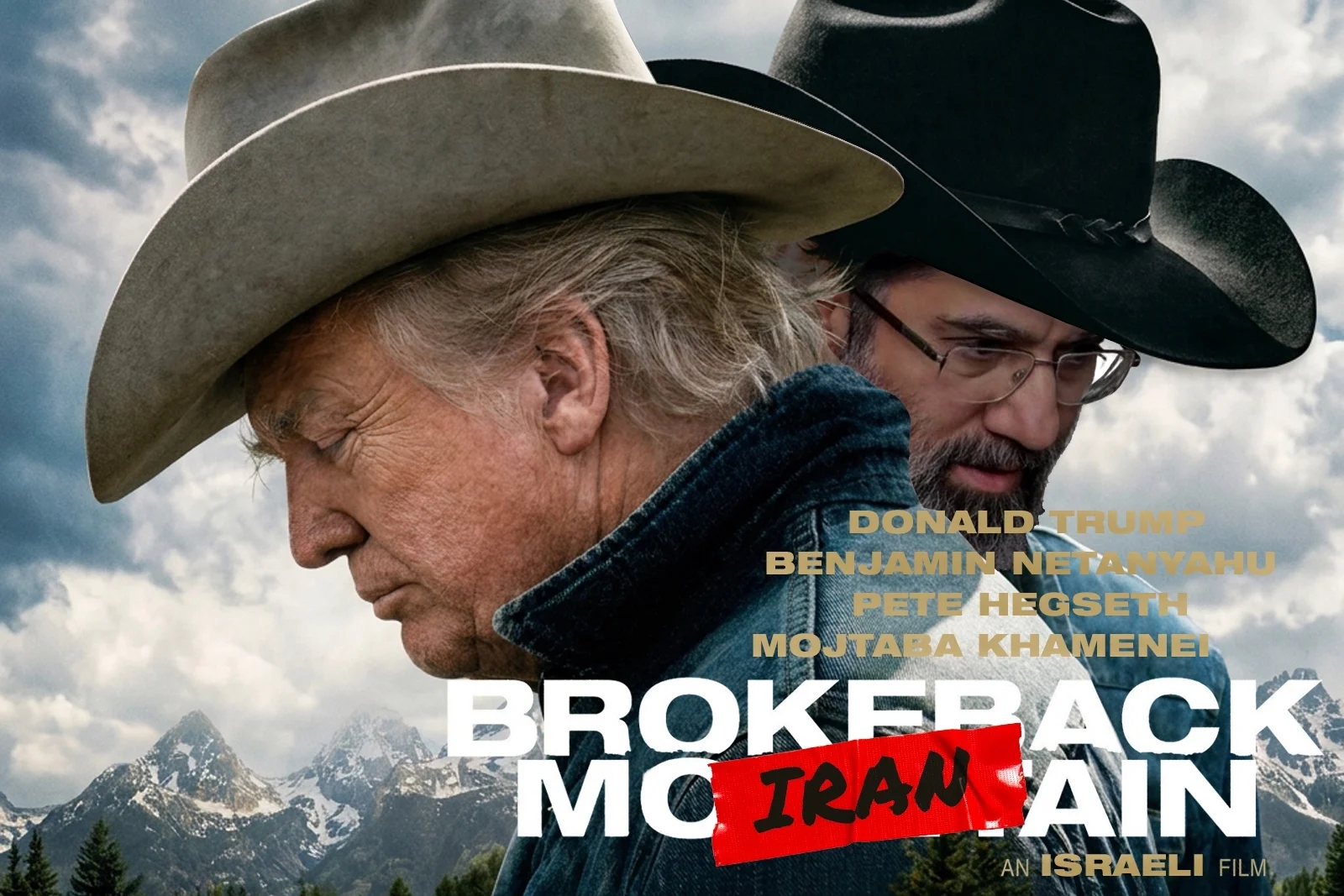

Trump to Iran: ‘I Wish I Knew How to Quit You’
The confrontation between the United States and Iran has become one of the most durable—and dangerous—strategic rivalries in the modern Middle East. It is no longer simply a dispute between two governments. It encompasses nuclear strategy, sanctions, regional alliances, proxy warfare, maritime security, energy politics, and competing visions of who should shape the region’s future.
What makes the confrontation especially dangerous is its ability to reproduce itself. Military escalation creates new grievances. Sanctions deepen resistance. Retaliation confirms perceptions of threat. Failed negotiations leave each side more suspicious than before. Just when the conflict appears close to resolution, another round begins.
The current crisis is more dangerous than many earlier periods of hostility. The war that began in February has continued for nearly six months despite a June agreement intended to provide a path toward settlement. Disputes over Iran’s nuclear program, sanctions, and the Strait of Hormuz remain unresolved. The agreement’s 60-day deadline expired without producing a durable deal, leaving Washington and Tehran once again relying on threats and coercion.
But the machinery driving this conflict was built decades ago.
The Architecture of Distrust
Few international relationships carry as much accumulated grievance.
For many Iranians, the 1953 overthrow of Prime Minister Mohammad Mossadegh after his government nationalized Iran’s oil industry remains a defining episode—a symbol of Western interference in Iranian sovereignty.
The 1979 Islamic Revolution transformed that resentment into an ideological confrontation. The overthrow of the shah and establishment of the Islamic Republic reordered Iran’s relationship with Washington, while the subsequent seizure of the U.S. embassy and hostage crisis embedded a similarly durable distrust of Iran in American politics.
From then on, Washington increasingly viewed Tehran as a revolutionary power challenging the U.S.-led regional order. Tehran regarded the United States as the principal outside power seeking to contain, weaken, or ultimately transform the Islamic Republic.
The result is a classic security dilemma. Iran sees its missiles and regional alliances as deterrents; Washington sees instruments of aggression. The United States deploys military forces in the Gulf to protect allies and maritime commerce; Tehran sees strategic encirclement.
Neither considers itself the principal aggressor. Each regards its own actions as defensive and the other’s as threatening. Mutual insecurity becomes the rationale for mutual militarization.
The Nuclear Trap
Iran’s nuclear program has become the central strategic issue around which much of the confrontation revolves. Tehran maintains that its activities are peaceful. Washington and its allies, principally Israel, fear that Iran could acquire the capacity to develop nuclear weapons.
The 2015 Joint Comprehensive Plan of Action represented the most ambitious diplomatic attempt to bridge that divide. Iran accepted significant restrictions and international verification in exchange for sanctions relief.
The deal demonstrated that even bitter adversaries could reach a sophisticated compromise. Its collapse, however, exposed the weakness of agreements without durable political support.
The United States withdrew from the JCPOA in 2018 and adopted a policy of “maximum pressure.” Iran subsequently reduced its compliance. What followed made clear that the nuclear dispute had never been merely a technical argument over centrifuges or enrichment levels. It was about trust, credibility, and vulnerability.
Washington wants to prevent Iran from acquiring a nuclear weapon. Tehran wants sanctions relief and security guarantees without surrendering sovereign rights or leaving itself vulnerable to efforts at regime change.
Any nuclear agreement that fails to address those broader security calculations risks becoming another temporary pause.
Sanctions and the Limits of Pressure
Economic sanctions have become one of Washington’s principal instruments of coercion, targeting Iranian oil exports, banks, shipping networks, financial institutions, and officials.
The logic is straightforward: make resistance expensive enough and Tehran will negotiate.
The political effects are considerably less predictable.
Sanctions can damage an economy without altering the leadership’s strategic calculations. They can also strengthen hard-line forces by allowing the government to portray economic suffering as proof of foreign hostility.
The current war has intensified Iran’s problems. War, sanctions, inflation, and disruptions to oil exports have inflicted substantial economic damage and increased social pressures. But economic pain does not automatically produce political capitulation.
Instead, pressure can reinforce the cycle it was intended to break. Washington imposes sanctions to extract concessions. Tehran resists because it interprets them as coercion. Washington increases the pressure because Iran refuses to concede.
A policy intended to compel diplomacy can end up making diplomacy harder.
Hormuz Changes the Equation
The Strait of Hormuz has turned the U.S.–Iran confrontation into a global economic problem.
Before the current conflict, roughly one-fifth of global oil and liquefied natural gas trade passed through the narrow waterway. Serious disruption therefore affects not only Iran and the United States but Europe, China, India, Japan, South Korea, and the Gulf economies.
Hormuz also demonstrates the strategic power of geography. Iran does not need conventional military parity with the United States to impose enormous costs. Its position alongside one of the world’s most important energy chokepoints gives Tehran leverage that superior American firepower cannot simply erase.
By August 19, commercial shipping through the strait remained badly disrupted, while Brent crude had climbed to roughly $91.79 a barrel amid uncertainty over maritime traffic and energy supplies.
Iran has tied reopening the strait to conditions associated with the June agreement, including sanctions relief, the release of frozen assets, and an end to American military operations. Washington insists that international shipping cannot be subjected to Iranian conditions.
The dispute is therefore about considerably more than tankers. It is a contest over sovereignty, deterrence, freedom of navigation, economic leverage, and regional power.
A War Neither Side Can Win
The central paradox of the conflict is that overwhelming military superiority has not translated into political control.
The United States possesses vastly greater conventional military power. Iran possesses strategic depth, difficult geography, missiles, asymmetric capabilities, and regional networks capable of imposing substantial costs.
Iran cannot defeat the United States conventionally. But Washington cannot simply eliminate Iran as a geopolitical actor.
That is why the conflict repeatedly returns to the same dangerous middle ground between war and peace. Military operations can diminish without the political dispute being resolved.
The June agreement briefly appeared to offer an exit. It was intended to halt large-scale fighting and establish negotiations over the nuclear program, sanctions, and Hormuz.
Instead, familiar disagreements resurfaced. Washington and Tehran clashed over sequencing, verification, sanctions relief, and military obligations. Each accused the other of failing to comply. By August, the deadline had passed without a permanent settlement.
Its collapse demonstrated a basic truth: stopping military operations is easier than resolving the conditions that produced them.
A ceasefire can stop shooting. It cannot manufacture trust.
And when neither government believes the other will honor tomorrow’s deal, concessions made today begin to look less like diplomacy than vulnerability.
The Trap Trump Built for Himself
Trump’s predicament is no longer merely that Iran refuses to yield. It is that he has exhausted nearly every instrument of American power without securing the surrender he repeatedly promised. He can threaten Tehran, bomb its military infrastructure, tighten sanctions, and dispatch more forces to the Gulf. What he cannot do is convert any of that pressure into the political outcome he wants.
That failure appears almost incomprehensible to a president who treats foreign policy as a contest of dominance. Trump entered office convinced that previous administrations had failed because they were timid, distracted by allies, constrained by international rules, and insufficiently willing to use force. In his telling, American power had not declined; it had merely been mishandled by weak people. Put a stronger man in charge, strip away the diplomatic niceties, and adversaries would fold.
Iran has exposed the stupidity of that assumption.
The United States can devastate Iran, but devastation is not victory. Tehran does not need to match Washington plane for plane or ship for ship. It needs only to survive, keep the Strait of Hormuz under threat, endanger U.S. partners in the Gulf, and make every additional round of escalation more expensive than the last. Missiles, drones, fast boats, foreign intelligence, and geography give Iran the ability to impose costs wildly disproportionate to its conventional strength.
This is the strategic reality Trump cannot quite absorb. The technologies that once helped guarantee American dominance are no longer exclusively American. Satellite imagery, precision components, drones, and targeting systems have spread across a globalized economy. Weaker states can now acquire enough capability to complicate—or frustrate—the plans of vastly stronger powers. Iran cannot defeat the United States in a conventional war. It does not have to. It can deny Washington the clean, inexpensive triumph Trump assumed American firepower would deliver.
The war has therefore produced the opposite of its intended lesson. Trump wanted to demonstrate that the United States could still impose its will on a hostile regional power. Instead, he revealed the limits of American coercion. Iran’s conventional forces have been battered, its economy has suffered, and much of its military infrastructure has been damaged. Yet its government remains standing, its nuclear ambitions have not disappeared, and its ability to disrupt Hormuz has survived. American threats that once seemed too dangerous for Tehran to test have now been tested.
That has consequences beyond Iran. For decades, U.S. deterrence in the Gulf rested on the belief that closing Hormuz or threatening America’s regional partners would invite intolerable punishment. Iran has now done both and lived to tell the tale. Once that psychological barrier is broken, it cannot be restored by another round of boasts from the Oval Office.
Trump is stuck because neither escalation nor retreat offers him what he craves most: the appearance of personal victory. Renewed attacks could deplete U.S. weapons stockpiles, further destabilize energy markets, expose Gulf allies to retaliation, and still fail to compel Tehran’s surrender. Diplomacy, meanwhile, would require acknowledging that Iran retains leverage and must receive something in return. Trump spent years denouncing compromise as weakness. He now needs a compromise while insisting that the other side has already lost.
His hubris has left him with a choice between admitting the limits of American power and testing those limits again.
A workable strategy would require patience, allied coordination, economic inducements, sustained pressure, and negotiations involving Gulf states, Europe, and probably China. It would resemble a long squeeze rather than the cinematic knockout Trump prefers. Such an approach might eventually contain Iran, protect navigation through Hormuz, and produce a nuclear settlement that both sides can live with.
But it would also demand qualities Trump rarely displays: discipline, strategic humility, and the ability to distinguish punishment from success. He can continue attacking Iran until the rubble looks sufficiently photogenic for a victory speech. What he cannot bomb into existence is capitulation.
From Victory to Coexistence
The conflict has also become increasingly regional. Israel is central to the strategic equation. Gulf states remain exposed to Iranian missiles and disruptions to maritime commerce. Iraq continues to navigate relationships with both Washington and Tehran, while Yemen’s Houthis have demonstrated the capacity of Iran-aligned forces to threaten shipping and regional infrastructure.
What once revolved heavily around the nuclear question has become a wider struggle over regional influence, maritime security, energy markets, and the future architecture of the Middle East.
That makes any bilateral settlement more difficult. An agreement between Washington and Tehran would not automatically resolve the concerns of Israel, Saudi Arabia, the United Arab Emirates, Iraq, or other regional actors.
But the largest obstacle may be political rather than military.
After decades of hostility, each country has developed an entrenched narrative about the other. In Washington, Iran is an ideological adversary threatening American interests and allies. In Tehran, the United States is an imperial power seeking to weaken the Islamic Republic.
Those narratives make compromise politically dangerous. An American president who offers concessions to Iran risks accusations of appeasement. An Iranian leader who compromises with Washington risks accusations of surrender.
Confrontation can therefore be easier to defend domestically than compromise—even when confrontation repeatedly fails.
Escaping that pattern requires abandoning the fantasy of decisive victory.
The United States cannot remove Iran from the geopolitical landscape of the Middle East. Iran cannot force the United States entirely out of the region. The realistic objective is managed coexistence.
That would require a durable ceasefire, credible verification, renewed nuclear diplomacy, reciprocal sanctions relief, regional security arrangements involving Gulf states, and some form of multilateral framework for protecting navigation through Hormuz.
Above all, Washington and Tehran need sustained communication. Diplomacy is not a reward for friendly governments. Between adversaries, it is a mechanism for preventing miscalculation from becoming catastrophe.
The War That Keeps Coming Back
The U.S.–Iran conflict is “never-ending” not because war is inevitable, but because the mechanisms that recreate it remain intact.
American military operations reinforce Tehran’s narrative of encirclement. Iranian retaliation strengthens Washington’s perception of Iranian aggression. Sanctions generate resentment; resistance produces demands for still more pressure.
Each side repeatedly behaves in ways that validate the other’s worst assumptions.
The consequences now extend far beyond either country. Disruption in Hormuz threatens global energy markets, while prolonged instability carries wider economic and financial risks.
The lesson should be obvious by now: military superiority cannot substitute for political settlement.
Washington cannot bomb its way to permanent security. Tehran cannot resist its way to permanent economic stability. Neither can remove the other from the strategic landscape.
They do not need friendship or ideological reconciliation. They do not even need to trust each other. They need institutions capable of managing their distrust.
The deepest irony of the U.S.–Iran confrontation is that both countries have repeatedly pursued security through policies that make the other feel less secure.
Until that changes, the war will continue doing what it has done so well: ending just long enough to begin again.