Watch Your Mouth: Mbappé, Mao and Cancellation
It has become evident over the years that sports stars, and, for that matter, anyone in sports venturing an opinion perceived to be remotely controversial, is to be gagged and subject to execration, sustained derision, and cyber immolation. They only exist with any legitimacy for the brands who sponsor them, the spectators who supposedly dote on them (till the inevitable accusations of treachery or poor form are made), and the administrators who play their own brand of politics with impunity as hefty salaries are drawn.
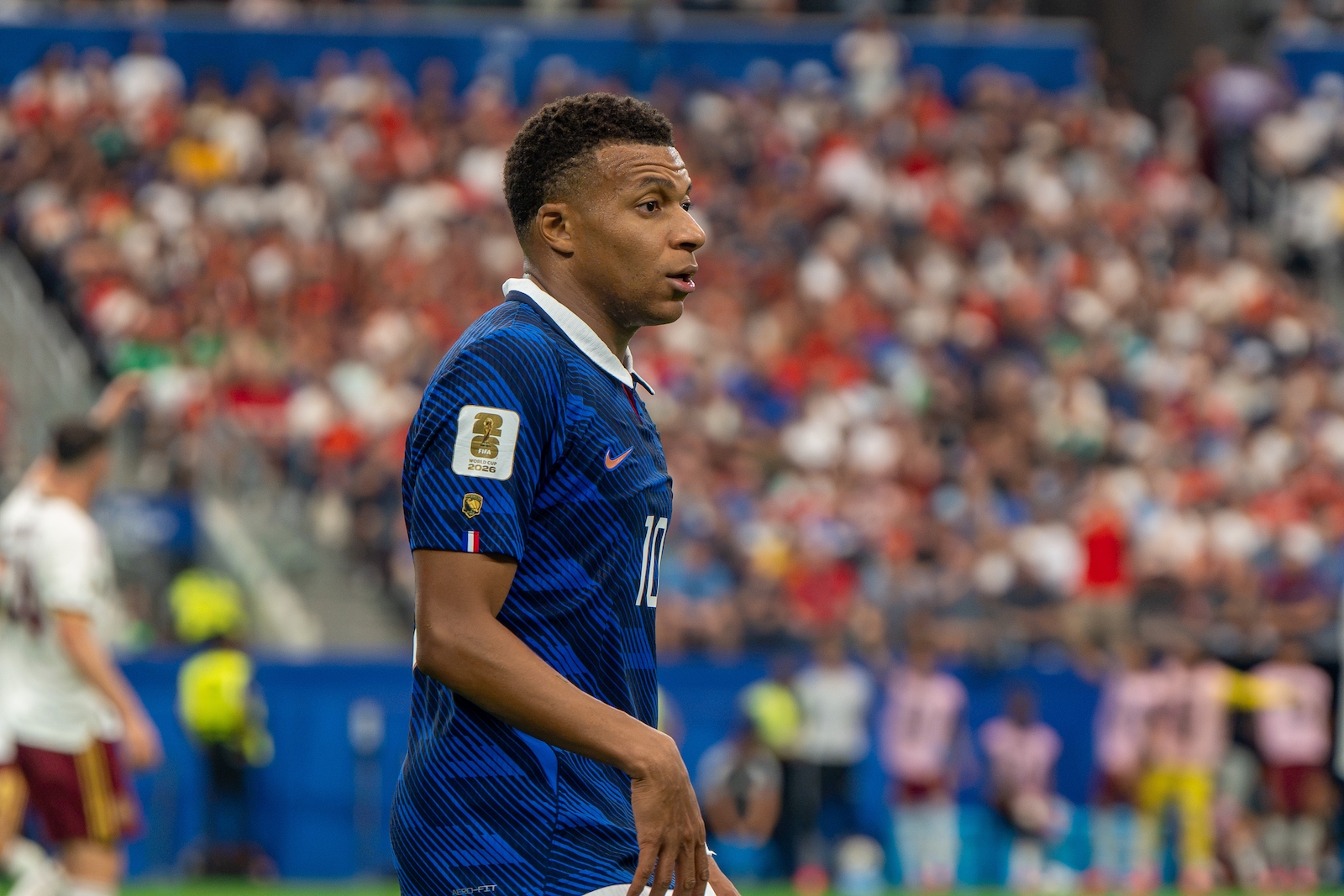
While footballers are living proof that regression of the human species, if not stasis, is a plausible fact, it is a bit rich to get riled up over throwaway remarks from such a figure as Kylian Mbappé, a man who is paid too much to kick a ball across grass. Sublime as he is when playing on a football pitch, he should be allowed to make those less than profound observations we come to expect from those who entertain spheres for a living.
On the French online talk show The Bridge, the French forward made reference to a meme “that makes me laugh the most, it’s the one where there’s a video of a guy, I think it’s a Chinese dictator.” During the interview, he chuckles as the clip cuts to the said meme, involving his own face superimposed on an image of China’s own Red Emperor Mao Zedong. In Real Madrid, the Spanish club side he plays for, Mbappé is known as the “dictator,” a mirthless comment that barely warrants attention.
Warrant attention, it apparently did. It did not matter that the player never named Mao as a crazed, murderous ideologue who had singularly mangled and mauled a country, or that the superimposed image was one done by the program he was speaking to. Across the social media moronsphere, France’s football captain had apparently erred on cultural and political grounds. China’s foreign ministry spokesperson Guo Jiakun warned that words and actions that hurt the feelings of the Chinese people would be repudiated. The China Media Group, parent company of China’s CCTV channel, pulled broadcasts of Spain’s LaLiga matches, along with any fixtures featuring Mbappé. Chinese companies such as Dongpen Beverage (Eastroc), dairy producer Mengniu and cheesemaker Milkground briskly terminated their commercial arrangements with Mbappé, expressing “zero tolerance” for conduct that offended national sentiment.
Instead of offering a modest defence for one of their most notable players against this pettifogging, Spain’s football league body LaLiga offered a grovelling apology while throwing the player to the screeching mob. It “deeply” regretted the “offence” caused by the remarks to “Chinese fans.” Such “comments were made in a personal capacity and do not represent LALIGA. Within the scope of our institutional responsibility, we apologise on behalf of LALIGA and all its clubs.” The president, Javier Tebas, distinguished the affair with some generous crawling: “I wish to personally apologise to Chinese fans for the offence caused. I have deep respect for China, its institutions and its people, and I value the trust which, for so many years, they have supported football.”
The lucre speaks, and on these occasions, it does so in amplified volumes, especially when it comes to the Chinese market. Terrence Burns, CEO of T. Burns Sports Group, captures the amoral sentiment with cold precision: “Mbappé’s team knew, or should have known, what the true cost of Chinese brand endorsements was all about.”
Mbappé was forced, through his digital networks, to gushingly apologise and seize back terrain lost in the faecal miasma fed by social media grievance. His kowtowing took the following, unenviable form: “I apologise to everyone my words have upset.” He had “reacted to an image of himself” during an interview and had no intention of causing insult. “I have deep respect for the Chinese people and their history, and I am sincerely sorry.”
Given the butcher’s bill Mao and his sanguinary fantasists left history, the apologies should be coming from elsewhere, not least those toadying courtiers who continue to minimise the significance of the death toll exacted in the name of revolution by terming them “abnormal.” Be it such sadistic experiments as the “Great Leap Forward” and the “Great Proletarian Cultural Revolution,” the mortality rates will never be entirely known.
Works, however, have attempted that herculean task. Yang Jisheng, when a senior editor at Xinhua, conducted research in 12 different provincial archives that lead to Tombstone: The Untold Story of Mao’s Great Famine. It charges that 36 million perished in the 1958-61 famine, which is still treated by a dismissive and paranoid establishment as a natural disaster. R. J. Rummel’s demographic and statistical forays into this field identified almost 7.5 million victims lost in the Great Leap Forward and 7.7 million from the murderous efforts of the Cultural Revolution – and these are but two stretches of lusty bloodletting.
The CCP grandees in Beijing guard against unflattering depictions of their holy leader with foamy dedication, evidenced by the recently imposed three-year prison sentence of the artist Gao Zhen, a U.S. permanent resident who was detained in August 2024 on suspicion of “infringing upon the reputation and honour of heroes and martyrs.” The works in question, many of a satirical nature, date back a decade or more, including Mao’s Guilt.
That brands, fans and governments can come together to abominate, and silence even a modest, casual expression that involves a veiled reference to one of history’s grand killers returns us back to the old premise that players must shut up and put up. They are the milch cows of an industrialised base of earnings hostile to the unapproved opinions of any sports figure who dares have them. Money in sports comes with a hefty price tag and seemingly endless lashings of hypocrisy.