
What Iran’s Rulers Miss About the Quran
Iranians are suffering, and the institutions meant to govern them offer little relief. The economy is under severe pressure, more people are slipping into poverty, and war with Israel and the United States has brought destruction and casualties. These crises have different causes, but in my view, one failure runs through them: a political system that cannot make legitimate, coherent decisions on behalf of the society it claims to represent.
A political system’s central responsibility is to provide a just and effective mechanism for collective decision-making. Citizens will disagree about foreign policy, economic institutions, and the distribution of power. Government must give those disagreements a way to be resolved. Iran’s system instead excludes much of the public while struggling to reconcile competing interests within its own ruling elite. The result is a crisis of governance that compounds the country’s other troubles.
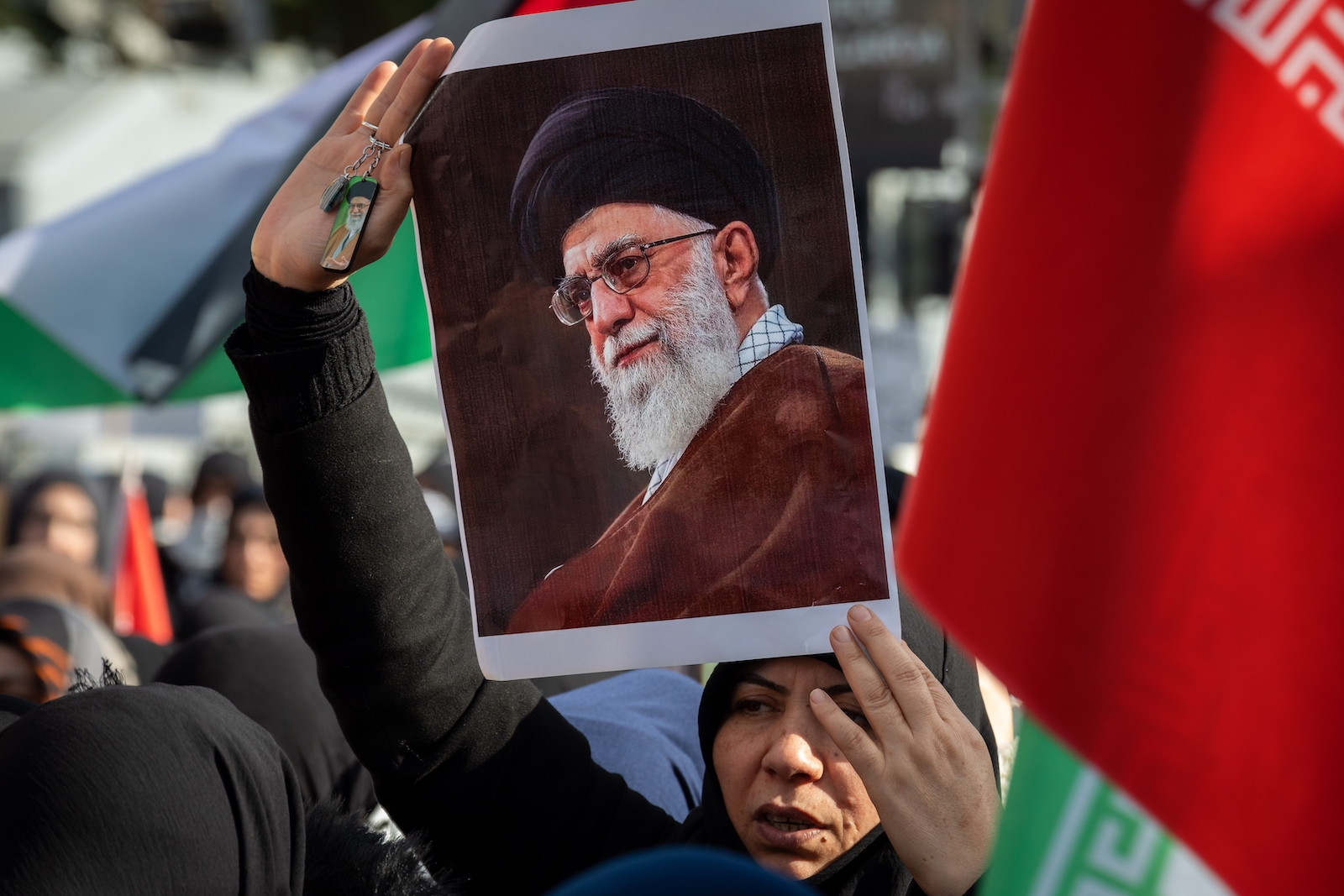
The gulf between the regime and ordinary Iranians is especially damaging. People outside the networks of power have little meaningful influence over decisions that shape their lives. For many, street protests have become the most visible means of demanding change. When citizens cannot secure representation through established institutions, political frustration accumulates outside them, leaving confrontation to do the work that accountable government should perform.
At the same time, the ruling establishment is divided. Some factions favor continued confrontation with the U.S. and Israel; others see negotiation as the path out of war. Such disagreements are inevitable in any political community. What makes them dangerous is the absence of a broadly accepted mechanism for deciding whose position should prevail. Without that mechanism, rival centers of power can obstruct a consistent strategy, even when the stakes are national survival.
One possible response is also one that is too often neglected: return to the Quran and build a political system consistent with its teachings. That may sound counterintuitive in a country whose rulers already claim religious legitimacy. Yet governing in Islam’s name does not establish that authoritarian government is faithful to Islam. I believe the Quran offers grounds for challenging the concentration of power and defending equal political participation.
Rulers and political movements that invoke Islam to justify authoritarian authority often rely on their interpretation of the Quran and the recorded traditions, or Hadith, of the Prophet Muhammad. A central text in this argument is Surah Nisah, verse 59, which calls on believers to obey Allah, the Prophet, and ulu’l-amr, commonly understood as those entrusted with authority. Read narrowly, that injunction can become a demand for submission to whoever holds power.
If this verse and other verses concerning obedience are treated as the whole of the Quran’s political teaching, authoritarian rule can appear religiously defensible. Once established, a ruler could claim the right to remain in office and determine his successor. Leadership and succession would then become the exclusive business of the ruling elite, with citizens expected to obey rather than to confer or withdraw authority. The crucial question of how a ruler becomes legitimate would be left unanswered.
But obedience is not the only principle relevant to governance. Other Quranic passages deserve to be considered alongside it. Verse 13 of Surah al-Hujurat addresses humanity’s common origins and the relationship among different peoples: “Human beings, we created you all from a male and a female, and made you into nations and tribes so that you may know one another. Verily the noblest of you in the sight of Allah is the most God-fearing of you. Surely Allah is All-Knowing, All-Aware. (49:13)”
This passage can be read as affirming the equal worth of human beings, regardless of their ancestry or communal identity. It does not set out an electoral system. Its political significance, in the interpretation advanced here, is that no group can claim an inherent entitlement to govern others. Applied to public life, that principle supports equal political rights for all citizens, rather than privileges reserved for a ruling caste.
A second passage, Verse 30 of Surah al-Bagharah, introduces the idea of humanity’s responsibility on earth: “Remember (when) your Lord said to the angels: ‘I am setting on the earth a vicegerent.’ The angels asked: ‘Will you set therein one who will cause disorder and corruption on it and shed blood, while we glorify You with Your praise (proclaim that You are absolutely free from any defect and that all praise belongs to You exclusively,) and declare that You alone are all-holy and to be worshipped as God and Lord.’ He said: ‘Surely I know what you do not know.’”
The opening sentence describes the appointment of a vicegerent, a term understood as a successor or representative. If this responsibility is understood to extend to humanity, it has an important political implication: responsibility for the affairs of an Islamic society cannot belong exclusively to a ruler or a clerical elite. It must also belong to the people whose lives are governed by those decisions.
Taken together, these passages support an argument that political equality entails political responsibility. Every citizen should have a voice, and every citizen shares a duty to participate in collective decisions. On this reading, neither men nor women can be denied political standing on the grounds that another person has a superior claim to represent God. Nor should citizens be expected to surrender their political agency to an authority they cannot hold accountable.
Choosing and replacing leaders is central to that responsibility. If political authority ultimately belongs to God, no individual’s assertion that he speaks for God should settle the question of who governs. God does not directly announce a preferred candidate in an election or resolve a modern dispute over succession. The practical responsibility must therefore fall to the community, whose members participate as equals in deciding who will exercise authority on their behalf.
That conclusion brings us to voting. A community of political equals may seek consensus, but unanimity cannot be assumed. When citizens disagree, majority voting offers a practical way to reach a collective decision while giving each person an equal say. I regard this as consistent with the principles of equality in Verse 13 of Surah al-Hujurat and shared responsibility in Verse 30 of Surah al-Bagharah. The argument is an interpretation of those principles, rather than a claim that the Quran explicitly prescribes modern elections.
On this interpretation, the obligation to obey rulers in Surah Nisah, verse 59 cannot be separated from the legitimacy of the process that brings them to power. Authority should rest on freely expressed public consent, with majority support providing a basis for choosing leadership. Citizens must also be able to withdraw that consent and choose successors. Otherwise, participation becomes a one-time concession, and a leader’s initial mandate can be turned into a permanent claim to rule.
Majority support is not, by itself, a complete democratic system. Elections require credible rules, genuine competition, and opportunities to replace those in office. Religious freedom and other individual liberties need protection as well, including protection against abuse by a majority. The passages considered here do not provide a detailed constitutional blueprint or resolve every question about those freedoms. They nevertheless offer, in my reading, a basis for rejecting dictatorship and government monopolized by a privileged minority.
For Iran, a representative government grounded in these principles could create a path out of political paralysis. Equal voting rights would allow citizens to influence national priorities rather than merely endure them. Leaders chosen through a credible process would have a public mandate to make collective decisions, including the difficult choices involved in war, negotiation, and economic recovery. Their authority would depend on continuing accountability, rather than on the suppression of competing voices.
Such a government would not make disagreements disappear. It would provide an accepted means of resolving them. A governing leader or coalition could pursue a coherent foreign policy, while opponents retained the right to criticize that policy and seek a different mandate. The distance between state and society would not vanish overnight, but citizens would have a peaceful, institutional means of changing the direction of government.
Returning to the Quran, in this sense, means reconsidering the political obligations that religious authority places on rulers as well as on citizens. Iran’s leaders invoke Islam to demand obedience. Its people can also draw on Islam to demand representation. A reading centered on equality, shared responsibility, and accountable leadership offers a religious argument for the political change Iran so urgently needs.