Culture

Why Remembering the Roma Holocaust Is Not Enough
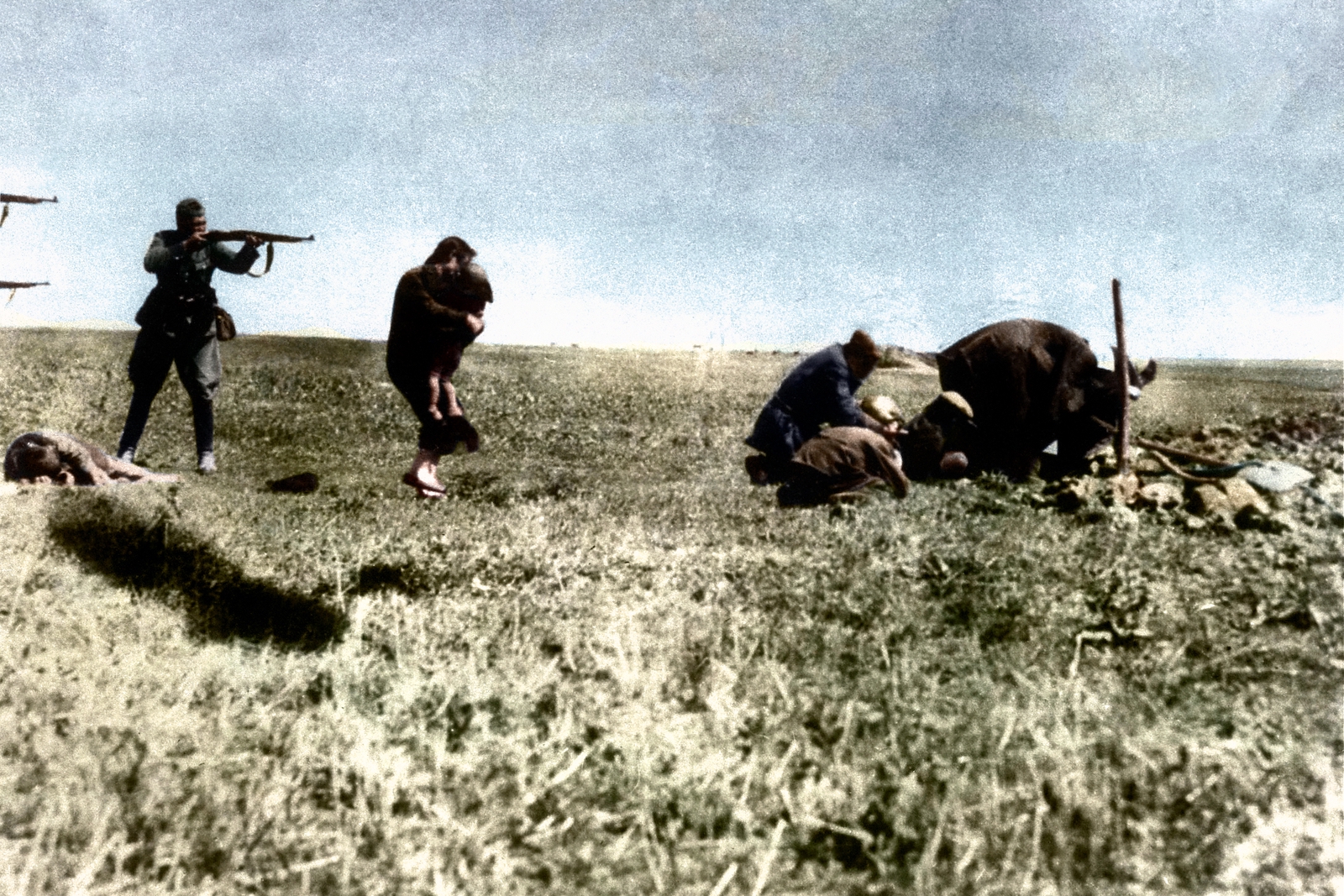
Eighty-two years after the mass murder of Roma and Sinti at Auschwitz-Birkenau, anti-Roma hatred persists. European Roma Holocaust Memorial Day is a warning that Europe is still failing to turn the lessons of history into political reality.
On September 6, Saxony-Anhalt goes to the polls, with the Alternative for Germany (AfD) party polling above 40 percent and within reach of an outright majority. More than 80 years after over 4,300 Roma and Sinti were murdered during the liquidation of the ‘Zigeunerlager’ at the Auschwitz-Birkenau concentration camp, a far-right party that openly stigmatises and singles out Roma citizens is once again on the rise in Germany.
In April, AfD politician Enxhi Seli-Zacharias led party colleagues through a German city, handing brooms to residents she took to be Sinti and Roma and filming them as they swept the pavement. She told one woman: “Germans have had enough—look what this looks like.”
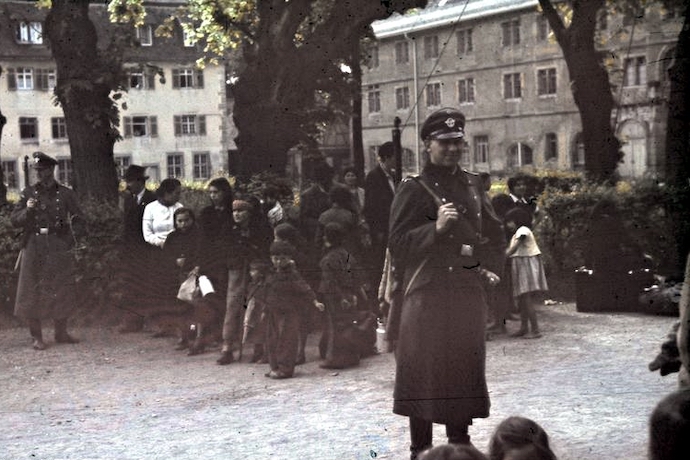
More than a decade ago, ahead of August 2, I wrote a short text for a leading Polish newspaper to raise awareness of the Roma Holocaust. It was 2014, the 70th anniversary, and I was at the height of my work as a Roma youth activist. That year, as part of the “Dikh he na bister” (Look and don’t forget) initiative organised by the International Roma Youth Network ternYpe, we brought more than 1,000 young Roma and non-Roma from 25 countries to Krakow and Auschwitz. It was the largest gathering of its kind, and it helped galvanise political support. It is no overstatement to say that this mobilisation contributed greatly to the European Parliament’s recognition of August 2 as European Roma Holocaust Memorial Day the following year.
There has undeniably been progress since then. Following the European Parliament’s 2015 declaration, more countries now officially recognise August 2 and hold institutional commemorations. Memorial sites have expanded, too, including a new memorial at the former extermination site in Lety u Písku, in the Czech Republic. The site was infamously occupied by a pig farm until 2018; its demolition in 2022 finally made space for a memorial worthy of the victims.
Educational initiatives have also multiplied, the result of several converging forces. Roma voices have become increasingly influential in shaping remembrance. Scholars and researchers, activists across generations, geographies and nationalities, and artists and cultural producers have stubbornly insisted on the importance of marking the Roma Holocaust.
At the same time, a 2020 report by the Council of Europe, the Roma Education Fund and the Georg Eckert Institute found that Roma remained largely absent from European school curricula. When they did appear, they were presented mainly as passive victims, with little recognition of their agency, history or resistance. In response, Council of Europe member states adopted a resolution encouraging the revision of textbooks and the inclusion of Roma in national historical canons. The EU, UN and OSCE have taken symbolic steps in the same direction, whether by developing teaching materials, hosting inclusive remembrance events or promoting ‘good practices.’
Yet these gains remain incomplete, and good intentions have not delivered tangible results.
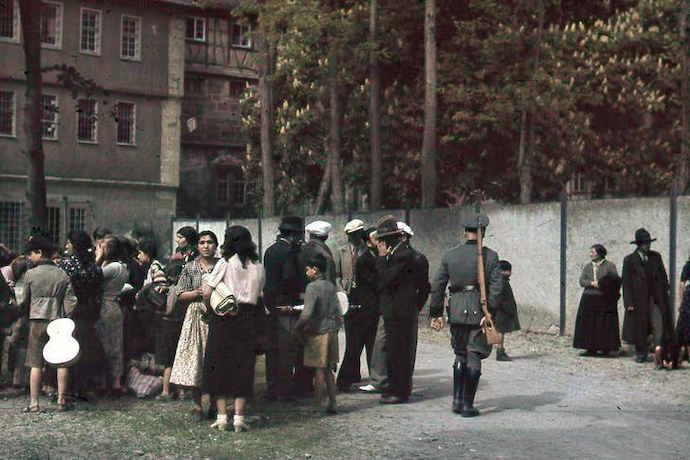
The Roma Holocaust remains a footnote in mainstream narratives of the Second World War. Historians estimate that more than 500,000 Roma and Sinti were killed by the Nazis and their collaborators. Yet Roma victims are still too often portrayed either through the lens of prejudice—with stereotypes about criminality or antisocial behaviour subtly reinforcing the very logic used to justify their persecution—or as anonymous victims stripped of agency and resistance.
Meaningful Roma involvement in Holocaust museums, memorials and political boards remains sporadic at best. Roma testimonies and archives are scattered and often inaccessible, making it difficult for scholars and family members alike to consult vital records. Research on the Roma Holocaust is underfunded, while hundreds of sites across Europe remain unmarked and neglected.
Worse, the anti-Roma racism that enabled the genocide continues to shape Roma lives across Europe—and in recent years it has intensified. Roma face hate speech, police violence, and segregated housing and schools. Anti-Roma prejudice remains widespread and dangerously entrenched. A recent report by MIA, Germany’s national reporting body on anti-Roma racism, documented 2,076 incidents in 2025, a 24 percent increase from the previous year. In Greece and Slovenia, Roma endure state-sponsored surveillance and the securitisation of entire neighbourhoods, while politicians in Portugal and Hungary scapegoat them for political gain.
But the danger does not stop with the Roma. We are all moving from bad to worse because history’s deeper lessons have not been translated into political reality.
Democratic standards are under pressure. Nationalism, racism, conspiracy theories and authoritarian politics are once again entering mainstream public discourse. Hate is becoming normalised not at the margins of politics, but at its centre.
Historical revisionism and Holocaust denial are eroding the factual understanding of the past and reshaping the social consensus around its horrors. Artificial intelligence introduces another, still poorly understood threat to remembrance culture, whether through deepfakes, manipulated archival material or the proliferation of disinformation.
In that 2014 article, I wrote about discovering the record of Anna Mirga while researching in the archives of the Auschwitz Museum—a Roma woman who bore my own first and last name and who perished in Auschwitz. Among the records, I found dozens of other Roma victims with my surname, along with first names familiar to me from my cousins, uncles, and grandparents. That discovery transformed history from something abstract into something profoundly personal. It became impossible not to ask: Had I lived 80 years earlier, could that have been me?
That question has never left me. Since becoming a mother, it has become even more terrifying: Could that have been my children?
This is why August 2 is not only a day of remembrance for me this year. It is a warning. Fascism is never simply a chapter in a history book. It begins with words, stereotypes, indifference and the gradual erosion of democratic values. Honouring those who were murdered is not enough. We must also recognise how quickly democratic societies can unravel when prejudice, dehumanisation and political extremism come to be accepted as ordinary.