Why the West Must Help Ukraine Win, Not Merely Survive
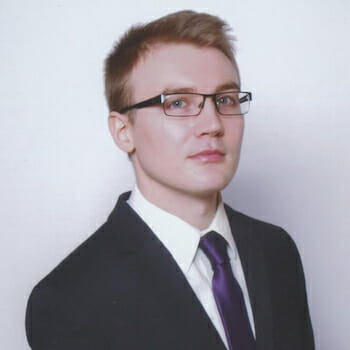
Dimitri Vasylev is a Ukrainian political consultant, analyst, public communications specialist, and musician. He leads the Research Agency for Development and Analysis (RADA), where his work spans political analysis, governance, development, and public communication. Born in Kyiv during the Soviet era, Vasylev served in the Soviet Army before embracing a stronger Ukrainian identity. Since Russia’s full-scale invasion, he has paired volunteer work with music, producing three albums intended to strengthen Ukrainian culture, resilience, and national identity.
In this interview, Scott Douglas Jacobsen speaks with Vasylev about the West’s evolving understanding of Russia’s war, the democratic world’s failure to act with unity, and the imperial assumptions that continue to shape Russian political culture. Vasylev argues that Ukraine’s defeat would reverberate far beyond its borders and that Western governments must provide enough military support to secure victory, rather than merely prevent collapse. He also assesses the contributions of the United States, Britain, Germany, the Netherlands, Poland, Turkey, and other partners, while warning that renewed attacks on Ukraine’s energy infrastructure could drive further displacement during the winter.
Scott Douglas Jacobsen: Since the full-scale invasion, how has commentary across the democratic world—including in countries such as Japan and South Korea—changed as the scale of Russian aggression has become clearer? And how has public opinion shaped government support for humanitarian relief, reconstruction, and military assistance?
Dimitri Vasylev: What has changed is that they understand the full scope of the risks for the future of this world if Ukraine loses because, if Ukraine loses, democracy loses.
But they don’t understand what they can do. We are at a stage of extreme uncertainty. What should be done? How should it be done? When should it be done? By what means should it be done?
A great level of uncertainty is combined with a great lack of unity because no leader can bring this democratic world together. Usually, it was America. But now, in my view, America is damaging itself and its democratic partners in many ways.
Jacobsen: Freedom House has now documented 20 consecutive years of decline in global freedom. Democratic progress has always come in waves, but a two-decade retreat is difficult to dismiss as a temporary downturn.
Vasylev: May I make a little remark?
Jacobsen: Please—go ahead.
Vasylev: On what you’re saying, the problem with democracy is that many different societies in the democratic world understand democracy in slightly different ways. When you ask Americans what democracy is, it may be a totally different answer from what you will hear from people in Portugal, Italy, Norway, Canada, Japan, Australia, and many other places.
Over about 80 years of more or less comfortable times, economic growth, and development, people spoke about democracy with less clarity about what they were actually talking about and experiencing. So people went in different directions, I guess, in many ways.
There is no crystal-clear common understanding of what democracy is about, especially what democratic practice is. Practicing democracy matters most. Comparing democratic practices is perhaps something for the future, to clarify what works.
It doesn’t matter how long you live without war or without attacks on democracy from the outside world. Democracy can still be in crisis. The main crisis is in people’s heads because, in my view, they no longer clearly understand what democracy is about.
Jacobsen: If Vladimir Putin dies, is removed from power, or otherwise leaves office, is Russia’s present political culture likely to produce a similar leader, someone even more hostile to democratic values, or a figure capable of leading the country away from permanent confrontation?
Vasylev: Russian people, no matter where they are, what their level of intelligence and education is, or what they’re doing in their lives, often have a common understanding of Russian primacy. In my view, this is deeply embedded in Russian political culture and characterizes its imperialistic dimension.
It doesn’t matter what their education is or what their individual intentions are, whether people call them good Russians or bad Russians. They are still, to some extent, shaped by this political and historical environment.
And the shape of Russia as it exists now is, in my view, a permanent threat to democracy, to the future, and to Russian people themselves.
Because what we have now is based on an imperial idea. And this empire has to end. If it doesn’t end, the world will continue to face problems with Russia in many ways.
You also have to understand that, in my view, over the last 25 years, Russian authorities and affiliated actors have used corruption, financial influence, and other means to influence people and institutions in democratic countries.
All this money that went into democratic countries was, in my view, often used for corruption to influence people’s thinking, decisions, policies, and willingness to fight for democratic values. The financial cheque became much more important than democratic values. This is one way Russia operates. They corrupt people’s minds.
And Russian people, whether someone calls them good Russians or bad Russians, are also affected by this corrupted political environment. Russia will continue trying to influence the minds of people in European countries, their leaders, America, and the democratic world.
I will give you an example, Scott, while you’re thinking or reflecting on that—just an example to support what I’ve said.
Let’s go back to 1992. I had just finished my military service in the Soviet Army. I was demobilized and came back to Kyiv, but then I went to Moscow to visit my friends because I had a lot of them there. It was a great community of people and friends.
I went to the Pushkin State Museum of Fine Arts in Moscow. It’s a great museum, with great art and a special community of highly educated people around it.
I was talking to a kind lady who was about 45 years old. I was about 21 then. We had a nice, intelligent conversation, and she asked me where I was from. I said, “From Kyiv.”
Her eyes changed immediately. I saw anger in her eyes. I saw eyes that suddenly held little understanding, and she said, “Ah, it was you who broke our country.”
So she was one of those “good Russians” who was unhappy about the destruction of the empire. It didn’t matter what education she had. It didn’t matter where she was. It didn’t matter that she was surrounded by the art and beauty of this world in this museum.
We had had a very nice human conversation, but all of a sudden she was not simply an individual. In that moment, she became a representative of her empire and of imperial thinking. So that’s what I mean when I talk about Russia.
Jacobsen: Putin famously described the collapse of the Soviet Union as the “greatest geopolitical catastrophe of the twentieth century.”
Vasylev: Read the recent article by Valerii Zaluzhnyi in The New Voice of Ukraine. He wrote it in connection with the 35th anniversary of Ukrainian independence, and it’s a pretty hard piece.
He reminds everybody about Vladimir Putin’s view of what happened in 1991. Putin famously described the collapse of the Soviet Union as the greatest geopolitical catastrophe of the twentieth century.
But Zaluzhnyi describes what happened differently. He calls the collapse of the Soviet Union the twentieth century’s greatest geostrategic turning point. He talks about the collapse of an empire.
And when we’re talking about the collapse of an empire, you understand that this is a natural historical process. Empires rise and collapse. We accept and understand that.
But the problem with Putin and, in my view, with a large part of Russian society is that they consider what happened in 1991 a mistake. And usually, when you’re thinking about a mistake, a mistake is something you can repair, yes? That’s why many Russians still think it’s possible to reverse what happened, because they see 1991 as a geopolitical mistake.
Jacobsen: Is the implied logic that supporting Ukraine is also an act of democratic self-preservation—that the West is ultimately acting for its own good?
Vasylev: Yes. Actually, what you’re doing is supporting us.
Macro-financial support is important, extremely important, for our survival and resistance. Military support is important for our survival and existence.
But, in my view, you’re not doing enough when I talk about the Western world and the democratic community of this planet.
Because you’re doing it at approximately the level necessary for us not to lose, you have to help us win. Because you’re still afraid Russia will collapse. But you don’t have to be afraid of that. For the sake of the future of the democratic community, you should not regard the possible collapse of the Russian imperial system as something that must be prevented at any cost.
That’s what you’re afraid of. And, in my view, that’s a big mistake by the Western democratic community.
Jacobsen: Which countries have been the unsung heroes of Ukraine’s defense and recovery? Turkey, for example, has played an important role in reconstruction and other forms of support.
Vasylev: Actually, there are many countries involved in reconstruction and recovery. Of course, large-scale reconstruction will continue after the war, but right now there is also reconstruction, recovery, repair, and maintenance that allow us to survive and continue.
But the most important thing is to stop the destruction. To stop the destruction, you need more military support.
When you’re talking about Turkey, of course, you had those famous Bayraktar drones at the beginning of the full-scale war. They helped us.
The military equipment we received from the United States at the beginning was also extremely important in helping us stop the Russians. So I would call many countries heroes.
Definitely, the United States, regardless of which administration is in power now, has played a major role in helping us stop Russia and continue to fight.
Great Britain, and Boris Johnson personally, also played an incredibly important political and historical role. Boris Johnson belongs to a British political tradition that includes figures who acted decisively during moments of crisis.
Boris Johnson is a chaotic thinker and sometimes a chaotic actor. But at the right time, at the right moment, he did the right things. What he did for Ukraine was right and important. And the governments after him have continued substantial support, including the present government. So Great Britain is one of the heroes.
Germany is a hero. They began very cautiously, including the famous early offer of helmets, but now we receive enormous support from Germany. Germany has become one of Ukraine’s largest providers of military, financial, humanitarian, and civilian assistance.
The Netherlands is helping a lot. When you’re talking about the scale of the country, I mean, it’s relatively small in terms of land and population, but it has a great economy, and it’s a strong democracy. The Netherlands is one of the heroes, I think. They understand what is going on here and are doing a great deal to help us defend ourselves and win.
You can continue. Many countries are involved, including France, Italy, Canada, and Poland.
Of course, right now we are going through a hectic, strange, and sometimes difficult period in relations between parts of Polish and Ukrainian society. Nevertheless, Poland has been extraordinarily important and helpful to Ukraine during this war, with a strong understanding of what could happen if Ukraine fails.
So I’m grateful to Poland, to the Polish nation, and to the Polish people for all the support they’ve provided, just as I’m grateful to many people throughout Europe and around the world.
Jacobsen: Looking ahead to winter, Russia is likely to continue targeting Ukraine’s electricity and heating systems. What should other countries expect, and what can they do to help ordinary Ukrainians withstand the cold and the disruption?
Vasylev: Other nations should expect that many people may try to leave Ukraine during the winter, especially when we’re talking about older people, women, and children.
That could place an additional burden on European countries regarding accommodation, public services, and social infrastructure. People have to live somewhere, stay somewhere, and receive basic services. That’s what I mean by stability.
In my experience, when Ukrainians come somewhere, most of them don’t cause problems. They bring solutions and hard work because Ukrainians are hardworking, smart, and educated people.
Of course, any nation has different people. Ukrainians are no exception. But when we’re talking about the nation more broadly, those are the characteristics I would emphasize.
But countries also need to understand that Ukraine could fail if it doesn’t receive sufficient support. And if Ukraine fails, the consequences will not remain within Ukraine’s borders.
In my view, Russia could then use the resources, territory, industrial capacity, and potentially even human resources of a defeated Ukraine in ways that would create much greater security risks for European and NATO countries.
So if you don’t want a much larger war and much greater problems in the future, you had better help Ukrainians win.
Jacobsen: This is not merely a rhetorical concern. Last winter, the United Nations recorded temperatures below minus 20 degrees Celsius in some areas as Russian attacks caused prolonged or intermittent power and heating outages.
Vasylev: Yes.
Jacobsen: Dimitri, thank you for your time.
Vasylev: Thank you.