The Platform
Sharur’s Future Along the Zangezur Corridor
08.10.2026
The proposed Zangezur Corridor could transform Sharur from an overlooked corner of Nakhchivan into a regional hub for tourism, agriculture, and trade.
As the world contends with supply-chain disruptions, geopolitical tensions, and an increasingly fragile global energy market, secure transportation corridors have become strategic assets rather than mere trade routes. Across Eurasia, governments are investing heavily in logistics networks designed to connect markets, reduce transit times, and strengthen regional resilience.
One of the most closely watched projects in the South Caucasus is the proposed Zangezur corridor. Since the end of the 2020 Karabakh War, the route has become a recurring subject of diplomatic negotiations, policy forums, and academic research. For Azerbaijan, it promises to reconnect the country’s mainland with its western exclave, the Nakhchivan Autonomous Republic, after more than three decades of interrupted overland links. Supporters argue that it could also stimulate regional trade, improve transportation efficiency, encourage tourism, facilitate energy cooperation—including the transmission of renewable energy—and attract new investment across the South Caucasus.
The proposal has already generated considerable scholarly and media attention. Hundreds of academic publications have examined its geopolitical, logistical, and economic implications, while thousands of news reports and policy analyses have considered its potential impact since the trilateral statement of November 10, 2020. Researchers, journalists, and policy experts continue to visit Nakhchivan to understand both the hardships created by decades of isolation and the possibilities that could emerge from greater regional connectivity.
That attention has largely treated the corridor as a line on a strategic map: a mechanism for moving goods, energy, and people across borders more efficiently. But maps can flatten the places they depict. The settlements along a prospective route are not passive waypoints; they are communities with their own economies, histories, ambitions, and vulnerabilities. Whether greater connectivity delivers lasting benefits will depend in part on what happens in those places.
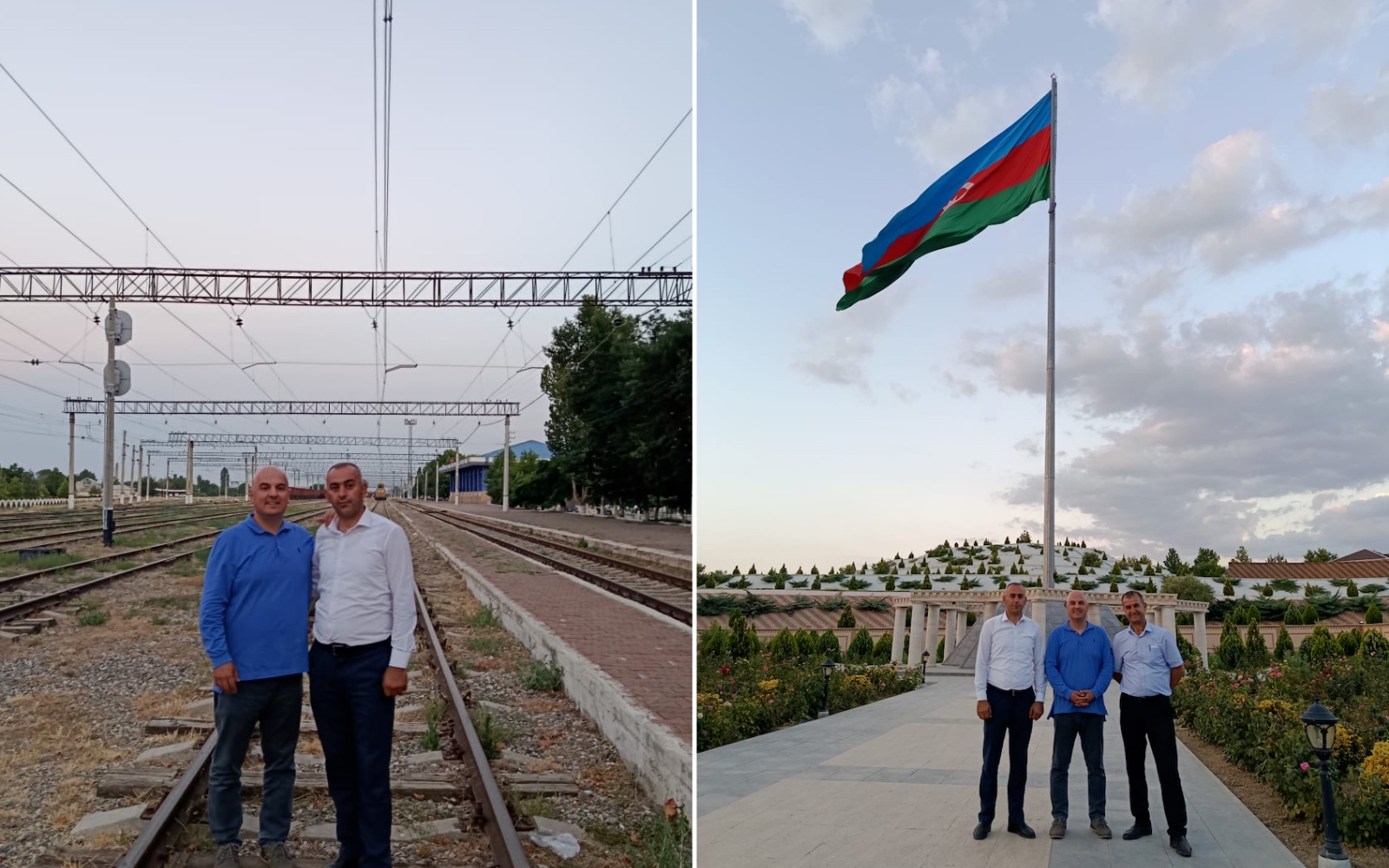
Yet amid the debate over railways, highways, borders, and geopolitics, one destination remains largely absent from international headlines: Sharur District.
Located in the western part of the Nakhchivan Autonomous Republic, Sharur possesses many of the qualities modern travelers increasingly seek: dramatic landscapes, fertile farmland, a rich cultural inheritance, authentic rural life, and a strategic position near potential transportation routes. Infrastructure projects may dominate the headlines, but Sharur offers a reminder that successful corridors ultimately connect people, cultures, and destinations—not merely freight.
“Historically, Sharur has served as one of Azerbaijan’s western gateways toward Türkiye and the broader Turkic world,” said Ali Jabbarov, a professor at Nakhchivan State University and a journalist with Şərq Qapısı. “Although the district’s official name changed twice during the Soviet period, local residents, historians, writers, and journalists continued to preserve its historic identity. Today, Sharur remains one of Nakhchivan’s most important economic regions, known for its productive farmland, entrepreneurial spirit, and longstanding traditions of hospitality.”
Established as an administrative district in 1930, Sharur now covers more than 815 square kilometers and encompasses 64 villages with a combined population exceeding 111,000. Sharur City, home to more than 30,000 residents, is the second-largest urban center in the Nakhchivan Autonomous Republic.
Geography is perhaps the district’s greatest strategic advantage. Bordering Armenia and Iran and situated on routes leading toward Türkiye, Sharur already accommodates major highways, railway infrastructure, and energy-transmission lines. If regional transportation projects continue to advance, the district is well placed to become one of the South Caucasus’ principal logistical gateways.
Nature has always shaped life here. Mountain ranges shelter one side of the district, while fertile plains stretch across the other, forming one of Azerbaijan’s most productive agricultural regions.
During a field visit to Sharur with tourism expert Hasan Pashali and Jabbarov, I met with Deputy District Executive Kamal Ismayilov, who described one of the region’s most valuable natural advantages.
“Our land gives us two harvests every year,” he said.
Spring arrives unusually early in Sharur, often by the end of February. By mid-May, while orchards in Nakhchivan’s mountainous areas are only beginning to bloom, Sharur’s farmers are already harvesting fresh potatoes and the region’s famous green plums.
Ismayilov also recalled the district’s economic importance during the Soviet period. Sharur’s agricultural products were transported not only to Baku but also to major cities across Russia. Its vineyards and wineries were known throughout the Soviet Union, reflecting an agricultural tradition that long predates current plans for regional integration.
The Aras and Arpachay rivers have sustained settlement in the area for centuries. Today, they continue to provide irrigation and drinking water while supporting the region’s ecological balance. The Arpachay Reservoir, which can store approximately 150 million cubic meters of water, remains one of the area’s most important pieces of strategic infrastructure, underpinning both agricultural production and long-term water security.
Sharur’s landscapes are no less striking. Along the road to Shahbulaq village, deep canyons and weathered rock formations evoke the surface of Mars, giving the area considerable appeal for photographers and adventure travelers. Many European visitors are especially drawn to the view of Mount Ararat. Its snow-covered peak dominates the horizon across the border in Türkiye, an imposing panorama that few first-time visitors expect to encounter from Azerbaijan.
Sharur’s strategic importance extends well beyond its modern geography. Long before highways and railway projects were conceived, this fertile plain served as a crossroads for civilizations, merchants, and cultures. Its location along historic trade routes made it a gateway among Anatolia, the Iranian Plateau, and the South Caucasus, leaving behind an extraordinary concentration of archaeological and cultural sites.
Few international travelers realize that Sharur preserves evidence of human settlement stretching back thousands of years. The district is home to Gazma Cave in Tənənəm village, one of Azerbaijan’s most important Paleolithic archaeological sites. Nearby stands the ancient fortified settlement of Oğlanqala, where excavations have uncovered substantial defensive walls and traces of a sophisticated urban culture that flourished centuries before the Common Era.
Sharur’s cultural landscape also includes Garasu Fortress, Qızqala, the Maxta necropolises, Parchi Imamzadeh, the Piri Suleyman Khanqah, the historic Yengija Bathhouse, and a traditional ice-storage structure that testifies to the ingenuity of premodern engineering in one of the region’s hottest climates.
Together, these sites form a kind of open-air museum that has yet to receive the international recognition it merits. Unlike the world’s crowded heritage destinations, Sharur still offers visitors something increasingly difficult to find: a sense of discovery. Its archaeological sites remain largely untouched by mass tourism, allowing travelers to encounter the past without overwhelming crowds or commercial distractions.
This combination of history and nature creates considerable potential for sustainable tourism. Hiking trails connecting archaeological sites with mountain viewpoints, cultural tours, photography expeditions, bird-watching, and agritourism could diversify the local economy while protecting the district’s environmental and cultural integrity.
Sharur’s agricultural traditions add another layer of appeal. Its orchards, vineyards, family farms, and traditional food production provide fertile ground for culinary tourism, one of the fastest-growing segments of global travel. Visitors increasingly seek experiences rooted in place, from tasting seasonal produce on the farms where it is grown to learning cooking techniques passed down through generations.
Hospitality remains one of Sharur’s defining strengths. Throughout the district, guests are welcomed not merely as tourists but as friends. The tradition reflects a broader cultural value across Nakhchivan, where generosity and respect for visitors remain woven into daily life.
Perhaps Sharur’s greatest advantage, however, lies not in any single attraction but in the diversity packed into a relatively small area. Within a short drive, visitors can move from fertile plains to dramatic mountain scenery, from prehistoric caves to medieval monuments, and from traditional villages to modern transportation corridors. Few destinations in the South Caucasus offer so much variety within such manageable distances.
That diversity lends itself to integrated tourism planning. Rather than marketing isolated attractions, local authorities and tourism operators could develop thematic itineraries combining archaeology, gastronomy, rural life, ecotourism, and regional history. Multi-day trips of this kind could encourage longer stays, increase local spending, and distribute the economic benefits of tourism more widely among surrounding communities.
As debate over the Zangezur corridor continues, physical infrastructure naturally commands much of the attention. Roads, railways, customs facilities, and logistics hubs are essential to regional connectivity. International experience, however, shows that transportation infrastructure alone does not create thriving destinations. Sustainable development depends on whether communities can convert better access into opportunities for entrepreneurship, tourism, cultural preservation, and durable local growth.
Sharur appears capable of making that transition. Its natural resources, cultural heritage, agricultural productivity, and strategic location provide a strong foundation for long-term development, provided those assets are managed carefully and introduced to international audiences without sacrificing the qualities that make the district distinctive.
Sharur’s identity has been shaped not only by its landscapes and monuments but also by the resilience of its people. Like many communities across Azerbaijan, the district carries the memory of the First and Second Karabakh Wars. According to official figures, 103 Sharur residents lost their lives in the two conflicts.
Their memory is preserved at the Martyrs’ Memorial in Sharur City, where rows of engraved names remind visitors that the district’s modern history has also been written through sacrifice. The memorial is among the city’s most respected public spaces, visited by local families, school groups, and international guests seeking to understand the human dimension of Azerbaijan’s recent past.
Resilience, however, is not defined by remembrance alone. For more than three decades, residents of the Nakhchivan Autonomous Republic lived with the economic and logistical constraints imposed by the absence of a direct land connection to the rest of Azerbaijan. Those years demanded ingenuity, self-reliance, and determination. Sharur’s farmers, entrepreneurs, engineers, and local communities adapted to difficult circumstances while preserving the district’s economic vitality and social cohesion.
Today, many observers believe the region is approaching a new chapter.
If regional transportation projects move forward, Sharur could emerge as one of the principal beneficiaries of greater connectivity. Its location places the district near prospective routes linking Azerbaijan, Türkiye, and the wider Eurasian landmass. That position could create opportunities extending far beyond transit.
Improved access could spur investment in hotels, restaurants, family-owned guesthouses, logistics services, agricultural-processing facilities, and small businesses. Rural, cultural, ecological, and gastronomic tourism all hold substantial potential, while local farmers could gain better access to domestic and international markets. For visitors entering Nakhchivan through Türkiye, Sharur may become one of the first destinations they encounter—a natural gateway to the autonomous republic.
Yet the district’s greatest competitive advantage may not be geography alone.
Successful tourism destinations around the world demonstrate that sustainable development requires preserving authenticity while embracing innovation. Sharur possesses precisely the qualities many established destinations now struggle to recover: unspoiled landscapes, living traditions, archaeological treasures, productive farmland, genuine hospitality, and communities whose cultural identity remains deeply rooted.
Such assets cannot be constructed overnight. They can only be protected, carefully managed, and thoughtfully presented to the world.
The Zangezur corridor is usually discussed in the language of geopolitics, international trade, and strategic transportation. Those dimensions are undoubtedly important. Yet every major transport corridor tells another story as well: the story of the communities through which it passes.
Sharur is one of those communities.
For decades, the district remained beyond the reach of international tourism despite its natural beauty, cultural heritage, and economic potential. Greater regional connectivity now offers an opportunity to change that story.
Whether visitors come to explore ancient fortresses, photograph otherworldly canyons, experience rural life, sample locally grown produce, or simply discover one of the South Caucasus’ least-known destinations, they are likely to find far more than a stop along a transportation corridor.
They will find a region where history, culture, agriculture, and modern development converge.
The future of the Zangezur corridor will be measured not only by the volume of freight it carries or the speed of its trains, but also by the prosperity it brings to communities such as Sharur.
For international travelers seeking places that remain welcoming, distinctive, and largely untouched by mass tourism, Sharur may be one of Azerbaijan’s best-kept secrets—and one of the South Caucasus’ most rewarding discoveries.
Peter Marko Tase is the author and editor of twelve books about Paraguayan history and foreign policy. He writes extensively about Latin America; the foreign policy, culture, and history of the Republic of Azerbaijan (including the economy of the Autonomous Republic of Nakhchivan, Azerbaijan) and has published many essays about Albania and the region of southeast Europe.