

The Limits of American Power Run Through Its Alliances
The latest round of U.S.-brokered talks between Israel and Lebanon ended without agreement on the next area from which Israeli troops would withdraw, even as the parties advanced other elements of a framework negotiated in June. The impasse captures a larger problem exposed by the Iran war. American power is easy to recognize when Washington is striking an adversary. It becomes harder to measure when the United States must persuade an ally to accept the limits of a broader American strategy.
The United States entered the war with Iran possessing overwhelming military advantages and inflicted heavy costs on Tehran. Yet as the conflict moved repeatedly between battlefield escalation, ceasefire diplomacy, and arguments over what should come next, the central question changed. It was no longer simply whether Washington could punish an adversary. It was whether military success could be converted into a political order, and whether the United States could shape the choices of the countries around it after force had done its work.
That is where the contradiction emerges. A superpower capable of exerting extraordinary pressure on an enemy cannot necessarily keep an ally moving in the same direction. Ending a war requires more than firepower. It requires setting limits, reconciling competing interests, and persuading allies to accept arrangements that may fall short of their own ambitions. Coercion can alter an adversary’s calculations; leadership must also align the calculations of friends.
Lebanon makes the problem particularly clear. Washington helped broker a framework designed to link Israel’s progressive withdrawal from southern Lebanon to the restoration of Lebanese government authority and the disarmament of Hezbollah. For the United States, that framework offered a political route out of the conflict and a means of strengthening the Lebanese state. Israel, however, continued to tie implementation to its own security conditions. A process intended to demonstrate Washington’s capacity to shape the postwar order therefore collided with a basic fact: even America’s closest ally can resist the terms of an American-designed settlement.
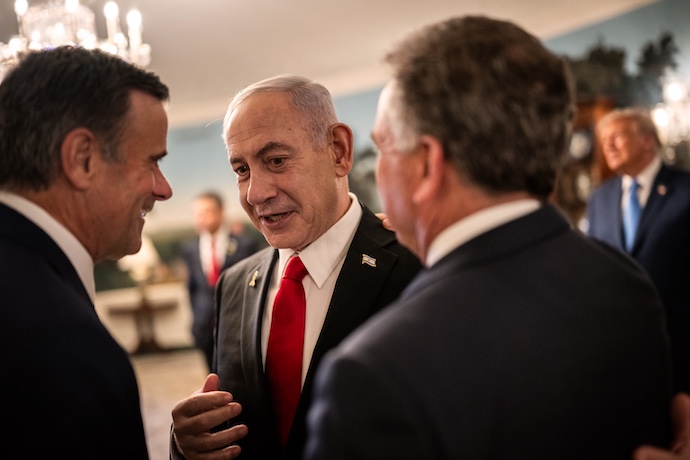
Iran and Lebanon are distinct arenas, but they expose the same gap: the distance between America’s ability to establish a framework and its ability to persuade its allies to operate within it. That is the Israeli problem confronting Washington.
The question is not whether the United States should distance itself from Israel. It is whether Washington can continue supporting Israel while preserving the ability to influence Israeli decisions. Those objectives are not inherently incompatible. In a durable alliance, each depends on the other. If the United States is to underwrite Israel’s security over the long term, that support must remain an instrument of American strategy. Otherwise, Washington risks finding itself responsible for managing the consequences of decisions it neither made nor meaningfully shaped.
Successful alliances are not sustained by unconditional loyalty. They endure through mutual trust and mutually understood limits. An ally must know that it will not be abandoned in a crisis. The leader of an alliance must also know that solidarity does not require surrendering strategic control. If Washington cannot retain influence over the timing, purpose, and limits of force while providing security support, the relationship can gradually change. Strategic partnership gives way to an arrangement in which the United States guarantees the consequences of Israeli choices more often than it helps determine them.
Seen this way, Lebanon is more than a test of American mediation. It is a test of whether Washington can construct a framework that addresses Israeli security concerns while still achieving its own political aims: a durable end to the conflict and the restoration of Lebanese sovereignty. The first stages of implementation have already produced delay and disagreement. If every stage brings new conditions that oblige Washington to revise the framework, U.S. mediation risks becoming something less than leadership. The process may remain American-sponsored while its direction is set elsewhere.
Washington does not need the final word on every Israeli decision. No genuine alliance could function on that basis. It does, however, need to define the boundaries of acceptable disagreement. Allies can differ over tactics, timelines, and even immediate interests. The measure of leadership is whether those differences can be contained without displacing the broader objective the alliance is meant to serve.
With Israel, the stakes extend well beyond the bilateral relationship. Because the U.S.-Israel partnership is so deep, disputes within it can reverberate across Iran, Lebanon, the Arab states, energy markets, and the calculations of other American partners. Washington’s ability to coordinate with Israel is therefore inseparable from its ability to manage the wider regional order. Other governments watch not only what the United States promises, but whether it can translate those promises into a coherent policy among the states most dependent on its support.
Preserving American leadership does not require Israel to agree with Washington at every turn. Leadership is tested precisely when agreement breaks down. If the United States can guide an ally only when both governments already want the same outcome, that is coordination, not leadership.
The Iran war made the distinction concrete. Decisions over escalation, ceasefires, war termination, and the arrangements that might follow repeatedly raised the question of whether American and Israeli objectives remained aligned. Lebanon poses the same challenge through diplomacy. The United States can convene talks and launch a process. But if it cannot bring its ally’s interests into line with its larger political objective when disagreement arises, Washington may remain seated at the negotiating table without determining where the negotiations ultimately lead.
For a great power, that kind of erosion can be more consequential than an obvious defeat. Defeat is visible. The gradual loss of the capacity to shape other actors’ choices is harder to detect. It appears as longer negotiations, proliferating conditions, delayed implementation, and an expanding number of occasions on which Washington manages outcomes fashioned by others instead of setting the terms itself. The flags, communiqués, and diplomatic choreography remain American. The strategic initiative does not.
The answer is not simply to reduce American support for Israel. That could weaken Israel’s security and cast doubt on the credibility of U.S. commitments to other allies. A more durable answer is to preserve the commitment while redefining what leadership within it demands. Washington should be able to assure Israel that it will stand with it against genuine threats while making clear that support does not amount to approval of every tactical decision, territorial demand, or course of escalation.
Such a boundary is not evidence of a weak alliance. It is a condition of a mature one. If Washington can establish it, the U.S.-Israel relationship could emerge from the Iran war and the Lebanon crisis as a partnership in which American support remains a means of coordinating strategy rather than an obligation to follow Israel’s lead. If it cannot, the United States may remain Israel’s strongest supporter while steadily surrendering its role as the relationship’s strategic leader.
That danger should not be mistaken for American decline in the conventional sense. The United States still possesses enormous military, diplomatic, and economic capacity, and it can profoundly alter the calculations of its adversaries. The more difficult question is whether it can exercise comparable influence within its alliances without weakening them in the process. America’s test in the Middle East is not a choice between supporting Israel and preserving U.S. leadership. It is whether Washington can still demonstrate that the two remain compatible.