The Hollowing Out of the FBI Is Creating a National Security Headache
In the summer of 2001, the FBI was losing the man who knew more about al-Qaeda than almost anyone else in the U.S. government. John O’Neill, the bureau’s fiercely driven counterterrorism chief in New York, had spent years tracking Osama bin Laden’s network. But by August, bureaucratic feuds, personal antagonisms, and controversy over O’Neill’s own conduct had made his position untenable. He retired from the FBI. Weeks later, al-Qaeda attacked the United States.
No single official could have guaranteed that the September 11 attacks would be stopped, and O’Neill’s departure did not cause the intelligence failures that preceded them. Yet his exit became an enduring symbol of institutional self-sabotage: a government allowing rivalry and dysfunction to drive away expertise precisely when it was most needed. The danger now is not that history will repeat itself neatly. It is that the FBI appears to be dismantling the habits and capabilities intended to keep it from repeating at all.
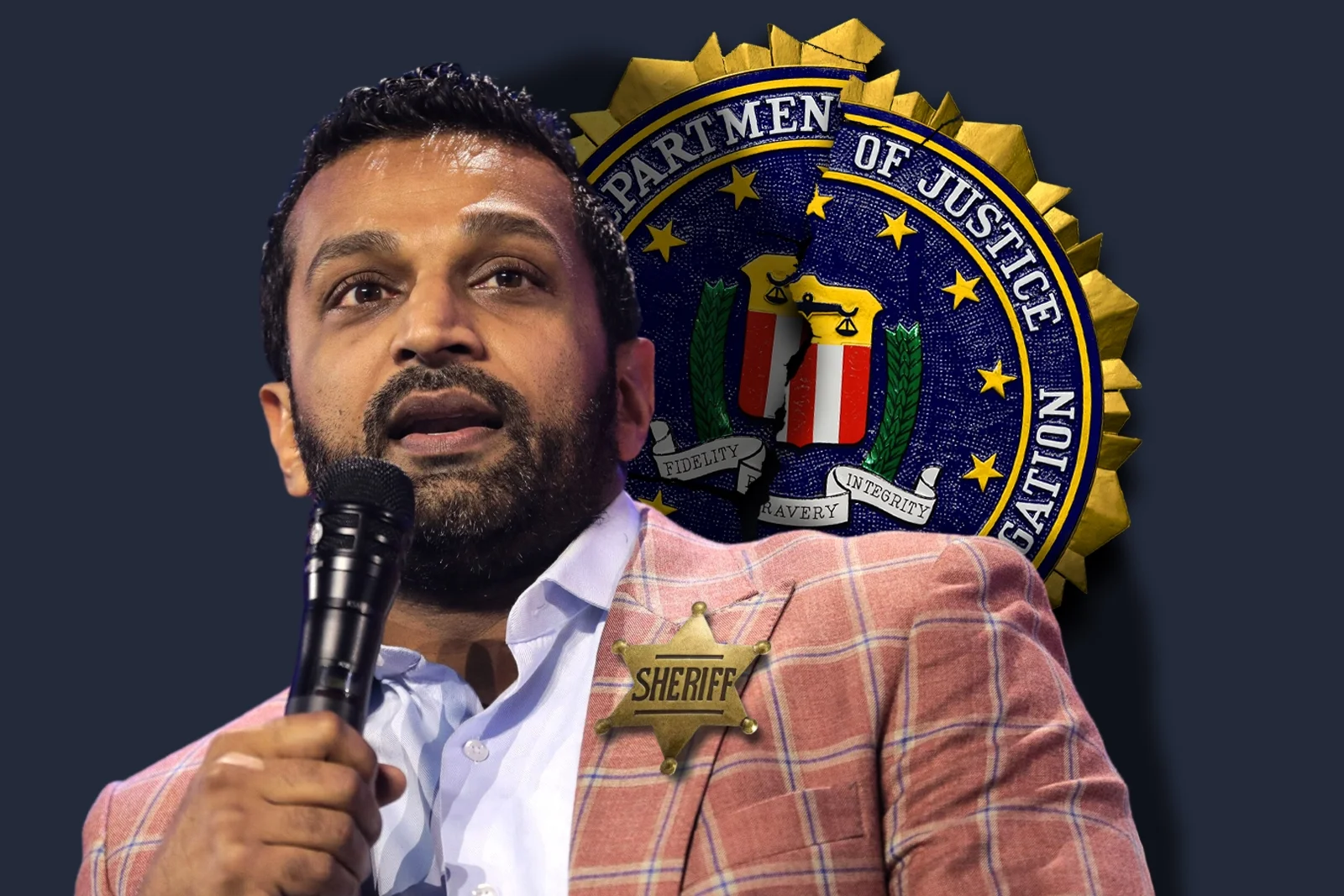
In late May, FBI Deputy Assistant Director Emily Morales was reportedly fired after years of Republican anger over the bureau’s initial assessment of the 2017 congressional baseball-practice shooting. That assessment did not classify the gunman’s attack on Republican lawmakers as domestic terrorism. Morales’ dismissal followed a much broader upheaval in which agents, analysts, and senior officials have been fired, pushed out, or reassigned—often amid accusations that political loyalty, rather than performance or institutional need, was driving the decisions.
The scale matters, but so does the character of the losses. Counterterrorism and intelligence work depend on accumulated knowledge: the analyst who recognizes a familiar travel pattern, the agent who remembers an obscure associate, the supervisor who understands why two seemingly unrelated fragments belong in the same file. Such expertise is slow to build and remarkably easy to destroy. An organization can replace a name on an office door much faster than it can replace the judgment that left with the person.
“The FBI’s actions are choking the capabilities that help it stop criminals, spies, hackers, and terrorists before they act,” said Tonya Ugoretz, the former assistant director who led the bureau’s Intelligence Directorate. Ugoretz was fired after declining to promote an intelligence report advancing claims about Chinese interference in the 2020 election that she reportedly considered insufficiently sourced.
This erosion is especially dangerous as terrorist organizations gain ground across parts of Africa. Jama’at Nusrat al-Islam wal-Muslimin, an al-Qaeda affiliate commonly known as JNIM, has expanded its reach across the Sahel and into coastal West Africa, exploiting weak governments, porous borders, and local grievances. At the same time, the war with Iran and Washington’s escalating confrontation with Cuba have widened the field of potential threats. Whatever one thinks of those policies, they create additional demands for experienced intelligence officers capable of distinguishing real danger from political noise.
Instead, the FBI has been ordered to devote substantial manpower to immigration enforcement. Agents and analysts already responsible for counterterrorism, counterintelligence, cybercrime, and complex criminal investigations have been reassigned to immigration-related duties or required to absorb them alongside their existing portfolios. The bureau is not merely being asked to do more with less. It is being told to do different work while pretending its older responsibilities require no sacrifice.
“You have to have good, experienced, trained people doing this work on a daily basis,” a national-security prosecutor told The New York Times. “If you don’t, because you demand they do immigration shifts, there is real danger to national security and public safety.”
The historical parallel is unsettling, although it should not be stretched beyond what the evidence can bear. On August 4, 2001, just weeks before O’Neill left the bureau, Mohammed al-Qahtani arrived at Orlando International Airport.
Investigators later concluded that he was probably meant to become the 20th hijacker. An immigration inspector, suspicious of his answers, refused him entry and sent him back to Dubai. The intervention may have prevented him from joining the plot, but information connected to his attempted entry did not become part of an effective, government-wide effort to uncover the approaching attack.
That episode was one of many clues that agencies failed to combine before September 11. It is tempting to imagine that O’Neill, had he remained at the FBI, would have recognized what others missed. Perhaps he would have. But the deeper lesson is less cinematic and more damning: national security cannot depend on one indispensable man. It requires an institution designed to retain expertise, circulate information, challenge assumptions, and prevent personal or political disputes from blinding the government to an emerging threat.
After September 11, the FBI and the 9/11 Commission pressed for precisely those reforms. The bureau was urged to strengthen its intelligence capacity, improve management, recruit and train analysts, and retain people with specialized knowledge. The purpose was to transform the FBI from an agency that mainly assembled criminal cases after an attack into one capable of detecting and disrupting threats before they matured.
Today’s purges and reassignments run against that hard-earned logic. Fewer seasoned agents and analysts are handling counterterrorism investigations, while many of those who remain are carrying immigration responsibilities as well. The predictable risk is not simply slower paperwork. It is that a name will go unrecognized, a lead will wait too long, or a fragment of intelligence will remain isolated until its significance becomes obvious in retrospect.
“The large number of reassignments…reflect a vast reshaping of the nation’s premier law enforcement agency, which has focused on national security threats since the Sept. 11, 2001, terrorist attacks,” The Washington Post reported. “The intense focus on immigration has raised alarm among current and former FBI agents who say morale is low across the bureau as agents have less time to dedicate to the often-complex cases they were hired to work on.”
O’Neill never had the chance to see how the FBI would change after September 11. After leaving the bureau, he became head of security at the World Trade Center. His remains were recovered from the rubble of the South Tower 10 days after the attacks. PBS’s Frontline later called him “The Man Who Knew.” The tragedy of his story is not that one man alone could have saved the country. It is that the country had allowed so much knowledge to become concentrated in one embattled man—and then let him walk away.
The FBI cannot know which expert it will need when the next warning arrives. That is why institutions preserve experience before a crisis, not after one. By pushing out specialists, politicizing personnel decisions, and diverting investigators from national-security work, the bureau is gambling that no consequential clue will be missed. The United States has made that wager before. It should remember the cost of losing it.