Politics

Demographics Don’t Decide Elections. Institutions Do.
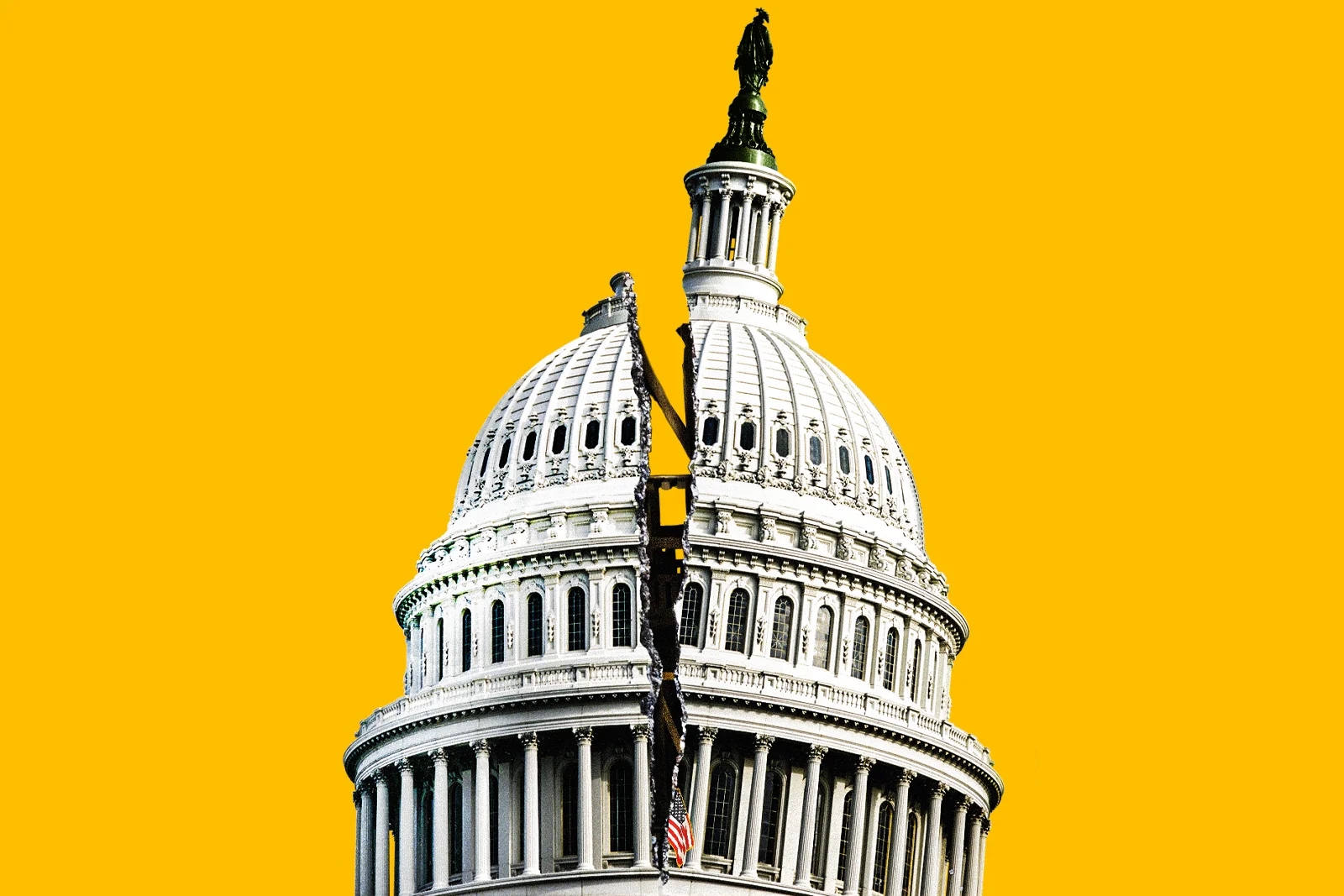
America’s population is changing through migration, generational replacement, and education. But its political future is shaped by something less predictable: the institutions that determine who can vote, where those votes count, and which coalitions ultimately take power. Demographic change and political change are closely connected, but they are not the same. Between the two lies a series of decisions, rules, and barriers that can amplify, diminish, or redirect the political influence of a changing population.
As the United States marks its 250th anniversary, one familiar argument holds that a more diverse country will inevitably produce a particular political future. A competing argument points to shifts in party support as evidence that demography no longer matters. Both overlook the machinery that stands between a population and the people who govern it.
The first problem is determining who belongs to the electorate. Residents, citizens, eligible voters, registered voters, and people who actually cast ballots are distinct groups. Growth in one does not necessarily mean growth in another. Nor can a national demographic trend, however striking, tell us what happened in any particular state or congressional district.
American history provides a reminder of why these distinctions matter. The Fourteenth Amendment established constitutional citizenship and equal protection, while the Nineteenth Amendment prohibited denying voting rights on the basis of sex. Yet neither amendment, on its own, guaranteed that everyone entitled to vote could exercise that right in practice. The Voting Rights Act confronted discriminatory practices that obstructed rights already recognized in constitutional law.
Legal eligibility, in other words, is not identical to meaningful participation. Registration requirements, access to reliable information, the time required to vote, and the availability of polling places can all influence the gap between the two. But their effects must be established in particular jurisdictions, rather than invoked as catchall explanations for every electoral outcome.
The same discipline is necessary when discussing generations. Reaching voting age tells us little about whether someone will register, participate in a primary, turn out for a midterm election, or consistently support the same party. Institutions, political organizing, and the choices voters make determine whether demographic potential becomes electoral action.
Even when voters do participate, the numbers can mislead if their meaning is left unexplained. Consider the composition of a candidate’s coalition. The Pew Research Center’s analysis of validated voters in the 2024 presidential election found that suburban voters accounted for 56% of Kamala Harris’s coalition and 49% of Donald Trump’s. That does not mean 56% of all suburban voters supported Harris. It means suburban voters constituted that share of the people who voted for her.
The distinction is more than statistical housekeeping. A group can represent a larger proportion of a candidate’s supporters because its population increased, its turnout rose, other groups participated less, or its political preferences changed. Without separating those possibilities, claims of a sweeping partisan realignment can outrun the evidence.
Pew also found that white voters without a four-year college degree made up 51% of Trump’s coalition in 2024, down from 63% in 2016. That change describes the composition of his support across two elections. By itself, it neither proves that these voters became politically unimportant nor reveals exactly why their share declined.
Political parties and analysts therefore need to ask more precise questions than whether a candidate appeals to the “working class” or to “minority voters.” What, exactly, does a category measure? How much variation exists within it? Which local conditions affect participation? A demographic label can illuminate an electorate, but when treated as a prediction, it often conceals more than it explains.
Votes, moreover, do not translate directly into governing authority. The House of Representatives, the Senate, and the Electoral College each convert political preferences into power through different geographic rules. A change in the national vote share will not necessarily yield a corresponding change in representation across these institutions.
In House elections, the location of voters matters alongside their overall number. In the Senate, every state elects two senators regardless of its population. Presidential elections operate through another system of allocation. And because voters can make different choices for different offices, a result in one race does not automatically predict the outcome of another.
These arrangements help explain why population shifts produce uneven political consequences. Growth concentrated in a handful of communities may transform local elections without substantially changing the national balance of power. Conversely, a modest but geographically widespread shift in support can decide several competitive races while barely registering in nationwide statistics.
To understand how demographic change becomes political power, the analysis must follow the entire chain: membership, practical access to voting, participation, partisan choice, geographic distribution, and the rules for awarding seats and offices. At every stage, institutions can strengthen, filter, or redirect what came before. This does not make election results mysterious. It makes the evidence required to explain them more specific.
Nor does winning office guarantee a particular policy outcome. The coalition that elects a candidate may be deeply divided over taxes, public services, trade, or foreign affairs. Its members may support the same politician for entirely different reasons, and they may disagree about which promises deserve priority. Legislative procedures, budgetary limits, and the balance of power among branches of government further constrain what elected officials can accomplish.
For observers outside the United States, that distinction is especially important. A change in America’s population is several steps removed from a lasting shift in policy toward another country. An election establishes who secured authority under a particular set of rules; it does not establish that every member of the winning coalition shares an identical view of the world.
None of this makes demographic analysis irrelevant. It makes such analysis more demanding. Population characteristics are a starting point, not a political verdict. A persuasive account must identify where a change enters the electoral process, how it affects participation and preferences, and which institutional decisions ultimately convert it into power.
America’s anniversary offers a useful occasion to examine that process in full. The country’s history is marked by repeated struggles over citizenship, voting access, enforcement, and representation. Its political future will emerge through those same contested pathways. The population passing through them will continue to change, but the rules governing the journey will remain consequential.