Politics

For AOC, the Midterms May Be a Dress Rehearsal for 2028
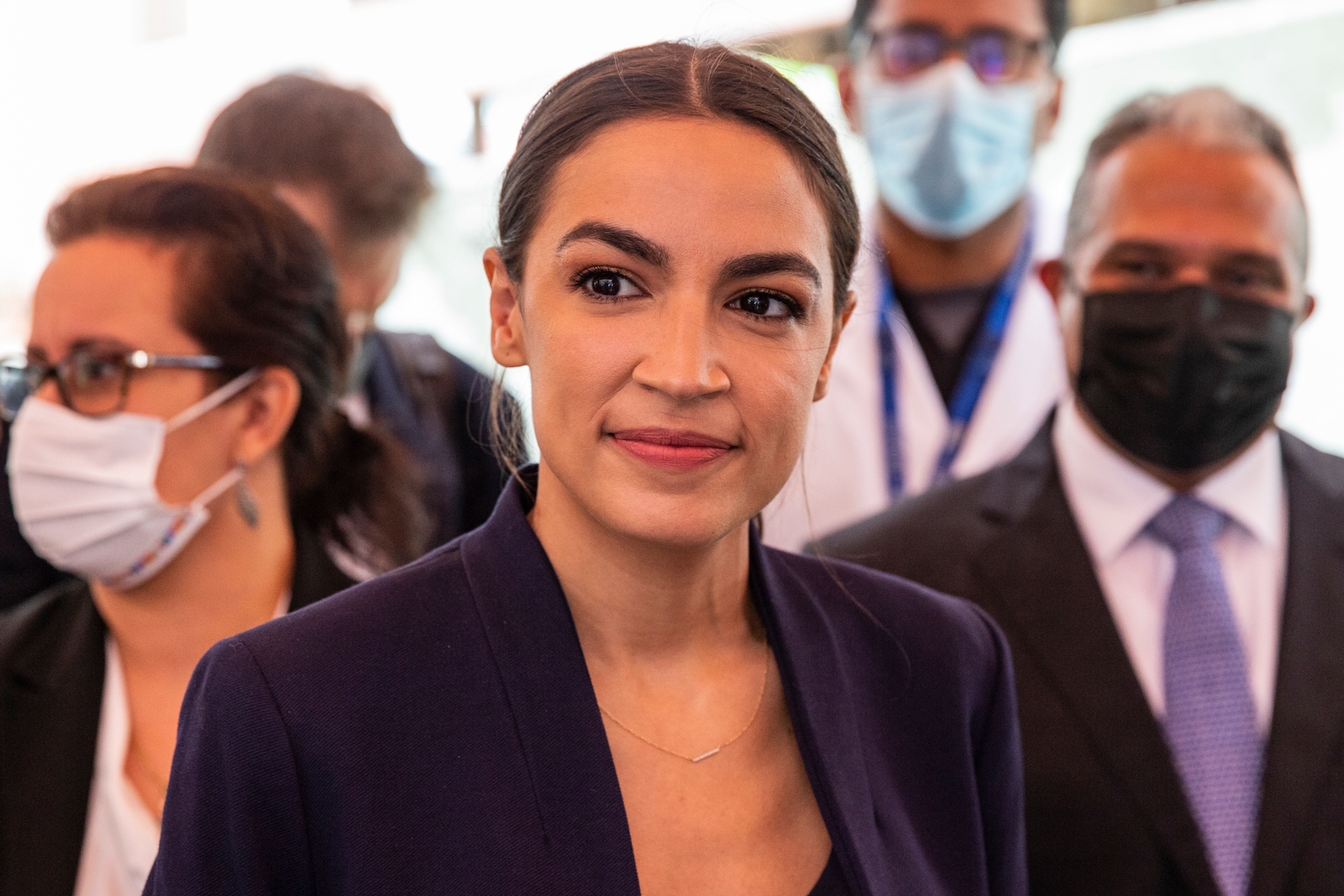
After a grueling day of campaigning across Michigan, Rep. Alexandria Ocasio-Cortez stepped onto the stage at Northern Michigan University’s packed Vandament Arena on October 15 to deliver another stump speech. She was there to rally support for Democratic Senate nominee Dr. Abdul El-Sayed, whose campaign has benefited from her high-profile backing.
More than 1,400 people turned out in Marquette to hear them. Former President Barack Obama was also scheduled to campaign for El-Sayed later that month. For Ocasio-Cortez, the former bartender who became one of the Democratic Party’s most recognizable figures, the enthusiastic reception offered another measure of her growing influence. And with Florida on her campaign itinerary, the trip suggested that she might be thinking beyond November’s midterms.
“You don’t need a medical degree to recognize the symptoms of a broken economy. Michigan, corruption is making this country sick, and when you’re sick, who do you call? A doctor, not a drug company, and certainly not a politician paid by them,” she told the crowd in Marquette County.
El-Sayed faces Republican former Rep. Mike Rogers in one of the country’s closely watched Senate contests. Recent polling has given the Democrat an edge, though the race remains competitive. Ocasio-Cortez’s intervention could help energize voters in the final stretch. But Michigan offers something else: a politically diverse electorate in a crucial battleground state and a useful proving ground for anyone considering a national campaign.
Speculation about a presidential bid intensified in 2025, when Ocasio-Cortez joined her longtime political mentor, Sen. Bernie Sanders, on the “Fighting Oligarchy” tour. Their appearances drew large crowds across states as different as Nevada, Nebraska, Colorado, and Arizona. With Democrats still searching for a persuasive message and a new generation of national leaders, her brand of left-wing populism has attracted attention well beyond the party’s progressive base.
“You have to be the right person at the right place at the right time,” Doug Sosnik, a former advisor to President Bill Clinton, told ABC. “The year that Jimmy Carter ran and got elected president is the only year I think he could have run and gotten elected.”
Ocasio-Cortez has also approached the 2026 election cycle with a degree of selectivity. Her support for candidates such as Sam Forstag in Montana’s 1st Congressional District suggests an interest in reaching working-class voters beyond reliably Democratic territory. At the same time, her distance from Wisconsin progressive Francesca Hong’s unsuccessful gubernatorial campaign suggests an awareness of how easily past culture-war controversies can overwhelm a candidate’s economic message. Her choices are not proof of a presidential strategy, but they are consistent with a politician seeking a broader audience.
She is hardly alone in using the midterms to build relationships in states that could matter in 2028. Former Transportation Secretary Pete Buttigieg visited Iowa in July to meet Democratic leaders. Former Vice President Kamala Harris traveled to New Hampshire shortly before Election Day, criticizing President Donald Trump as a “tyrant” while campaigning for Democratic Senate nominee Rep. Chris Pappas. The early maneuvering offers a reminder that the next presidential contest is already taking shape, even before voters settle this one.
Michigan gives Ocasio-Cortez an opportunity to test whether her appeal can travel beyond the districts and audiences most receptive to her politics. A victory for El-Sayed would undoubtedly draw attention to the coalition that helped elect him, even if it would be impossible to isolate the congresswoman’s contribution. More revealing, however, could be her involvement in Florida, where Democratic state Rep. Angie Nixon, a fellow democratic socialist, is mounting an uphill challenge against Republican Sen. Ashley Moody.
Nixon surprised Florida Democrats by defeating Alexander Vindman, the former Army officer whose testimony helped bring scrutiny to Trump’s first presidency, in the Democratic primary. Like Ocasio-Cortez, Nixon emerged from the party’s progressive wing to defeat a better-known opponent. Her strength in Miami-Dade County, which backed Trump in 2024, also raised questions about where progressive candidates might find unexpected support.
Florida remains a difficult state for Democrats. A recent New York Times/Siena poll placed Moody ahead of Nixon, 50% to 44%, and other surveys have generally shown the Republican leading. Nixon could still outperform expectations, but a victory would require a substantial late shift in the electorate. That makes the race less a straightforward test of Democratic strength than an experiment in whether a progressive message can gain traction on unfavorable political terrain.
Taken together, Michigan and Florida offer two very different measures of Ocasio-Cortez’s potential. El-Sayed is competing in a swing state where Democrats can plausibly win a statewide majority. Nixon is challenging a Republican incumbent in a state that has moved steadily to the right. Success in either contest would strengthen the case that progressive candidates can reach voters outside their usual constituencies. Failure, meanwhile, would not necessarily discredit Ocasio-Cortez, but it would expose the limits of the coalition she hopes to build.
The larger question is whether a politician long portrayed by critics as a radical can become a credible contender for the Democratic presidential nomination. Ocasio-Cortez has shown a willingness to reconsider political rhetoric, at one point declaring, “Woke 1.0 was crazy.” Whether that translates into a broader political transformation remains uncertain. A surprise Nixon victory would give her supporters a powerful story to tell, but attributing such an outcome primarily to Ocasio-Cortez would oversimplify how elections are won.
Either way, the congresswoman faces a consequential choice before 2028: remain in the House, pursue a Senate seat, or undertake the far riskier challenge of running for president. Michigan may reveal how much organizing power she can bring to a competitive race. Florida may show how far her political appeal can stretch. Neither state can answer the presidential question on its own, but together they could help determine whether Ocasio-Cortez is ready to ask it.