

Chile Is Drowning in More Than Rain
What takes decades to build can disappear in a matter of hours.
Chile knows this reality all too well. But the extraordinary rains of October 2026 raise a question that extends far beyond the weather: Is nature the only force threatening to overwhelm the country?
As rivers overflow, other storms are quietly gathering across Chilean society. They do not appear on satellite imagery or trigger evacuation warnings. They are the storms of unemployment, economic insecurity, precarious work, and opportunities that never materialize.
In early October, a meteorological station in Santiago’s Tobalaba district recorded 110.8 millimeters of rainfall in just 24 hours, an October record for that location. At Rodelillo, near Valparaíso, the figure reached 125.2 millimeters in a single day. These were extraordinary local records for October, though not the highest rainfall totals ever recorded across Chile.
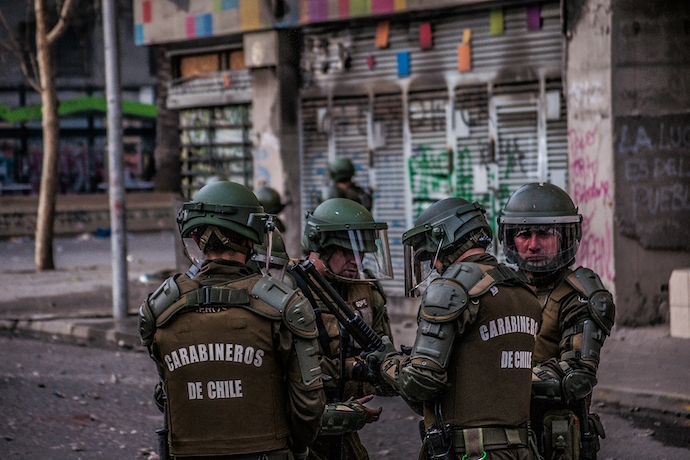
The downpours inundated homes and streets, while a mudslide in Santiago’s San Carlos de Apoquindo neighborhood damaged residential areas and exposed the dangers of building near mountain ravines.
The numbers are striking. But for a family digging mud out of its living room, the distinction between a monthly record and an all-time record offers little consolation.
And while the country watched images of submerged neighborhoods and devastated homes, another set of troubling statistics deserved equal attention.
Chile’s National Statistics Institute reported that unemployment reached 9.6% between June and August 2026. Earlier in the year, unemployment among those aged 15 to 24 had reached 24.6% during the March-to-May period.
That means nearly one in four young people participating in the labor force were searching for work without success. It does not mean that one in four young Chileans was unemployed, but the distinction hardly makes the situation reassuring.
Consider the graduate who sends out dozens of résumés and receives no response. Or the young applicant repeatedly informed that even an entry-level position requires previous experience. Behind these statistics are lives placed on hold: a first apartment, financial independence, the possibility of starting a family or building a business.
A country cannot congratulate itself on educating its young people while failing to provide them with meaningful opportunities. When hard work and ambition no longer appear sufficient to open doors, society risks squandering a generation’s potential.
At the opposite end of working life, Chile faces an equally troubling contradiction. The 2024 census counted 3,665,028 residents aged 60 or older, representing 19.8% of the population.
These are people who have raised families, built businesses, mastered trades, and accumulated decades of knowledge. Yet experience does not necessarily translate into opportunity, particularly for those seeking employment later in life.
Research released in August 2026 by the Center for Knowledge and Research on Older People at Universidad del Desarrollo found that average employment income among workers aged 60 and older was 21.2% lower than among those aged 50 to 59.
The disparity does not automatically establish age discrimination. Differences in working hours, occupations, and informal employment all influence earnings. Nevertheless, the findings raise uncomfortable questions about how Chile values older workers and the opportunities available to them.
The irony is difficult to escape. Young people are told they lack experience, while older workers can find themselves overlooked despite spending decades acquiring it. At what point did experience become a liability rather than an asset?
A more equitable labor market would recognize both the ambition of younger generations and the judgment that comes with age.
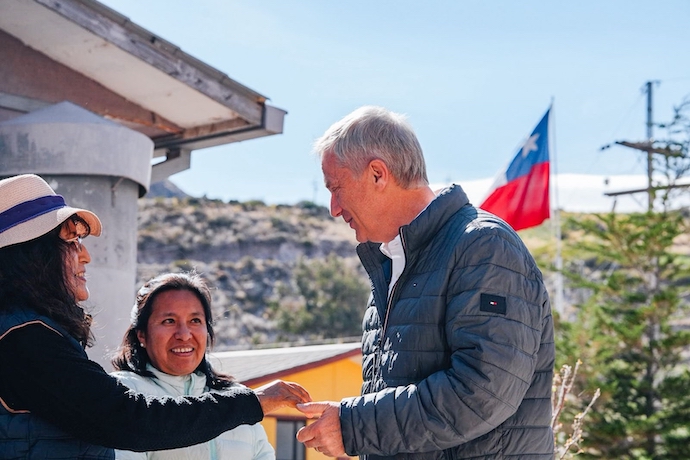
Chile is also undergoing a profound demographic transformation. According to provisional government figures, annual births declined from 275,916 in 1993 to 146,446 in 2025, a drop of 46.9% over 32 years.
Deciding whether to have children is deeply personal, and declining birth rates should not automatically be interpreted as evidence of national failure. Nevertheless, the trend raises questions that governments cannot afford to ignore.
Are affordable housing, stable employment, childcare, and family support sufficiently accessible for people to build the lives they envision? And how should pension systems and healthcare services adapt as the population grows older?
The fundamental concern is not simply how many children are born. It is whether people have the economic security and confidence to imagine a future worth planning for.
Meanwhile, the country’s economic outlook has deteriorated. In September 2026, Chile’s Central Bank lowered its annual growth forecast from a range of 1.0% to 1.75% to just 0.25% to 0.75%. The bank pointed to weakening domestic demand, deteriorating labor-market conditions, and adverse weather, among other factors.
This is where Chile’s natural and economic storms converge.
Heavy rainfall can destroy crops, damage infrastructure, disrupt transportation, and force businesses to close. A small shop may spend months recovering from a flood that lasted only hours. A retired homeowner may be forced to exhaust limited savings on repairs, while an employee loses essential income because a workplace has shut down.
Flooding does not cause youth unemployment or demographic decline. These challenges have distinct and complicated origins. But natural disasters can deepen existing inequalities, exposing the fragility of households already struggling to remain financially secure.
A home can fill with water overnight. A family can remain submerged in debt, unemployment, and uncertainty for years.
Chile has capable emergency responders, scientists, public servants, volunteers, and ordinary citizens who repeatedly come together when disaster strikes. Their efforts deserve recognition. But genuine national resilience must amount to more than rebuilding what was destroyed and preparing to do it all again after the next catastrophe.
It requires protecting floodplains and wetlands, mapping vulnerable ravines, upgrading drainage systems, and designing cities capable of withstanding increasingly unpredictable weather. Just as importantly, it demands credible pathways into employment for young people, greater recognition of older workers, stronger formal employment opportunities, and policies that give families a reasonable measure of economic security.
None of these challenges can be resolved through a single administration, a televised announcement, or an ambitious promise. Meaningful progress requires sustained investment, measurable results, institutional cooperation, and policies capable of surviving changes in political leadership.
Eventually, the roads damaged by October’s floods will be repaired. The mud will be cleared, the cameras will move elsewhere, and the sun will return. But young Chileans will still be searching for their first jobs, older workers will still be fighting for recognition, and families will still be confronting an uncertain economic future.
Those storms will not disappear when the weather forecast improves.
For centuries, Chileans have learned to live with an extraordinary and sometimes unforgiving landscape. The challenge now is to confront the vulnerabilities that lie not in the country’s geography, but within its society.
Rain falls from the sky. But many of a nation’s tears arise from problems that human beings have the power, and the responsibility, to solve.