
Europe’s Young Are Losing Faith in the System
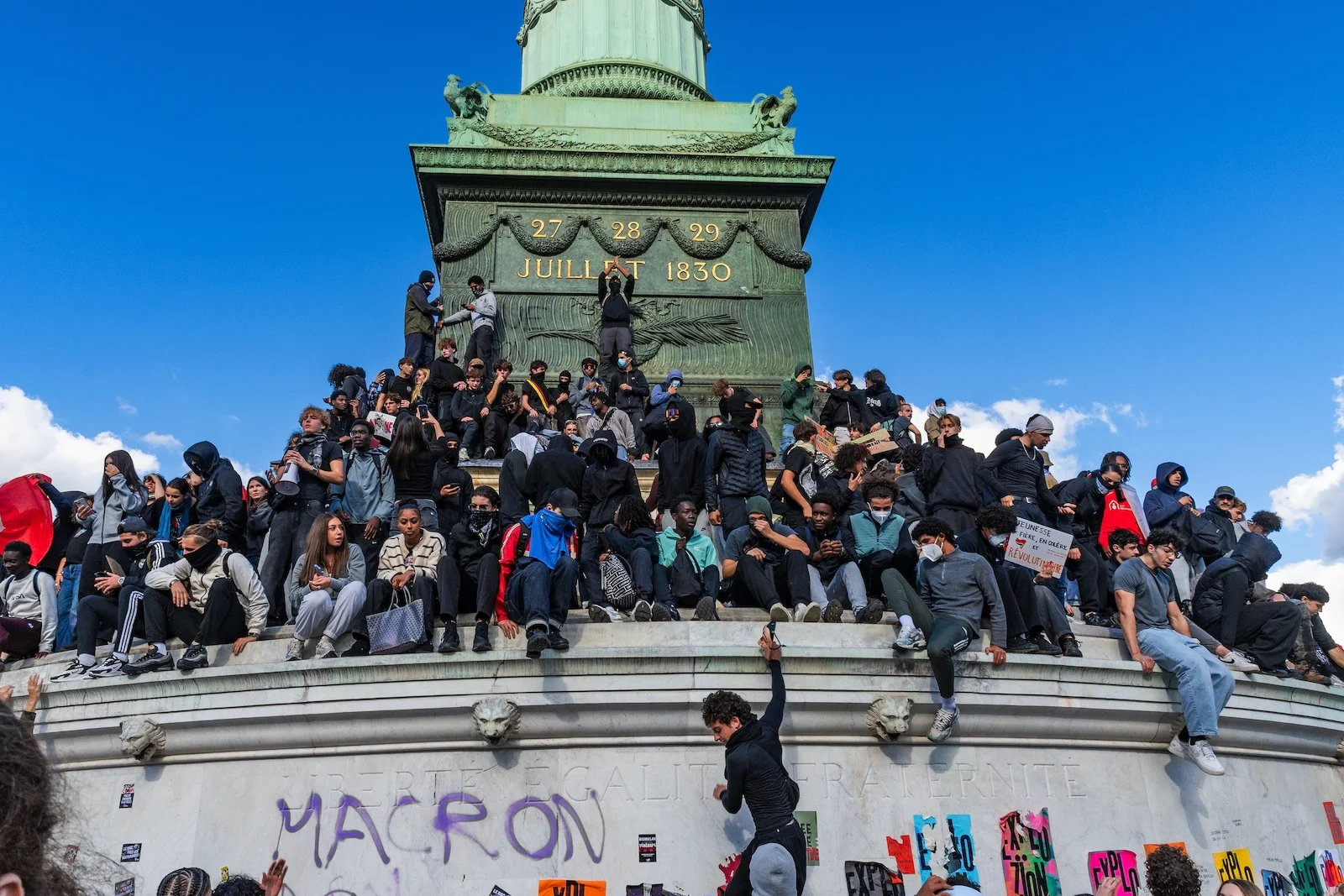
Europe’s streets are becoming the setting for a deeper generational and institutional reckoning. What began as localized protests over underfunded classrooms and teacher shortages has evolved into a broader expression of economic frustration and declining confidence in political institutions.
Across the continent, a generation struggling with unaffordable housing, rising living costs, and uncertain economic prospects is increasingly questioning not only the promises of the existing social contract but also whether governments are capable of fulfilling them.
As demonstrations spread and confrontations with authorities intensify, the unrest is exposing a crisis that extends beyond economic hardship. At its core is the widening distance between European institutions and the citizens whose trust is essential to their legitimacy.
Driven by Generation Z activists and grassroots organizing networks, protesters are taking to the streets to challenge an economic system that increasingly appears incapable of providing a secure future.
Across major European capitals, traditional boundaries of political dissent are giving way to broader expressions of frustration, confronting governments with grievances that transcend national borders.
At the heart of this unrest is a profound sense of exhaustion. In Paris, Berlin, Madrid, and Lisbon, the modern social contract is fraying under the pressure of persistent living costs, mounting energy bills, and housing markets that have effectively locked a generation out of independent adulthood.
When rents outpace wages and public services deteriorate, the anxiety of everyday survival can easily become a catalyst for political defiance.
This growing frustration also raises fundamental questions about institutional credibility. As geopolitical analyst Bahauddin Foizee argues in an Asia Times analysis, the authority to maintain public order cannot substitute for the public confidence on which lasting political stability depends.
In Europe, that confidence is increasingly being tested by the inability of political institutions to respond convincingly to the economic pressures confronting younger generations.
Protest encampments in Spanish plazas and mass marches through Portuguese streets reflect grievances that extend beyond individual policy disputes. They represent a broader indictment of an economic landscape in which the basic milestones of adulthood have increasingly become luxuries.
Young Europeans are discovering that working hard and following the rules no longer necessarily guarantees a stable life. That realization is transforming economic disappointment into political anger.
As protests have expanded, confrontations have sometimes grown more volatile, exposing a darker and more unpredictable dimension of public discontent. Demonstrations that begin with specific policy demands can descend into confrontations between protesters and security forces.
In cities such as Frankfurt and Berlin, episodes of disorder have complicated the political message of demonstrations, drawing attention away from the underlying grievances and toward questions of public safety and the appropriate use of police authority.
Government responses, including arrests and crowd-control measures, illustrate the difficulty of containing a frustration that demands more than modest policy adjustments. For many demonstrators, the issue is no longer simply the cost of living but the priorities of the economic and political systems themselves.
Yet, as Foizee’s analysis emphasizes, containing demonstrations does not necessarily resolve the grievances that produced them. Dispersing protesters and restoring normal activity may address immediate disruptions, but neither guarantees that citizens feel heard or that their concerns have been meaningfully addressed.
The distinction between restoring public order and rebuilding public trust is therefore essential to understanding the growing confrontation between European governments and increasingly dissatisfied segments of their populations.
The danger is that prolonged economic exclusion can weaken younger citizens’ attachment to the institutions they are expected to support. When people believe the system offers them little prospect of advancement, their willingness to defend its legitimacy may begin to erode.
As demonstrations emerge across countries from Belgium to Greece, Europe faces a consequential political test. What might appear to be isolated expressions of dissatisfaction could instead reveal deeper vulnerabilities in the continent’s economic and democratic institutions.
The central problem is that the mechanisms designed to address public grievances have struggled to keep pace with mounting economic pressures. When citizens lose confidence in their governments’ ability to provide basic security, affordable housing, and decent education, the legitimacy of those institutions inevitably comes under scrutiny.
This concern echoes Foizee’s argument that the absence of demonstrations should not be mistaken for the resolution of the grievances that produced them. Institutional confidence can deteriorate even in periods of apparent calm, particularly when governments prioritize containing dissatisfaction over addressing its underlying causes.
For Europe, the challenge is therefore not simply to restore order but to demonstrate that democratic institutions remain capable of responding meaningfully to the economic and social anxieties of their citizens.
European leaders can no longer afford to regard these protests as isolated disruptions to be managed through policing and temporary subsidies. Unless they confront the structural pressures facing younger generations, the fractures now visible in cities such as Paris, Frankfurt, Berlin, Madrid, and Lisbon could deepen into a lasting crisis of political legitimacy, reshaping the continent’s democratic landscape for decades to come.