
Taiwan Is Building a Climate Future Without a Seat at the Table
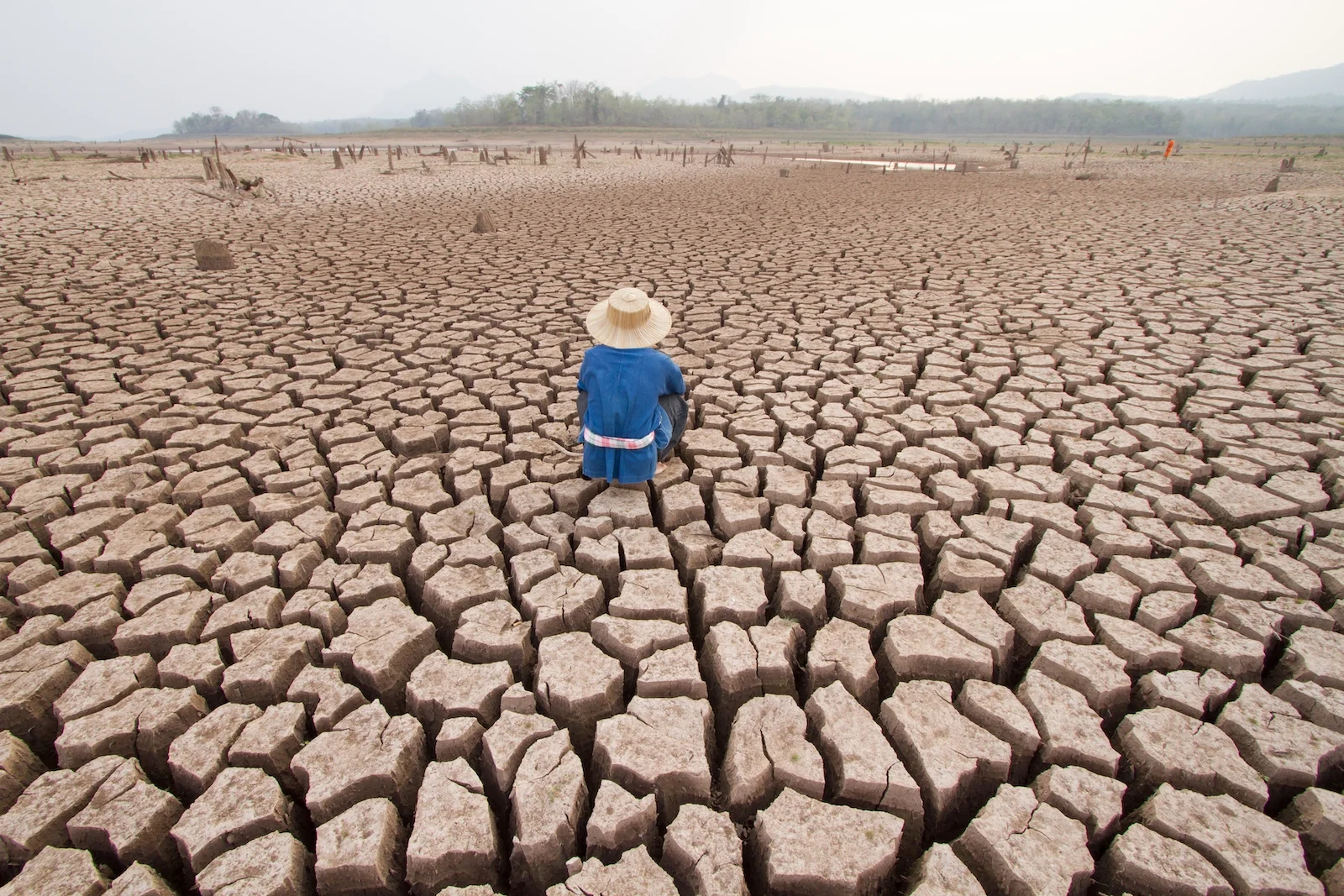
In 2026, extreme heat continued to sweep across the globe, with historically high temperatures recorded in numerous regions. Western Europe experienced its hottest June on record, as soaring temperatures intensified droughts and wildfires, strained water resources, and disrupted public health, energy supplies, and economic activity. Taiwan has faced similar challenges, confronting extreme heat, torrential rainfall, and increasingly destructive typhoons. Climate change is no longer simply an environmental concern. It has become a shared global challenge with profound consequences for social stability, industrial development, economic security, and national resilience.
Against this backdrop, global climate governance is entering a new phase, shifting its emphasis from ambitious targets and international commitments toward tangible implementation. At this year’s COP31 climate summit, participants are expected to emphasize dialogue, consensus, and action, seeking to transform political promises into concrete, measurable results. Although Taiwan is not a party to the United Nations Framework Convention on Climate Change (UNFCCC), it continues to pursue climate governance in the spirit of the Paris Agreement.
After submitting its 2035 nationally determined contribution in 2025, Taiwan has begun translating its emissions-reduction ambitions into coordinated policies across government agencies. These efforts encompass industrial decarbonization, resource circulation, climate adaptation, and a just transition, while international partnerships are helping turn policy objectives into practical solutions.
Article 4 of the Paris Agreement calls on participating countries to progressively strengthen their climate mitigation efforts and fulfill their nationally determined contributions. Article 13 establishes an enhanced transparency framework designed to ensure that climate progress can be consistently monitored, measured, and evaluated.
Seeking to align itself with these international standards, Taiwan formally approved its third-phase greenhouse gas reduction action programs for 2026–2030. The programs span six major sectors: energy, manufacturing, residential and commercial buildings, transportation, agriculture, and the environment. Together, they incorporate 20 flagship mitigation initiatives, annual emissions targets, and 63 performance indicators. By embedding national climate objectives into sector-specific policies, Taiwan is establishing a framework for annual monitoring and performance evaluations.
The latest national greenhouse gas inventory offers evidence of progress. Taiwan’s net greenhouse gas emissions in 2024 were 6.59 percent below their 2005 levels, marking the third consecutive year of declining emissions. During the same period, real GDP continued to grow, while carbon dioxide emissions intensity fell by 48.59 percent. These figures suggest that Taiwan is gradually weakening the historical relationship between economic growth and carbon emissions, an essential objective for economies seeking to reconcile industrial competitiveness with climate responsibility.
Transparency remains central to this effort. Taiwan follows reporting frameworks recommended by the Intergovernmental Panel on Climate Change and the Paris Agreement, regularly publishing nationally determined contributions, biennial transparency reports, and national greenhouse gas inventory reports. Through clearly defined mitigation pathways, sector-specific measures, and publicly available information, Taiwan aims to make its climate commitments measurable, verifiable, and accountable.
The industrial transition, however, requires more than emissions targets. It demands changes in how businesses invest, produce, and compete.
To accelerate decarbonization, Taiwan began collecting carbon fees in 2026, making carbon pricing an increasingly important instrument of industrial policy. The system links carbon fees to voluntary emissions-reduction plans and preferential rates, encouraging companies to incorporate climate considerations into investment decisions and everyday operations.
During its first year, the carbon fee generated approximately NT$4.97 billion in revenue, which was directed to the Greenhouse Gas Management Fund. The fund supports emissions reduction and climate adaptation through financial instruments that include loan credit guarantees and interest subsidies. Taiwan has also introduced regulations governing subsidies for greenhouse gas reduction technologies and climate adaptation, offering additional support for businesses investing in cleaner production and greater resilience.
Together, these measures are intended to mobilize private investment by combining government subsidies, financing mechanisms, and risk-sharing arrangements. Rather than treating decarbonization exclusively as a regulatory obligation, Taiwan is seeking to make the green transition a source of industrial innovation and long-term competitiveness.
The next stage will involve gradually developing the Taiwan Emissions Trading System (TW-ETS), creating a diversified carbon pricing framework in which emissions trading and carbon fees operate alongside one another.
Taiwan’s efforts are also becoming more closely connected to international carbon pricing arrangements. The United Kingdom recently recognized Taiwan’s carbon fee as a qualifying carbon pricing scheme under its Carbon Border Adjustment Mechanism. Under the applicable rules, eligible Taiwanese products will be able to claim deductions reflecting carbon prices already paid. The recognition represents an important step toward greater compatibility between Taiwan’s domestic climate policies and international trade-related carbon regulations.
Yet industrial sustainability cannot be achieved through energy policy and emissions management alone. It also requires rethinking how materials are produced, consumed, recovered, and reused.
In 2026, Taiwan completed amendments to the Resource Circulation Promotion Act and the Waste Disposal Act, shifting its approach away from waste management at the end of a product’s useful life toward a broader system of resource governance encompassing the entire production and consumption cycle.
The government has identified eight priority areas for developing a circular economy: food, plastics, textiles, health, construction, electronics, inorganic resources, and circular industries. Taiwan now has 69 publicly listed companies operating in the circular economy sector, which generates more than NT$1 trillion in annual revenue. These figures suggest that resource circulation is emerging as a significant industrial sector rather than remaining a peripheral environmental initiative.
Taiwan is also advancing digital product passports, reducing plastics at their source, and expanding opportunities for reuse. Through legislation, industrial cooperation, and digital innovation, the government hopes to reduce dependence on virgin materials, limit waste, and lower the carbon footprint of production. The broader ambition is to strengthen resource security, improve supply chain resilience, and ensure that Taiwanese industries remain competitive as global markets increasingly favor more sustainable production.
But reducing emissions is only one dimension of the climate challenge. As extreme weather becomes more disruptive, adaptation is becoming just as essential to national planning.
Article 7 of the Paris Agreement establishes a global objective of strengthening adaptive capacity, increasing resilience, and reducing vulnerability to climate change. At COP30, participating countries adopted the Belém Adaptation Indicators to help translate the Global Goal on Adaptation into measurable progress.
Taiwan has sought to align its own adaptation policies with these international efforts, integrating climate risk assessments into national and local governance while strengthening preparedness for extreme heat, torrential rainfall, and other climate-related hazards.
In 2026, Taiwan adopted a 40°C extreme-heat scenario to guide cross-ministerial adaptation planning. The initiative focuses on public health, energy security, transportation, occupational safety, and assistance for vulnerable populations. By considering the consequences of extreme heat across multiple sectors, the government hopes to improve coordination and reduce the cascading disruptions that increasingly accompany severe weather.
At the direction of President Lai Ching-te, Taiwan also established the national-level Urban Forest Promotion Committee to advance its National Green Canopy Program. The initiative treats urban forestry not merely as an environmental amenity but as an essential component of climate resilience infrastructure.
By combining LiDAR remote sensing, three-dimensional digital twin technology, and microclimate data, the program seeks to identify urban heat hotspots and areas lacking adequate shade. This information will help guide the development of interconnected green spaces designed to moderate temperatures, protect public health, and strengthen communities against the effects of extreme weather.
Taiwan also plans to draft an urban forests act, establish professional certification standards for tree protection, and promote higher-value uses of recycled wood. By encouraging corporate environmental, social, and governance investment, community participation, and private-sector innovation, the government intends to create local demonstration zones that combine emerging technologies with practical approaches to urban resilience.
These initiatives reflect a growing recognition that successful climate adaptation must be incorporated into everyday life, from the design of cities and transportation systems to the protection of workers and vulnerable communities.
The transition to a low-carbon economy also raises difficult questions about employment, economic opportunity, and social equity. Climate policies may create new industries and jobs, but they can also impose substantial costs on workers, businesses, and communities dependent on established forms of production.
The Paris Agreement acknowledges these concerns in its preamble, emphasizing the importance of a just transition for workers and the creation of decent work and quality employment. In recent years, the UNFCCC has expanded discussions of the social and economic consequences of decarbonization, including its effects on energy systems, industry, and labor markets.
At COP30, participants advanced mechanisms intended to strengthen international cooperation, technical assistance, capacity building, and knowledge sharing, recognizing that the benefits and burdens of the net-zero transition must be distributed more equitably.
Taiwan has adopted the principle of leaving no one behind as a central component of its climate strategy, establishing a legal foundation for a just transition through the Climate Change Response Act.
In 2026, the government began conducting stakeholder consultations across six sectors: energy, manufacturing, residential and commercial buildings, transportation, agriculture, and the environment. These consultations are intended to gather public perspectives, identify potential social and economic disruptions, and ensure that individual sectors respond to concerns raised by affected communities.
The government plans to consolidate these sectoral efforts into a nationwide just transition action plan, creating a comprehensive policy framework that places public participation at the center of climate planning and implementation.
Taiwan is also using the Greenhouse Gas Management Fund to support workers, industries, regions, and communities affected by decarbonization. Particular attention is being directed toward developing green-collar skills, helping small and medium-sized enterprises adopt low-carbon practices, assisting vulnerable populations, and strengthening local participation in transition planning.
The objective is to ensure that climate policy does not simply deliver lower emissions but also creates opportunities for economic participation and social resilience.
International cooperation will be equally important. Article 6 of the Paris Agreement encourages voluntary cooperation among countries to strengthen climate ambition while supporting sustainable development. Its principles emphasize environmental integrity, transparency, and safeguards against double counting emissions reductions.
As these arrangements move from negotiation toward implementation, international climate cooperation is increasingly expanding beyond diplomatic declarations to include emissions-reduction projects, technology partnerships, capacity building, and investment. Such cooperation can help countries accelerate climate action while sharing expertise and financial resources.
Taiwan is pursuing this approach through practical climate diplomacy. In 2025, it signed a memorandum of understanding with its diplomatic ally Paraguay concerning cooperation under the Paris Agreement. The two countries are now advancing 12 environmental governance action plans, encompassing technology sharing, youth dialogue, and exchanges involving the circular economy.
These initiatives demonstrate how bilateral partnerships can contribute to broader international climate objectives, even when formal participation in multilateral institutions remains constrained.
Türkiye has described COP31 as the “COP of the Future,” emphasizing the distinction between making commitments and delivering results. A declaration of intent may establish political ambition, but implementation ultimately determines whether governments earn public confidence.
As international climate governance enters a period increasingly defined by measurable outcomes, Taiwan intends to deepen its global partnerships, share its experience with the net-zero transition, and make practical contributions to collective climate goals.
Taiwan also continues to seek international support for meaningful participation in the UNFCCC and other global climate governance mechanisms. Its position reflects a broader argument: achieving the objectives of the Paris Agreement requires cooperation among all partners with the capacity, expertise, and willingness to contribute.
Climate change does not recognize diplomatic boundaries, and the ability to respond effectively should not be limited by them. For Taiwan, the challenge is to demonstrate that national commitments can become meaningful action while strengthening cooperation with governments and communities confronting the same environmental threats.
The success of the global climate response will ultimately be measured not by the number of promises made at international summits, but by the policies implemented, emissions reduced, communities protected, and partnerships sustained. Taiwan is seeking to establish its place in that effort, helping transform climate ambition into a more resilient and sustainable future.