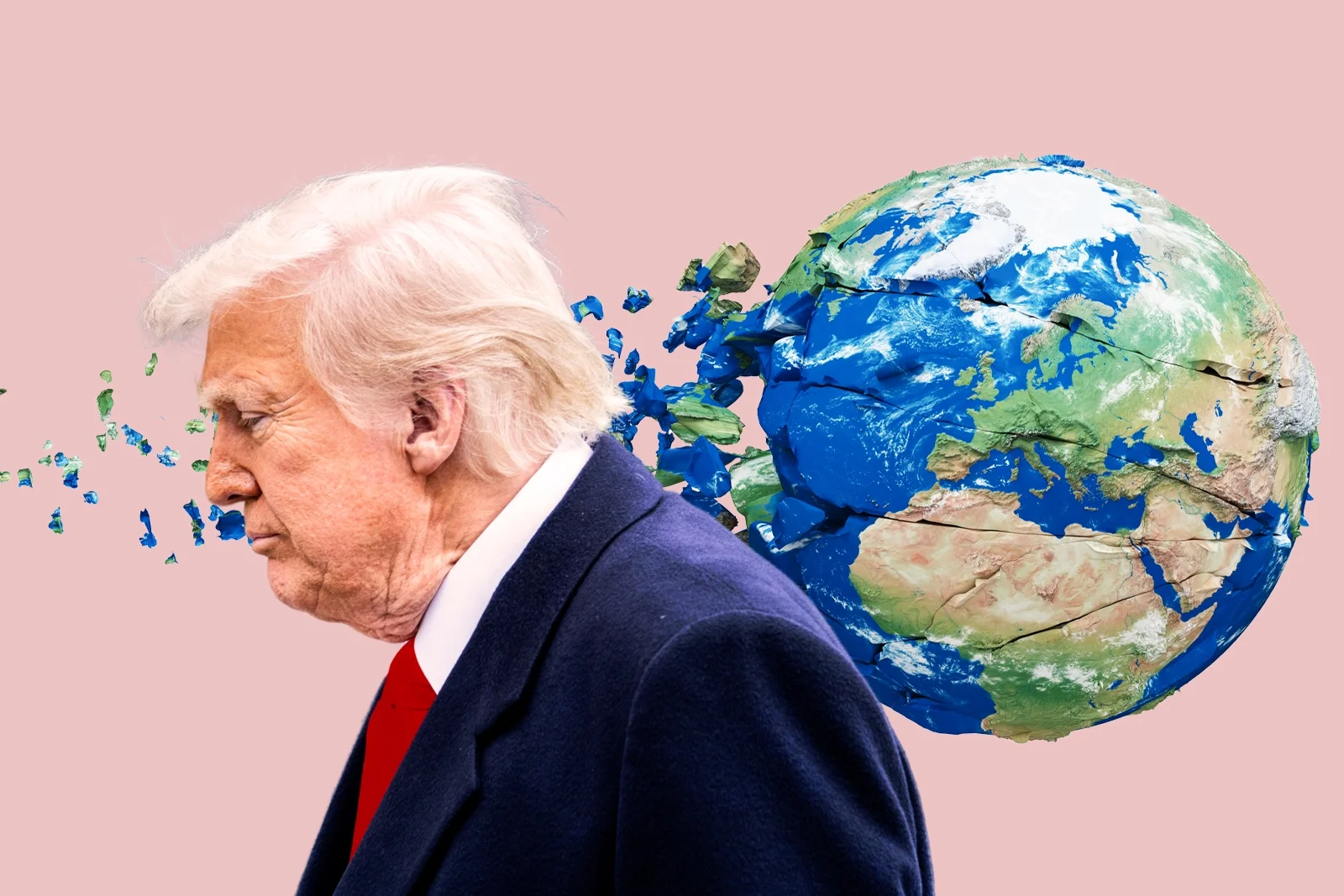

Trump, Xi and Putin’s Summit of Naught
Three presidents. Three nuclear powers. Eighty minutes. And almost nothing to show for it.
On Thursday, President Donald Trump, Chinese President Xi Jinping, and Russian President Vladimir Putin gathered in Shenzhen for an unprecedented diplomatic summit. They posed for photographs, exchanged pleasantries, and offered lofty assurances about international peace and stability.
Then they departed without a nuclear arms agreement, a ceasefire in Ukraine, or a meaningful breakthrough on any of the major conflicts supposedly important enough to bring them together.
What, exactly, was historic about that?
For Putin, the summit was a diplomatic gift. The man responsible for launching Russia’s devastating invasion of Ukraine stood alongside the American president, treated as an equal partner in shaping the future of international security.
Xi got to host three of the world’s most powerful leaders, including himself. Trump got another headline. And the rest of the world got a four-point declaration promising little beyond further conversations.
Perhaps the most revealing aspect of the summit was what that declaration actually addressed.
The three governments found common ground in challenging the authority of the International Criminal Court, the very institution that issued an arrest warrant for Putin over the alleged unlawful deportation of Ukrainian children.
Yet somehow, a declaration supposedly dedicated to peace failed to mention Ukraine at all.
Consider the absurdity.
Three leaders gathered to discuss global stability while one of them continues waging a devastating war against a neighboring country. They found time to address petroleum production and the authority of international courts, yet could not bring themselves to acknowledge that invasion in their final statement.
Apparently, questioning the authority of institutions that might hold powerful leaders accountable was easier than confronting the suffering of ordinary Ukrainians.
And then there is Trump.
The president has repeatedly insisted that his personal relationships with foreign leaders can accomplish what traditional diplomacy cannot. He has built much of his diplomatic identity around the conviction that direct negotiations with adversaries can deliver results that conventional diplomacy has failed to achieve.
Shenzhen should have been his opportunity to prove it.
Instead, the summit raised an uncomfortable question: Is American diplomacy becoming more concerned with producing impressive photographs than extracting meaningful concessions?
Trump called Putin his friend. But friendship with a president who invaded a neighboring country means precious little if it cannot produce even the beginnings of an agreement to end the fighting.
To be clear, diplomacy with adversaries is both necessary and desirable. Washington should maintain open channels of communication with Moscow and Beijing, particularly when all three possess nuclear weapons. Refusing to engage with rival governments would be reckless.
But engagement should not become an excuse for celebrating failure.
The expiration of the New START treaty in February left the United States and Russia without their last major agreement limiting deployed strategic nuclear arsenals. China, meanwhile, continues expanding its own nuclear capabilities, introducing another layer of uncertainty into an already dangerous strategic environment.
The summit offered an opportunity to begin confronting one of the gravest threats facing humanity. Instead, the leaders reaffirmed that nuclear war must never be fought and promised further dialogue.
Of course nuclear war must never be fought. That principle has been understood for decades. Repeating it without establishing actual limits, verification mechanisms, or concrete negotiating commitments does little to make the world safer.
The summit also exposed a troubling vision of international relations: one in which the world’s most powerful countries gather to discuss the futures of smaller nations without giving them a seat at the table.
Ukraine was absent. America’s European allies were absent. The countries that would bear the consequences of any consequential agreement had no meaningful role in the discussions.
That should trouble Americans regardless of their political affiliation.
American leadership has never rested solely on military strength. It has also depended on alliances, credibility, and the expectation that Washington will defend certain principles even when doing so proves inconvenient.
Yet the defining image from Shenzhen was of three powerful governments congratulating themselves for reaching an understanding on matters that demanded little immediate sacrifice.
The meeting itself was not necessarily a mistake. There is value in maintaining diplomatic channels, and serious negotiations rarely produce sweeping agreements overnight. Even an inconclusive summit can establish the groundwork for future progress.
But not every meeting deserves applause simply because it happened.
Trump, Xi, and Putin had an opportunity to establish serious negotiations over nuclear weapons, confront the war in Ukraine, and demonstrate that major powers can cooperate on matters of genuine international security.
Instead, they produced a declaration that carefully sidestepped the hardest questions.
A peace declaration that cannot bring itself to mention one of the world’s most devastating wars deserves skepticism, not celebration.
Putin walked away with prestige. Xi walked away with publicity. Trump walked away with a photograph.
And the world walked away with another reminder that powerful men can make history without making progress.