Culture
The Egypt I Dreamed of and the Egypt I Found
My fascination with Egypt began when I was eight years old. At school, I learned about the pyramids of Giza, and every documentary I watched about them filled me with excitement. At home in Kurdistan, I teased my older sister for listening to Umm Kulthum, insisting that she screamed rather than sang. As my Arabic improved, however, I began to appreciate the beauty of her songs. My father owned tapes of her performances, and her unmistakable voice gradually became part of the Egypt I imagined.
My sisters and I spent much of our time at home, partly because there were few places to go and partly because of the restrictions imposed by a male-dominated culture. Every Friday, we eagerly awaited the Egyptian films broadcast on television. Arabic, which we were required to learn at school under Saddam Hussein’s regime, unexpectedly opened a window onto another world through music, cinema, and literature.
As a teenager, I discovered Nawal El Saadawi. Her writings on women, sexuality, patriarchy, class, and colonialism challenged me to examine my own identity and the society in which I was growing up. I devoured the works of Ihsan Abdel Quddous and Naguib Mahfouz and developed a fascination with Nefertiti. Egypt became something more than the land of the pyramids. It was a country whose culture, history, and contradictions I wanted to experience for myself.
Nine years ago, my daughter traveled to Egypt for work. When she asked what I would like her to bring back, I told her that I wanted nothing from Egypt; I wanted to go there. I recommended places to visit and foods to try, requested photographs, and jokingly accused her of living my dream.
Finally, in October 2026, I traveled to Cairo with my sister and her husband. We arrived in the evening, and the surprises began almost immediately. Men offered to help us with taxis and luggage. In the restroom, a woman handed me paper towels, offered a prayer for me, and requested a tip. Later, we discovered that the hotel where we had made reservations had overbooked and arranged alternative accommodations for us. By the time we reached our rooms, we were exhausted.
Cairo overwhelmed me. Cars, motorcycles, buses, and tuk-tuks competed for space on streets filled with the seemingly incessant sound of car horns. The traffic was more chaotic than anything decades of watching Egyptian films had prepared me for. Stray dogs gathered near busy roads, and many vehicles bore the scars of previous collisions.
From a distance, palm trees, monuments, and statues lent parts of the city a certain grandeur. Walking through those same streets, however, revealed broken pavement, uneven steps, and piles of rubbish. Despite these first impressions, I remained eager to visit the pyramids and the Grand Egyptian Museum. My childhood excitement had survived my first night in Cairo.
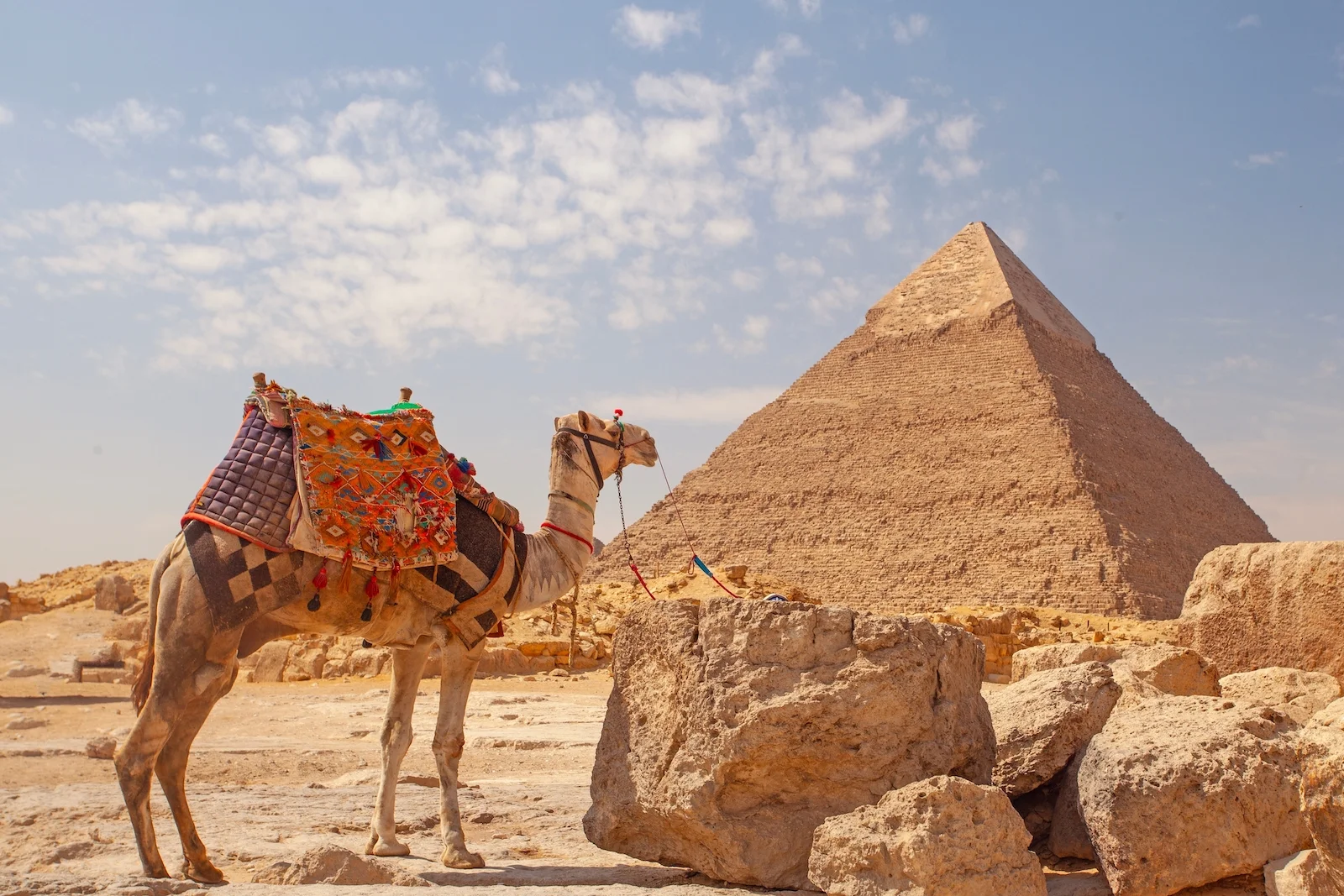
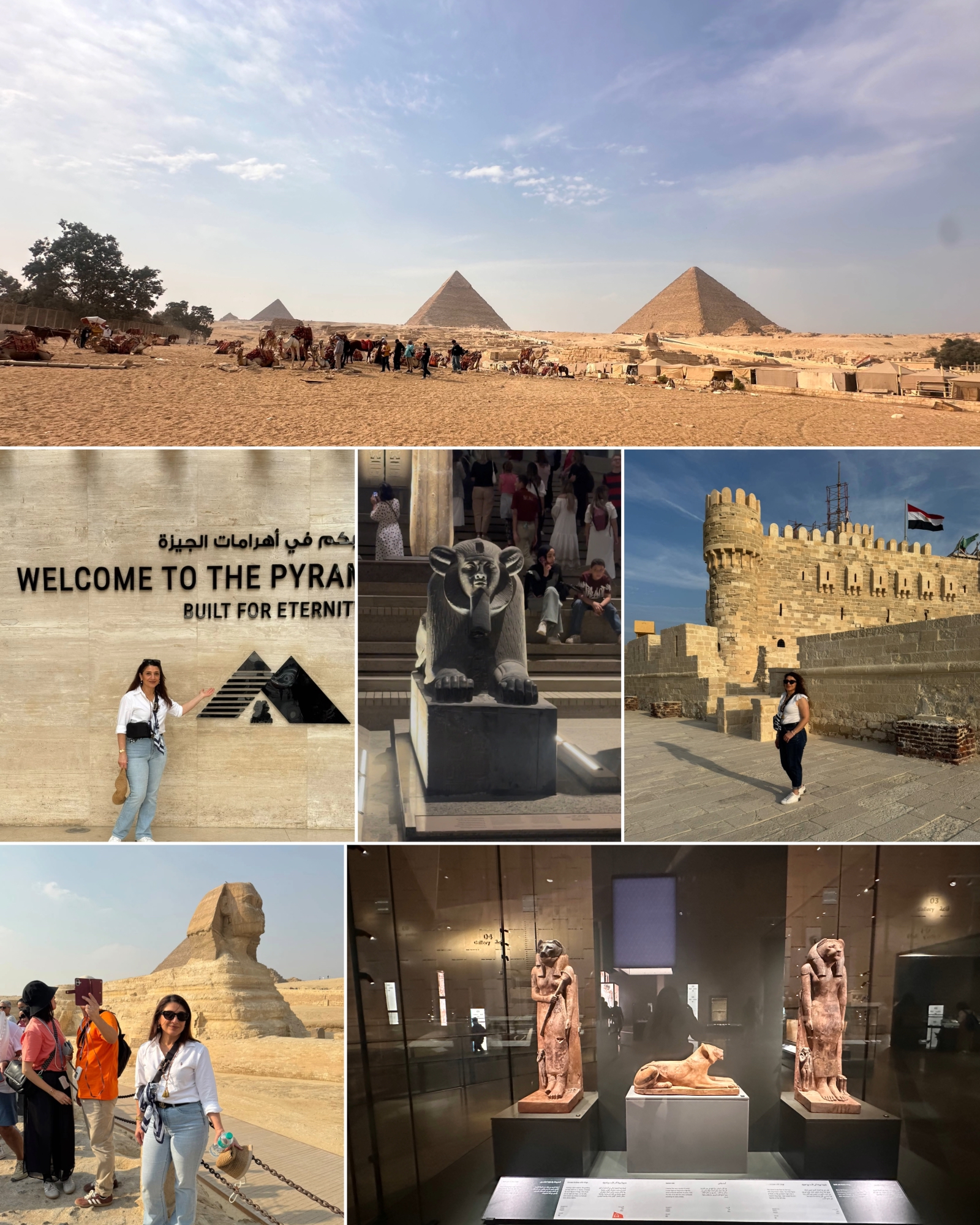
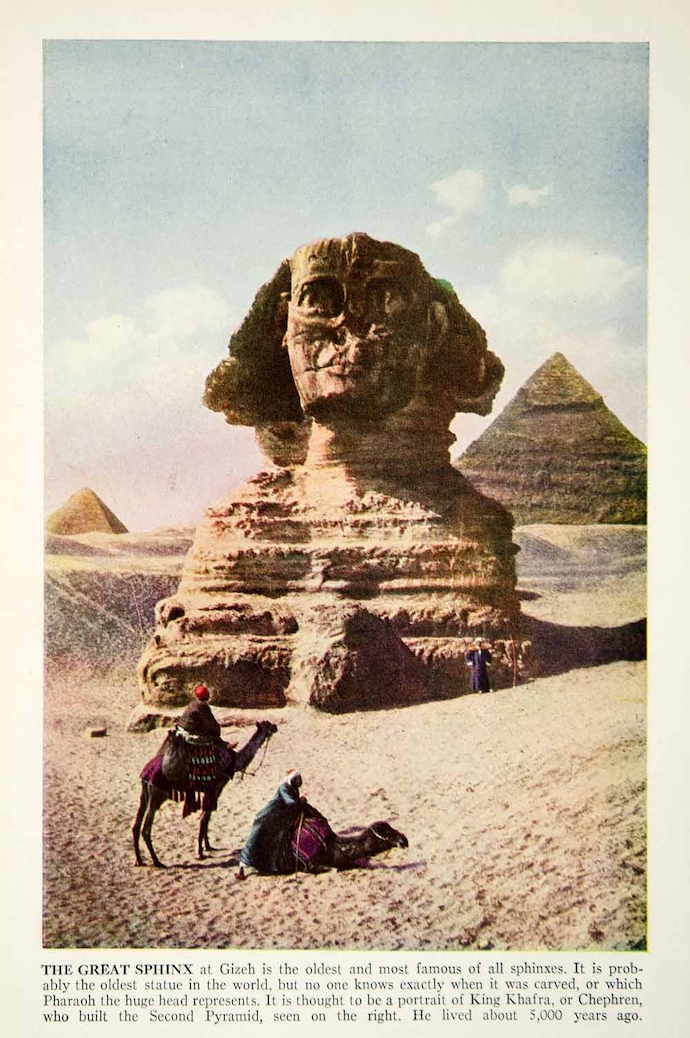
Our driver, Akram, helped restore my confidence. Patient, kind, and trustworthy, he took us to Giza the following morning. The sheer scale of the pyramids was astonishing, even amid the crowds and the afternoon heat. My sister and her husband opted for a carriage ride, while I chose to ride a camel. Around us, bargaining and requests for tips accompanied nearly every interaction.
Inside the Pyramid of Khafre, a narrow passage and steep wooden steps led toward the burial chamber. Visitors squeezed past one another, those descending forced to negotiate the same cramped route as those climbing back out. Despite a sign restricting access, we followed other visitors toward the empty sarcophagus. The guard appeared more interested in receiving tips than enforcing the rules.
Climbing out proved considerably more difficult than entering. I wished we had been given clearer warnings about the confined passageways, the humidity, the poor ventilation, and the physical demands of the visit. Standing inside a pyramid I had dreamed of visiting since childhood was an unforgettable experience, but it was difficult to separate that sense of wonder from legitimate concerns about visitor safety.
The Grand Egyptian Museum offered a welcome contrast. Clean, organized, and carefully managed, it was perhaps the largest museum I had ever visited. Staff were attentive to the protection of the collections, and the exhibition halls contained far more than we could reasonably absorb in a few hours. We took photographs, knowing that much of what we experienced would remain only in our memories.
Elsewhere in Cairo, I began searching for El Saadawi’s books. At one bookstall after another, I received the same answer: no. I wondered why it was proving so difficult to find the works of an Egyptian writer whose ideas had helped shape my intellectual development. Then, in Zamalek, my brother-in-law discovered Diwan bookstore. There, openly displayed on a table, were seven of her books. I immediately bought three.
That discovery became one of the happiest moments of my trip. After walking through the heat and struggling with contradictory directions, finding her books felt like reconnecting with the Egypt I had first encountered through literature. Later, we enjoyed excellent Syrian shawarma at Agha. These small pleasures provided a welcome respite from the frustrations of navigating Cairo.
For our trip to Alexandria, we hired another driver, Wa’eel, because Akram was unavailable. We visited the Catacombs of Kom El Shoqafa, where descending underground felt like entering another world. The remarkable blending of artistic traditions made history seem layered rather than distant. At the Serapeum, we walked among columns and statues before following directions to the Small Library.
 Uneven stairs led into dimly lit stone passages lined with empty niches. Standing there, I imagined the knowledge those spaces might once have housed and the magnitude of what had been lost over the centuries. Of all the historical sites we visited, this one inspired a particularly quiet kind of reflection.
At the Citadel of Qaitbay, massive doors opened onto corridors and chambers of pale stone. Beyond the fortress walls, the Mediterranean shimmered turquoise. Fishing boats moved through the harbor, and waves broke against the rocks below. The view was magnificent, although the rubbish scattered along the shoreline diminished its beauty. Once again, extraordinary surroundings existed alongside unmistakable signs of neglect.
Our return journey was punctuated by two collisions within 20 minutes. First, our driver struck another vehicle after refusing to allow it to merge. The drivers exchanged angry words before continuing on their way. Then another car struck ours. Wa’eel explained that the vehicle belonged to the hotel and that he would report the damage. His seemingly casual response to both incidents unsettled me.
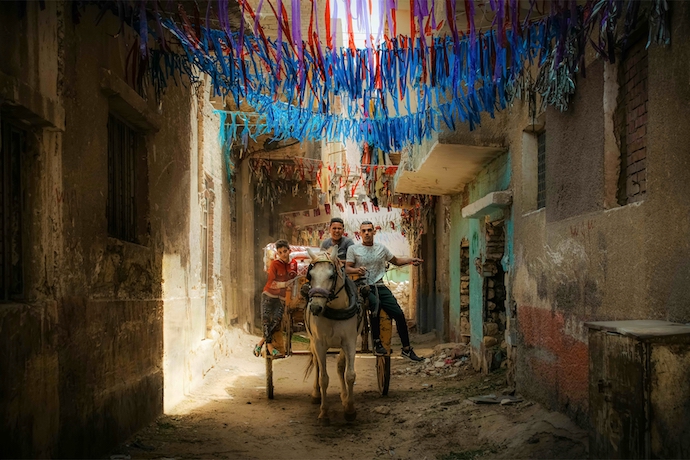
Yet the most troubling sights of my journey were not the damaged cars or the neglected streets. They were the children asking for money and the young boys working in shops or selling flowers, tissues, and handmade crafts. Some appeared to be no older than nine. Seeing children working at an age when I hoped they would be in school troubled me deeply. Watching mothers encourage their children to approach strangers for money revealed another painful dimension of life that my childhood fascination with Egypt had never led me to consider.
Throughout the trip, I found myself comparing what I encountered with the images I had carried in my imagination for so many years. The Egypt of those Friday evening films had seemed familiar long before I arrived. But familiarity with a language, a song, or a literary tradition is not the same as understanding the realities of everyday life. My expectations had left little room for exhaustion, uncertainty, or the discomfort of being repeatedly approached as a tourist.
Traveling with my sister and her husband made the experience easier and more enjoyable. We joked, took photographs, and shared the frustrations of finding our way through unfamiliar surroundings. Their companionship mattered as much as the monuments we visited. Even on the most difficult days, we were creating memories together rather than simply moving from one tourist attraction to another.
I did not leave Egypt with a single, easily articulated feeling. Admiration and discomfort remained side by side. The books I bought, Akram’s patience, and the extraordinary treasures of the Grand Egyptian Museum would stay with me, but so would the images of children working on the streets. Neither set of memories could diminish the significance of the other.
Before leaving, I gave generous tips to Akram and several young hotel employees. Their kindness had made a difference to my experience, and I knew I would miss them. My frustration with the constant requests for money did not diminish my gratitude toward those who had treated us with genuine patience and care.
The pyramids, the Grand Egyptian Museum, and Alexandria’s historical treasures alone justified the journey. Yet the traffic, litter, persistent solicitation, and visible economic hardship made the experience considerably more challenging than I had imagined. In a country of roughly 120 million people, with more than 20 million living in Greater Cairo, the pressures of overcrowding, poverty, and strained public services were difficult to overlook.
My childhood dream of visiting Egypt had finally come true, although the journey was more disappointing than I had anticipated. I had spent much of my life imagining Egypt through the accomplishments of its civilization, the voices of its singers, and the words of its writers. What I had been less prepared for was the everyday reality of a country negotiating the demands of the present while possessing such an extraordinary inheritance from the past.
The Egypt I encountered was not quite the country I had imagined as an eight-year-old girl in Kurdistan. Nor had it ceased to be the country whose music and literature had helped shape my understanding of the world. It was something more complicated, more contradictory, and ultimately more human than the Egypt of my childhood dreams.