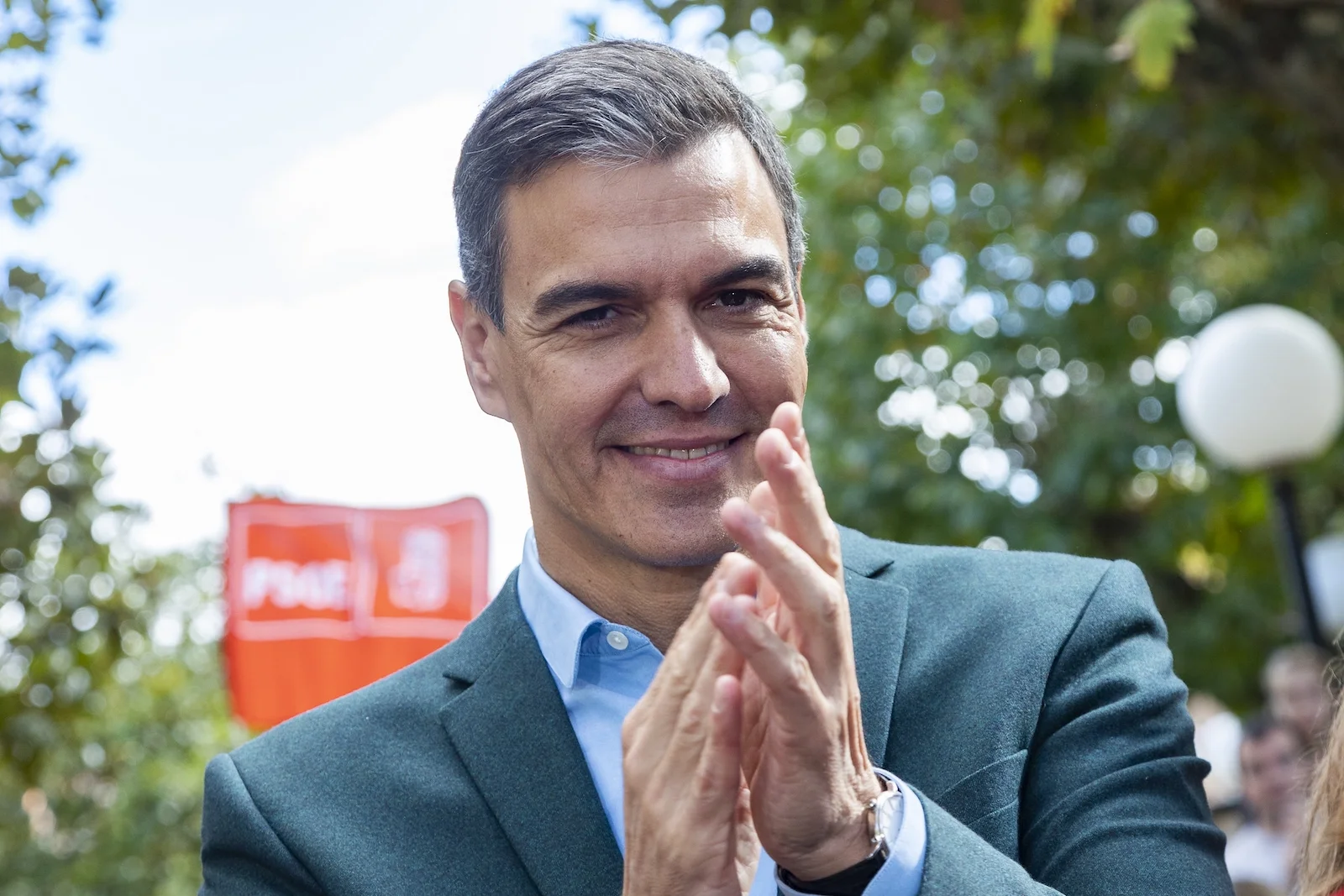

Sánchez Is Running Out of Political Road
Pedro Sánchez is gambling on his political survival once again. Spain’s prime minister and leader of the Socialist Workers’ Party (PSOE) has dissolved parliament and called early general elections after Congress rejected two of his emergency housing decrees. The decision follows a series of regional electoral defeats, recalling the circumstances under which Sánchez called snap elections in 2023.
Back then, the gamble paid off. Although the conservative People’s Party (PP) emerged as the largest parliamentary force, its leader, Alberto Núñez Feijóo, failed to assemble a governing majority. Sánchez proved more adept at parliamentary arithmetic. This time, however, the center-right PP and the far-right Vox appear determined not to repeat their mistakes.
The election comes after years of political turmoil. Corruption investigations, a worsening housing crisis, tensions with Morocco, and deadly railway accidents have eroded public confidence in the government. Against a backdrop of rising European nationalism, strained transatlantic relations, and disagreements over immigration, Spain’s election could also have consequences well beyond its borders.
Sánchez first came to power in 2018 after winning a vote of no confidence against Mariano Rajoy’s conservative government, presenting himself as an alternative to the corruption that had plagued the PP. Following elections in 2019, he formed a coalition with the left-wing Podemos, establishing Spain’s first coalition government since its transition to democracy.
His political survival in 2023 depended on a considerably more complicated arrangement. Although the PSOE finished second, Sánchez secured parliamentary backing from Catalan separatist parties, partly through a controversial amnesty agreement covering individuals involved in the failed 2017 independence bid. The concession was particularly contentious because Sánchez had previously opposed such an amnesty.
That arrangement has since begun to unravel. Catalan pro-independence lawmakers joined the parliamentary opposition in rejecting the government’s housing decrees. Efforts to consolidate parties to the left of Sánchez under a broader electoral alliance have also encountered internal resistance, with Podemos reluctant to participate and Gabriel Rufián of the Republican Left of Catalonia opting to remain within his regional political movement.
But parliamentary arithmetic is hardly Sánchez’s most pressing concern.
Spain is experiencing a profound housing affordability crisis, the origins of which can be traced, in part, to the collapse of its property market in 2008. Demonstrations in Madrid, Barcelona, Valencia, and elsewhere have exposed the growing disconnect between Spain’s comparatively encouraging economic performance and the financial insecurity experienced by many of its citizens.
For younger Spaniards, in particular, economic growth offers little reassurance when homeownership is increasingly unattainable, and rents consume a substantial proportion of their incomes. One Spanish correspondent interviewed for this piece identified housing as the country’s most urgent domestic concern, arguing that a government can hardly claim economic success when young people cannot afford to establish independent lives.
The problem is compounded by emigration. In 2024, Spain recorded a net migration loss of more than 12,000 Spanish-born citizens between the ages of 20 and 34. The departure of educated young professionals raises uncomfortable questions about the country’s ability to retain talent and provide opportunities for future generations.
Spain’s housing crisis is not simply a nationwide shortage of residential property. Numerous homes sit vacant in rural communities and smaller towns, even as demand overwhelms supply in major urban centers. Madrid, Barcelona, Alicante, Valencia, Murcia, and Málaga account for more than half of the country’s accumulated housing deficit.
In these areas, young professionals, international buyers, investment funds, and tourists compete for a limited supply of property. Employment opportunities remain concentrated in cities where housing construction has failed to keep pace with demand. The resulting competition has pushed prices beyond the reach of many ordinary households.
Changing demographics, household formation, and immigration have also increased demand. Sánchez’s efforts to regularize the status of undocumented migrants have become particularly controversial among voters who believe that the government has failed to expand housing supply sufficiently to accommodate population growth.
Regularization does not itself create additional residents, however. The people covered by such measures are already living in Spain. The more fundamental policy question is whether successive governments have adequately anticipated demographic changes and invested in the infrastructure necessary to accommodate them.
The government’s €7 billion housing plan, covering 2026 to 2030, represents an acknowledgment of the problem. Yet an assessment by BBVA Research suggests that the initiative may do relatively little to address the accumulated shortage. Even an ambitious construction program would take years to deliver meaningful results.
For Sánchez, that is precisely the political problem: The housing crisis demands immediate answers, while its most credible solutions require patience.
Immigration has become another source of political vulnerability. Sánchez’s approach has drawn criticism from European conservatives, particularly those who argue that regularization programs risk encouraging further irregular migration. The debate has become increasingly intertwined with Spain’s complicated relationship with Morocco and the security of its North African territories, Ceuta and Melilla.
Morocco has long maintained claims to both cities, and renewed rhetoric from Moroccan officials concerning their sovereignty has heightened tensions with Madrid. For Spain, the challenge extends beyond border management. It concerns the possibility that migration could be exploited as an instrument of diplomatic pressure.
There is historical precedent for such concerns. In 1975, Morocco organized the Green March, mobilizing hundreds of thousands of civilians in support of its claims to Western Sahara. Spain subsequently relinquished its administration of the territory, much of which came under Moroccan control. Western Sahara’s political status remains unresolved.
More recently, in May 2021, thousands of migrants entered Ceuta amid a diplomatic dispute between Spain and Morocco. Madrid had allowed Brahim Ghali, the leader of the Polisario Front, which seeks independence for Western Sahara, to receive medical treatment in Spain.
The following year, Sánchez backed Morocco’s autonomy proposal for Western Sahara, reversing Spain’s longstanding diplomatic position. The decision improved relations with Rabat but strained ties with Algeria, a supporter of the Polisario Front and an important regional partner.
Spain’s subsequent efforts to repair relations with Algeria illustrate the difficulties of balancing competing interests in North Africa. Madrid depends on cooperation with Morocco on migration, trade, security, and counternarcotics operations, while its relationship with Algeria carries considerable economic and strategic importance.
For Sánchez’s critics, his handling of Morocco reflects a willingness to make concessions without securing sufficient guarantees in return. Others argue that cooperation with Rabat, however politically uncomfortable, remains essential to Spain’s national interests.
Suspicions that Moroccan authorities have deliberately exploited migration pressures are not confined to the Spanish right. Politicians on the left have also expressed concern about Rabat’s conduct, highlighting the extent to which disagreements over Morocco have complicated Sánchez’s relationship with his own political allies.
Some have gone further, suggesting that Morocco, the United States, and Israel share an interest in weakening the Spanish government. Sánchez’s disagreements with President Donald Trump and his criticism of Israeli policies have undoubtedly complicated Spain’s relations with both countries. But diplomatic friction does not constitute evidence of a coordinated campaign to destabilize his government.
Nevertheless, the competing interests involved expose a potential contradiction for Spain’s nationalist right, particularly Vox, whose leadership has aligned itself closely with Trump’s political movement.
An America-first foreign policy does not necessarily serve the interests of European nationalist parties. Washington’s strategic relationship with Morocco, for example, may conflict with the priorities of Spanish conservatives concerned about their country’s territorial sovereignty. Should those interests diverge more sharply, Vox may find its enthusiasm for Trump increasingly difficult to reconcile with its own nationalist commitments.
A conservative government in Madrid could adopt a more confrontational position toward Rabat. Whether such an approach would improve Spanish security or undermine the cooperation on which it depends remains an open question. Morocco, for its part, would be unwise to assume that future Spanish governments will respond to diplomatic pressure in the same manner as Sánchez.
The prime minister’s greatest vulnerability, however, may be considerably closer to home.
Sánchez rose to power promising a departure from the corruption scandals that had damaged Spain’s conservative establishment. His government now finds itself confronting allegations involving members of his family, political associates, senior Socialist Party officials, and figures from previous PSOE administrations.
“The controversies have only reinforced my distrust in Sánchez and his government,” one Spanish correspondent said. However, “A PM shouldn’t be held automatically responsible for the people around him,” she continued, “but should be judged on how he responds- whether he demands transparency and whether he takes responsibility for the political consequences.”
That distinction is important. Allegations against Sánchez’s relatives or political associates do not establish wrongdoing by the prime minister himself. Nevertheless, the cumulative political consequences are difficult to dismiss.
Legal proceedings involving his wife, Begoña Gómez, and his brother, David Sánchez, have placed the prime minister under considerable personal and political pressure. Investigations concerning the activities of individuals associated with the PSOE have further complicated the government’s efforts to present itself as a champion of institutional integrity.
Among the most politically damaging controversies is the so-called Koldo affair, involving former Transport Minister José Luis Ábalos, his former adviser Koldo García Izaguirre, and former senior PSOE official Santos Cerdán. The allegations concern suspected corruption connected to public contracts, including procurement during the COVID-19 pandemic.
Cerdán’s proximity to Sánchez makes the affair especially uncomfortable. He was an influential figure within the Socialist Party and played a significant role in the parliamentary negotiations that helped keep Sánchez in office.
The prime minister’s continued defense of close political associates has raised questions about his judgment, even in the absence of evidence establishing his personal involvement in their alleged wrongdoing.
For a politician who initially came to power by exploiting public frustration with corruption, the irony is particularly damaging. Sánchez is increasingly being judged against the standards he once demanded of his political opponents.
Spain’s railway infrastructure has become another source of public anxiety. The deadly Adamuz railway disaster in January and concerns over the safety and maintenance of high-speed rail services have intensified scrutiny of government oversight and public investment.
The political consequences of such tragedies should not be confused with findings about their causes. Establishing responsibility requires technical investigations, not electoral speculation. Yet disasters inevitably shape public perceptions of institutional competence, particularly when confidence in the government is already deteriorating.
A Spanish election campaign that Sánchez might have hoped to build around economic growth, social progress, and the dangers of the far right now faces a considerably less receptive electorate. Housing insecurity, corruption allegations, and public frustration with essential services have made optimistic campaign messages increasingly difficult to sustain.
The opposition has its own challenges. The PP must reconcile its desire to return to government with the ideological demands of Vox, whose positions on immigration, national identity, and regional autonomy could complicate coalition negotiations. An electoral victory for the right would not, by itself, resolve Spain’s deeper structural problems.
Nor should Sánchez’s considerable political resilience be underestimated. He has repeatedly survived circumstances that would have ended the careers of less resourceful politicians. His ability to negotiate unlikely parliamentary alliances and exploit divisions among his opponents has been central to his longevity.
But the political conditions that enabled his survival in 2023 may no longer exist. The left is fragmented, his parliamentary allies have become increasingly unreliable, and the conservative opposition has had ample opportunity to learn from its previous failure.
More fundamentally, Sánchez faces a crisis of confidence that extends beyond individual scandals or policy disagreements. Voters who cannot afford housing, who doubt the integrity of public institutions, or who question the government’s ability to manage its international relationships may be less inclined to respond to warnings about the alternative.
For much of his premiership, Sánchez has demonstrated that political survival is an art in itself. Spain’s next election may determine whether survival alone is still enough.